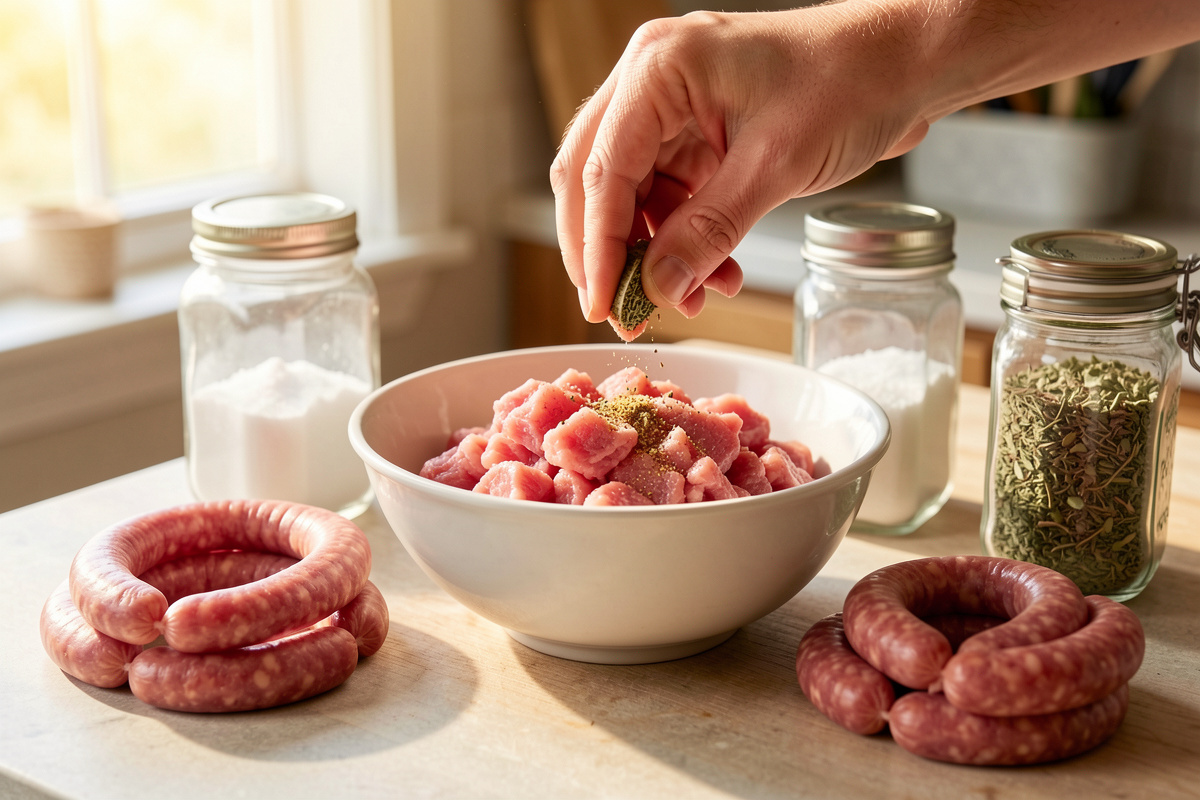

To make fresh sausage at home, grind cold pork shoulder at roughly 70% lean to 30% fat, mix in 1.7% salt (17 g/kg) plus seasoning until the meat turns sticky, fry-test a pinch, stuff into soaked casings, and cook to 71 °C (160 °F). The whole process takes an afternoon and needs no curing salt.
I came to fresh sausage from the slow side of this hobby — I run curing chambers and hang whole-muscle coppa and bresaola for months — and the thing that surprised me was how fast and forgiving fresh sausage is by comparison. There is no humidity to babysit, no pH to drop, no weight log to watch. There is only cold meat, the right salt, and a clean bind. Here is the exact sequence I use, step by step, the first time and every time.
What You Need Before You Start
Fresh sausage needs three tools and four ingredients. The tools: a grinder, a stuffer (or patties if you skip casings), and a thermometer. The ingredients: pork shoulder, salt, your seasoning, and a little ice water. That is genuinely the whole list — no nitrite, no culture, none of the chamber gear my dried sausages demand.
Buy pork shoulder (Boston butt) for your first batch; it arrives near the ideal 75/25 fat ratio, so you do not have to add fat back. Plan on roughly 1.5–2 kg for a first run — enough to learn on, small enough that a mistake is cheap. Have everything cold before you begin: the meat, the grinder parts, and the bowl all belong in the freezer or fridge until the moment you use them. If you are still choosing a grinder, my guide to the best meat grinder for sausage making covers what actually matters.
Step 1: Cube and Chill the Meat
Cut the pork into 2.5 cm strips or cubes that fit your grinder throat, spread them in a single layer on a tray, and freeze them for 30–45 minutes until the surfaces are crusting with ice but the centres still flex. This near-frozen state, around 0–2 °C, is the single biggest determinant of a clean grind.
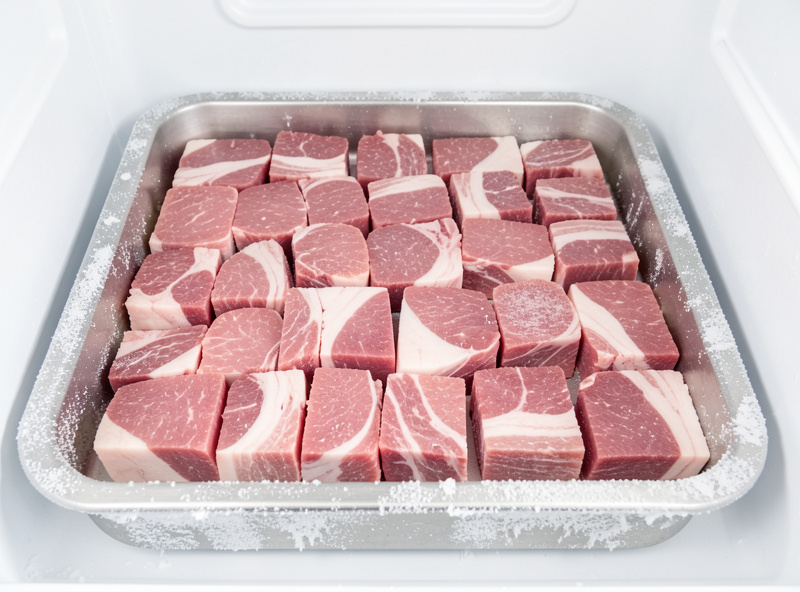
While the meat firms up, put the grinder auger, plates, and knife in the freezer too, and chill your mixing bowl. Cold steel keeps the fat from warming as it passes through. This is the same cold discipline I bring to grinding meat for salami — the substrate is different but the physics are identical: warm fat smears, cold fat shears.
Step 2: Grind Cold and Fast
Fit a coarse plate — 8 to 10 mm — and grind the chilled meat straight into the cold bowl in one steady pass. Do not force it; let the auger pull the meat through. A good grind comes out as distinct, separate strands with the fat still visible as flecks rather than a pale paste smeared through the lean.
If you want a finer breakfast-style texture, grind once through the coarse plate, return the meat to the freezer for 15 minutes, then grind a second time through a 4.5 mm plate. The moment the grind looks smeary or the fat goes greasy, stop and re-chill everything for 20 minutes — a smear cannot be mixed out, you simply taste it in the finished sausage.
Step 3: Season and Mix to the Bind
Weigh your ground meat, then weigh the salt at 1.7% of that weight — 17 grams per kilogram — and add your seasoning. Pour in 30–60 ml of ice water per kilogram. Now mix, by hand or on a stand mixer’s low speed, until the meat turns visibly tacky and clings to your hand in a sheet. This usually takes 1 to 3 minutes.
That stickiness is myosin, the protein the salt pulls out of the cold meat, and it is what binds loose grind into a cohesive sausage that holds a slice. Under-mix and the sausage crumbles; the fix is simply more mixing. Use non-iodized salt — kosher or fine sea salt — weighed, never measured by spoon, because flake size makes a teaspoon of one salt weigh nearly double another.
Step 4: The Fry Test (Never Skip This)
Before you stuff a single link, pinch off a small patty, cook it through in a pan, and taste it. This is the only moment you can still correct the seasoning, and it takes two minutes. Too bland is the usual verdict, and the cause is almost always salt rather than spice — under-salted meat tastes flat no matter how much pepper you add.
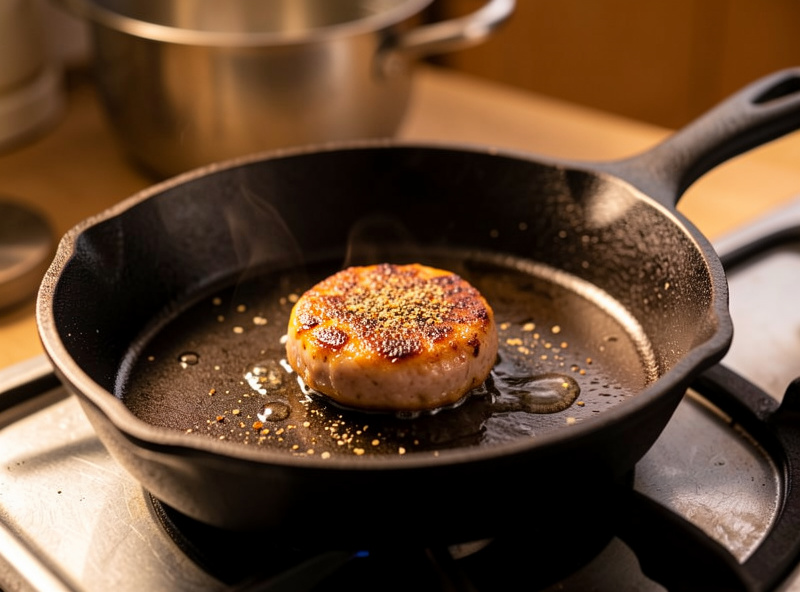
If it needs more salt, add it in 0.2% steps (2 g/kg), mix briefly, and re-test. Keep the bulk meat in the fridge while the test patty cooks; warm meat sitting on the counter between grinding and stuffing is the most common rookie slip. Write down the percentage that tasted right so your next batch starts from data, not memory.
Step 5: Stuff Into Casings (or Make Patties)
If you are skipping casings, you are already done — shape the seasoned meat into patties or keep it as loose bulk and cook it. To make links, soak natural hog casings in warm water for 30 minutes, flush water through them to find holes, and slide the whole length onto the stuffer horn before you start.
Fill at a steady pace, supporting the emerging rope, and do not pack the casing drum-tight — an overstuffed link bursts when you twist it. Twist into links every 12–15 cm, alternating direction each time so they do not unwind. The full method, including clearing air pockets and preventing blowouts, is in my sausage stuffer guide, and the choice between casing types is covered in the casing guide.
Step 6: Cook Now or Store Safely
Fresh sausage is raw ground meat. Cook it to an internal 71 °C (160 °F) for pork and beef, or 74 °C (165 °F) for poultry, checked with an instant-read thermometer — doneness is a number, not a guess. Cook gently over medium heat so the casing does not split; a sausage rushed over high heat blows out and dries.
What you do not cook today, you store cold: uncooked fresh sausage keeps 2–3 days in the fridge, or freeze it the day you make it for up to about three months. Because fresh sausage is never cured and never lingers in the bacterial danger zone, it needs no nitrite — that is the dividing line between this and the fermented dry sausage world, where Cure #2 and a controlled pH drop are non-negotiable. For the broader picture of fat ratios, equipment, and recipes, start from the homemade sausage guide.
Frequently Asked Questions
How do you make fresh sausage step by step?
Cube and chill pork shoulder near-frozen, grind it cold through a coarse plate, mix in 1.7% salt and seasoning until tacky, fry-test a pinch to check seasoning, stuff into soaked casings or shape patties, then cook to 71 C. No curing salt is needed for fresh sausage.
Do you need curing salt for fresh sausage?
No. Fresh sausage you cook to 71 C and eat within a few days needs only regular non-iodized salt. Cure #1 is required only if you cold-smoke or low-temperature smoke the sausage, because then the meat sits in the bacterial danger zone for hours.
What pork should I use for homemade sausage?
Pork shoulder, also called Boston butt, is ideal because it arrives near the perfect 75/25 lean-to-fat ratio so you do not have to add fat back. Buy 1.5 to 2 kg for a first batch: enough to learn on, small enough that a mistake is cheap.
Why is keeping the meat cold so important?
Cold meat near 0 to 2 C shears cleanly through the grinder plate, while warm meat tears and smears the fat into a paste that blocks the protein bind and leaves a greasy texture. Freeze the meat 30 to 45 minutes and chill the grinder parts before you start.
Can I make fresh sausage without casings?
Yes. Shape the seasoned meat into patties or keep it as loose bulk and cook it straight away. Breakfast sausage in particular is often made as bulk with no casing, which makes it the easiest possible first batch.
Related Articles
- Homemade Sausage Guide: Fresh & Cooked From Scratch
- Best Meat Grinder for Sausage Making
- Sausage Stuffer Guide and Technique
- Breakfast Sausage Recipe and Method
- Sausage Casing Guide: Natural vs Collagen