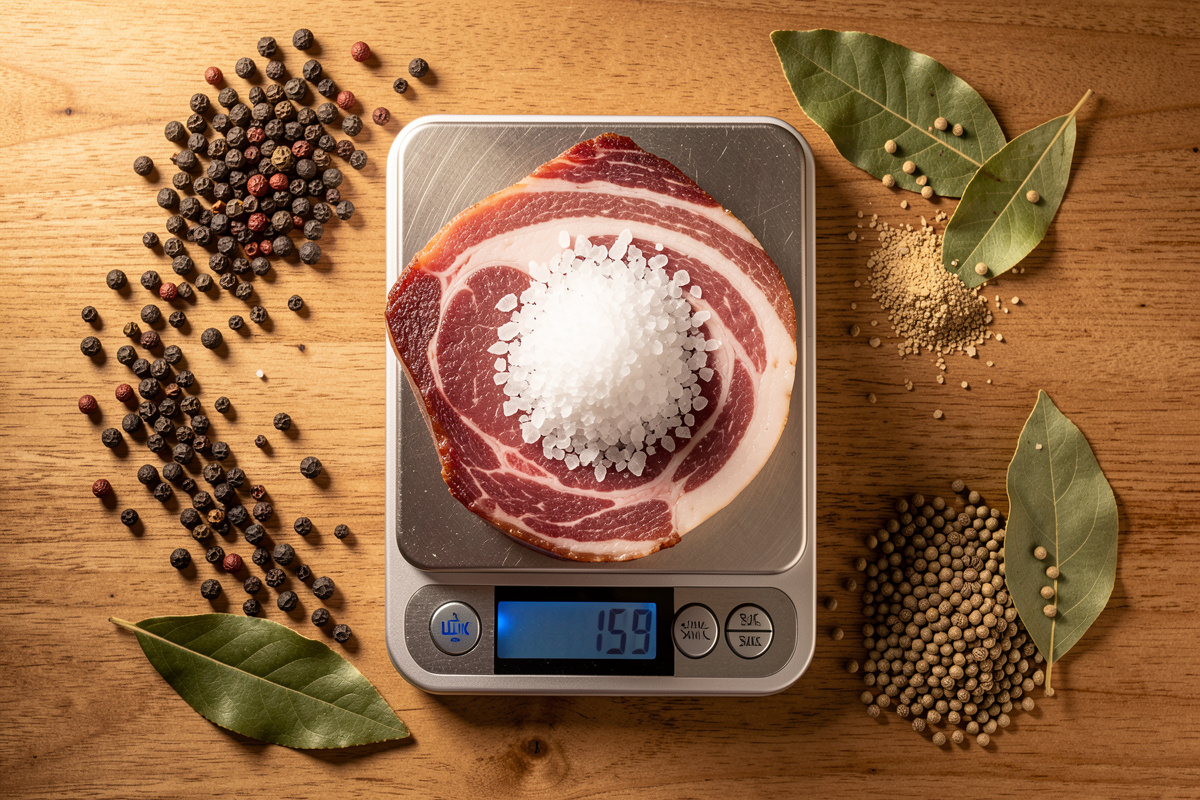

Salt and cure come first, smoke comes last. On every piece I cold smoke, the salt and the curing salt do the preservation work before the smoke ever touches it, and the spices are a flavour layer I build into the cure rather than dust on at the end. A standard equilibrium cure runs 2.5 to 3% salt by weight of the meat, plus 0.25% Cure #1 (which lands you at the USDA-target 156 ppm sodium nitrite), and the spices ride along inside that rub.
I get asked constantly whether you season before or after smoking, and how much salt a cold-smoked piece really needs. The short version: the salt is a safety hurdle, not a seasoning choice, so it gets weighed; the spices are where you get to play. Across the bacon, fish, and cheese I run through my converted-fridge chamber, the salt-and-spice stage is the part beginners most often get backwards, so here’s how I actually build it.
How Much Salt for Cold-Smoked Meat?
Use an equilibrium cure of 2.5 to 3% salt by the weight of the meat, plus 0.25% Cure #1 for anything that will be cold smoked and not fully cooked afterward. For a 1,000 g pork belly that’s 25 to 30 g of salt and 2.5 g of Cure #1.
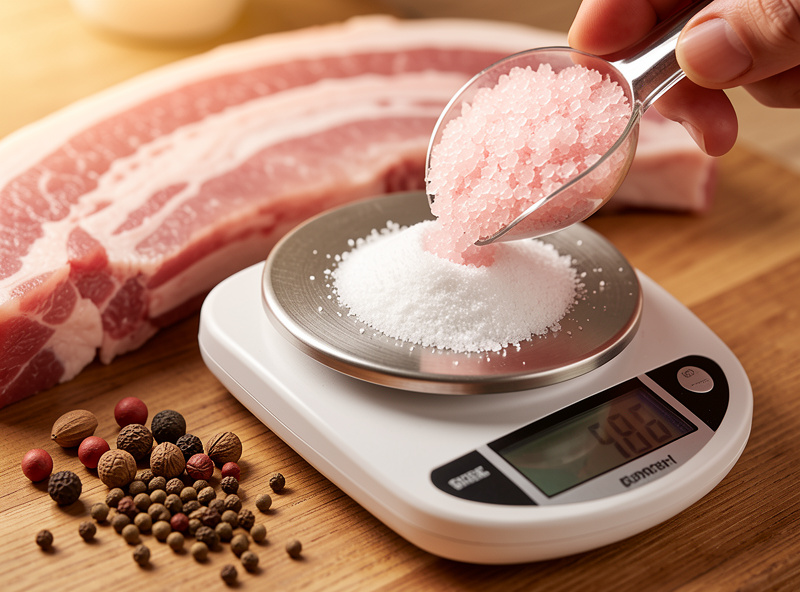
The reason I weigh rather than eyeball is that salt is doing two jobs at once: it seasons, and it drops the water activity to a level where spoilage and pathogenic bacteria can’t get going. Equilibrium curing — weighing the salt as a precise percentage and letting it fully absorb over days — means you can’t over-salt the way a salt-box cover cure can, and the result is consistent every time. Cure #1 supplies the nitrite that protects against Clostridium botulinum during the low-temperature smoke and any subsequent fridge time. For long-dried, fermented, or room-temperature-aged pieces you step up to Cure #2 instead, but for the bacon-and-fish cold-smoking most home smokers do, Cure #1 at 0.25% is the right call. Never substitute iodized table salt — the iodine and anti-caking agents interfere with both flavour and any fermentation step.
When to Add Spices: Before or After Smoking?
Add spices to the cure before smoking, not after. Whole or cracked spices mixed into the salt rub penetrate the meat over the days-long cure and survive the smoke; spices dusted on after smoking sit on the surface, taste raw, and fall off when you slice. The cure stage is the only point where flavour gets inside the piece.
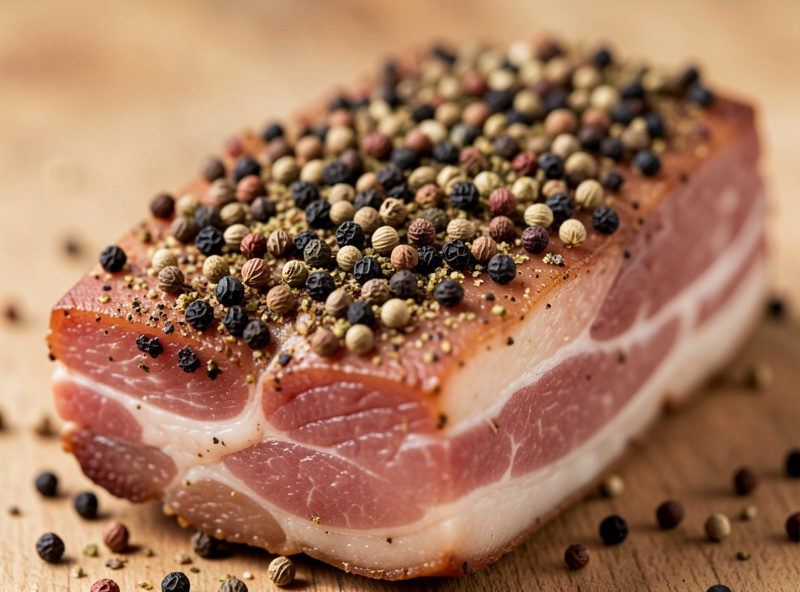
The exception is a finishing crust on something like a pastrami-style cut or a peppered bacon, where you want a visible, texturally distinct coat — there, I press cracked pepper and coriander onto the surface after the cure has equalised but before the smoke, so it bonds during smoking rather than after. For cold-smoked fish, I keep the spicing restrained because smoke and salt are already assertive; a little dill, white pepper, and a touch of sugar in the cure is usually all a side of salmon needs. The mistake I see most is treating cold smoking like grilling and reaching for a shaker of finishing salt at the end — by then the piece is already cured to its target and adding surface salt just makes it harsh.
Best Spices for Cold-Smoked Bacon, Fish, and Cheese
Match the spice to the product and the wood. Bacon takes assertive, sweet-savoury spicing — black pepper, juniper, maple, garlic; fish wants restraint — dill, white pepper, a little sugar; cheese is best smoked bare and seasoned, if at all, only after smoking since it isn’t cured.
I grow several of my own curing spices — juniper, coriander, fennel, and bay — so I’m partial to whole, freshly cracked spice in the rub rather than pre-ground, which goes flat fast. Juniper berries are the one I’d never skip on a winter bacon: crushed into the cure, they give a resinous, gin-like note that pairs beautifully with beech or oak smoke. For fermented or aged pieces the spice also has to play nicely with the culture, but for straightforward cold-smoked bacon and fish you have a free hand. The table below is how I pair them across the products I run most.
| Product | Cure salt | Spices in the rub | Wood pairing |
|---|---|---|---|
| Cold-smoked bacon | 2.5–3% salt + 0.25% Cure #1 | Black pepper, juniper, maple sugar, garlic | Beech, oak, hickory |
| Cold-smoked salmon | 3% salt + 0.25% Cure #1 | Dill, white pepper, light sugar | Alder, apple, beech |
| Pastrami-style cure | 2.5% salt + 0.25% Cure #1 | Coriander, cracked pepper crust, mustard seed | Oak, hickory |
| Cold-smoked cheese | None (not cured) | Season after smoking only, if at all | Apple, cherry, alder |
How to Build a Cure Rub Step by Step
Weigh the meat, calculate 2.5 to 3% salt and 0.25% Cure #1 against that weight, then mix the curing salts with your chosen cracked spices and sugar into a single dry rub. A kitchen scale accurate to 1 g is non-negotiable here — Cure #1 dosing is a safety number, not a taste preference.
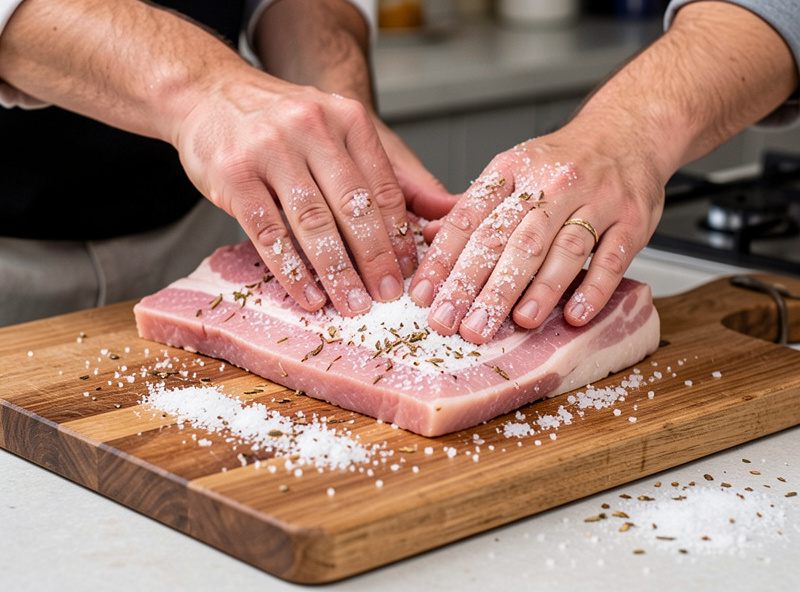
Rub the mix evenly over the whole piece, getting it into every fold, then vacuum seal or bag the piece and refrigerate. Cure time runs roughly one day per centimetre of thickness, so a typical bacon belly sits 5 to 7 days, flipped daily so the brine that forms redistributes. When the cure has equalised, rinse briefly, pat dry, and form a pellicle — leave it uncovered in the fridge overnight so the surface goes tacky and the smoke will actually adhere. Only then does it go to the chamber for the cold smoke, held under 30 C exactly as on a piece without spices. The spices change the flavour, never the safety numbers — the salt and Cure #1 percentages stay the same regardless of what else is in the rub.
Common Salt and Spice Mistakes
The three mistakes that wreck a cold-smoked piece are under-salting below the safety threshold, skipping the pellicle so smoke won’t stick, and over-spicing fish until the smoke is lost. Each one is avoidable with a scale and a little restraint.
Under-salting is the dangerous one: if you guess the salt instead of weighing it, you can land below the water-activity hurdle a cold-smoked, not-fully-cooked piece relies on, and the low smoking temperature won’t save you. Skipping the pellicle is merely disappointing — the smoke beads off a wet surface and you get a pale, weakly flavoured result. Over-spicing is the rookie tell: a side of salmon buried under a heavy spice crust tastes of the crust, not the clean smoke-and-salt balance that makes cold-smoked fish worth the effort. Weigh the salt, respect the Cure #1 number, form the pellicle, and keep the spicing in proportion — get those four right and the smoke does the rest.
A fourth mistake catches people who do weigh correctly: cutting the cure time short. Equilibrium curing only works once the salt has fully migrated through the piece, which takes roughly a day per centimetre of thickness. Pull a thick belly after two days because the surface looks cured and the centre is still under-salted, exactly where you do not want a weak spot in a piece destined for low-temperature smoke. I set a reminder for the calculated cure end date and never rush it; the whole advantage of weighing the salt as a percentage is lost if you do not give it the days it needs to equalise. Patience at the cure stage is what makes the precise numbers actually mean something on the plate.
Frequently Asked Questions
Do you salt before or after cold smoking?
Salt before, always. The cure does the preservation work over a days-long equilibrium cure before smoking. Salt added after smoking only sits on the surface, tastes harsh, and does nothing for safety. Smoke is the last step, not the seasoning step.
How much salt do you use for cold smoking?
Use an equilibrium cure of 2.5 to 3% salt by the weight of the meat, plus 0.25% Cure #1 for low-temperature smoked pieces. For a 1,000 g belly that is 25 to 30 g salt and 2.5 g Cure #1, weighed on a gram scale.
What spices go best with cold-smoked bacon?
Black pepper, juniper, maple sugar, and garlic suit cold-smoked bacon, paired with beech, oak, or hickory smoke. Crushed juniper in the cure gives a resinous note that works especially well with a winter bacon.
Should you add spices to the cure or after smoking?
Add whole or cracked spices to the dry cure so they penetrate during the days-long equilibrium cure. Spices dusted on after smoking stay on the surface, taste raw, and fall off when slicing. Only a finishing crust goes on after the cure but before the smoke.
Can you use table salt for cold smoking cures?
No. Iodized table salt and its anti-caking agents interfere with flavour and any fermentation step. Use pure non-iodized salt for the cure, weighed as a percentage of the meat, alongside the correct Cure #1 dose.
Do spices change the cure safety numbers?
No. Spices are a flavour layer only. The salt percentage (2.5 to 3%) and the Cure #1 dose (0.25%, giving 156 ppm nitrite) stay identical regardless of what spices you add. Weigh the curing salts independently of the seasoning.
Related Guides
- Cold Smoking at Home: The Complete Guide
- Best Wood for Cold Smoking: Cheese, Bacon, and Fish
- Cold Smoke vs Hot Smoke Bacon: What Is the Difference?
- Cold Smoking Fish at Home: Safety and Method
- How to Calculate Salt Percentage for Equilibrium Curing
- Growing Your Own Curing Spices