
Cured Meat Headache and Nitrates: What the Research Actually Says
June 17, 2026

If you have ever pulled a slice of salami off the board, eaten three rounds with cheese, and felt a dull throb start behind one eye twenty minutes later, you have probably wondered the same thing I did the first time it happened in my kitchen: is it the nitrates? It is one of the most common questions I get from people who cure their own meat or simply love good charcuterie, and it deserves a careful, honest answer rather than a scary headline. I run converted-fridge curing chambers in Sweden, I dose the cure on every batch by gram scale, and I have read the research on this more times than is probably healthy — so let me walk through what the science actually reports, and where it stops.
The honest framing up front, before anything else.
Research describes a real, well-documented headache that some susceptible people get after nitrite-containing foods, and a separate amine-driven reaction in fermented and aged products — but headaches are individual and medical. This article reports what studies say; it is not medical advice, and if cured meat reliably gives you headaches, the right move is to talk to a doctor, not a curing blog.
The documented “hot dog headache” and the nitric-oxide pathway
The phrase is not folklore. Headache researchers have studied nitrite and the broader family of nitric-oxide donors for decades, and a peer-reviewed review in The Journal of Headache and Pain describes the mechanism in detail: nitrite can be reduced toward nitric oxide, a potent vasodilator, which relaxes and widens blood vessels and can trigger an immediate headache through the NO–cGMP pathway (Olesen, J. Headache Pain, via PMC).
What stands out in that literature is individual variability. The same review reports that delayed migraine-type attacks after NO donors involve calcitonin gene-related peptide and glutamate, and that people with a personal or family migraine history are far more likely to react than healthy controls. In other words, research describes this as a susceptible-person response, not a universal one — which lines up with the everyday observation that one person at the table gets the throb and three others eat the same salami with no trouble at all.
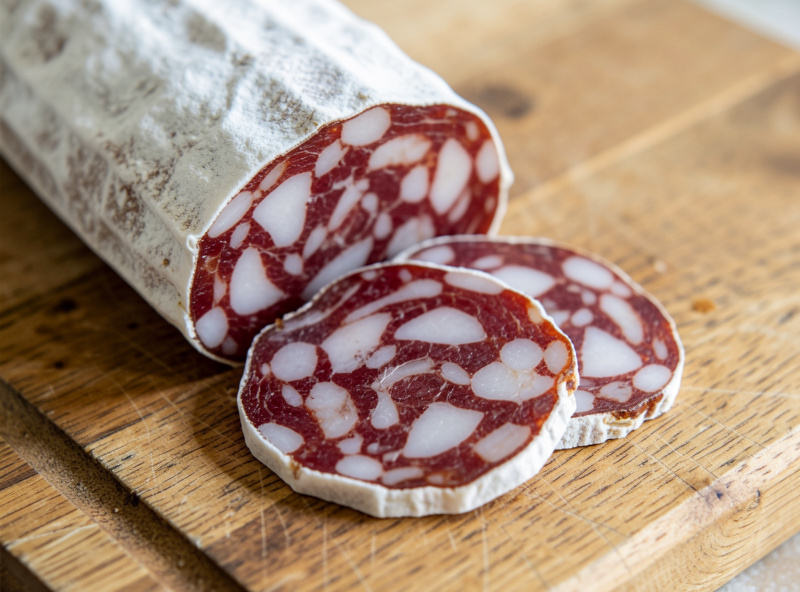
The other suspect: histamine, tyramine and biogenic amines
Here is the part most “is it the nitrates?” articles miss, and it matters for anyone eating dry-cured salami specifically. Fermented and long-aged foods accumulate biogenic amines — chiefly histamine and tyramine — produced as bacteria and enzymes break down amino acids during the ferment and the months of drying. A review of biogenic amines in meat and meat products notes that tyramine reactions are characterized by headache, palpitations, nausea and a rise in blood pressure (Biogenic Amines in Meat and Meat Products review, PMC).
A broader review of biogenic amines across fermented foods reports the same picture and adds that individual sensitivity varies widely, influenced by things like the body’s amine-clearing enzymes and the use of medications that inhibit them (Heliyon review of biogenic amines in fermented foods, PMC). This is why a long-fermented soppressata might bother someone who is fine with a freshly cooked, nitrite-cured hot dog — two different mechanisms, two different culprits, and they can overlap on the same charcuterie board.
Possible headache triggers in cured and fermented meat
I find it clearer to lay the suspects side by side. Every cell below reports what the research describes, not a claim about you specifically — your reaction is individual and is a question for a clinician.
| Suspected trigger | Mechanism research describes | What the home curer can actually control |
|---|---|---|
| Nitrite / nitric oxide | Nitrite reduced toward nitric oxide, a vasodilator, linked to headache in susceptible individuals (Olesen review). | Dose cure precisely; never exceed the regulated ingoing maximum; do not “eyeball” curing salt. |
| Histamine | Builds during fermentation/aging; high levels associated with headache-type reactions in sensitive people (PMC reviews). | Clean fermentation hygiene, reliable starter culture, controlled temperature, fresh ingredients. |
| Tyramine | Vasoactive amine in aged foods; reported reactions include headache and blood-pressure rise, notably with certain medications (PMC review). | Limit over-long uncontrolled aging; eat product fresh; store properly to slow amine buildup. |
| “Uncured” / celery-powder products | Still contain nitrate/nitrite from a vegetable source; chemically similar to added nitrite (McGill OSS). | Read this as: switching to “uncured” is not a guaranteed headache fix — it is not nitrate-free. |
Why “uncured” and “no nitrate added” is not the fix it sounds like
This is where my curing-craft side and the headache question actually meet. People who suspect nitrites often reach for packages labeled “uncured” or “no nitrate added,” assuming they have removed the variable. The chemistry says otherwise. Those products are typically cured with celery juice or celery powder, which is naturally rich in nitrate that fermentation converts to nitrite — the same active compound, arriving by a different route.
Research and food-science explainers are blunt about this: nitrite from celery powder is chemically essentially the same as added sodium nitrite, and “uncured” products still carry nitrate and residual nitrite. So if a headache is genuinely nitrite-driven for you, an “uncured” label is not a reliable escape — and confirming that is a conversation for your doctor, not a label.
Two sources lay this out clearly: McGill University’s Office for Science and Society on whether celery juice is a real alternative to nitrites (McGill OSS), and the American Institute for Cancer Research on celery-powder curing (AICR). On that last point, I’ll be neutral: there is a separate and active body of research on nitrosamines and long-term cancer risk from processed meat, the labeling does not change the underlying chemistry, and I am not going to translate that research into an alarm or a reassurance — it is a real topic, reported here without a verdict.
What I can actually control in the chamber — and what I can’t
When someone asks me whether home-curing lets you “avoid the headache,” I separate the two honestly. There is craft I genuinely control, and there is a personal medical response I do not.
On the craft side, the big lever is dosing the cure correctly — never more. The U.S. regulatory framework caps how much nitrite may be used, and FSIS documents an ingoing maximum on the order of 156 ppm of sodium nitrite for comminuted products like sausage, within the limits set out in the federal regulation on permitted uses (eCFR 9 CFR 424.22). The practical translation in my chamber: I weigh cure #1 or cure #2 on a gram scale against the meat weight, I follow the established rate (roughly 2.5 g of cure per kg lands near that 156 ppm figure), and I never round up “to be safe.” More nitrite is not safer — it is the opposite of safe.
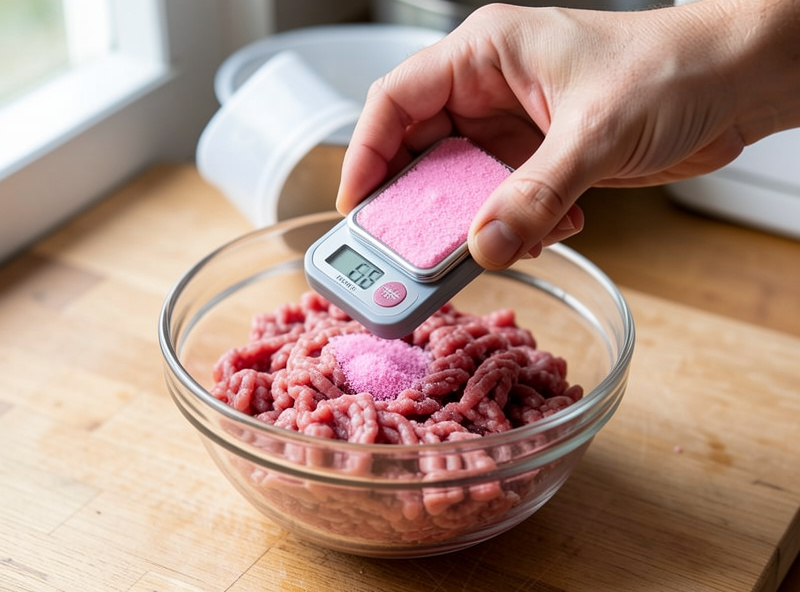
The biogenic-amine side I influence but cannot zero out. Good fermentation hygiene, a reliable starter culture to drive a clean predictable pH drop instead of letting whatever is in the air take over, controlled fermentation temperature, fresh meat, and eating the product reasonably fresh rather than letting it over-age all push amine levels lower. That is genuine control over my product. It is not control over your physiology — and that distinction is the whole point of this article.
Keep the safety question and the headache question separate
The takeaway I want to leave you with is that two things are true at once, and conflating them is where people go wrong. Using cure #2 correctly on a fermented or long-dried sausage is about safety — specifically preventing Clostridium botulinum over a long, low-oxygen cure — and it is correct, non-negotiable practice. That is not up for debate in my chamber. The headache question is a separate, personal, medical matter about how a given individual responds to nitrite and to biogenic amines.
So I do not dose differently to chase someone’s headache, because under-curing a long dry-cure to avoid nitrite would trade a manageable, individual headache question for a genuine botulism risk — a terrible bargain. If cured or fermented meat reliably triggers headaches for you, the research gives you good vocabulary to bring to the conversation, but the conversation belongs with a doctor who knows your history. That is the honest answer, and it is the only one I am qualified to give.
Do nitrates in cured meat cause headaches?
Research describes nitrite being reduced toward nitric oxide, a vasodilator linked to headache in some susceptible people, but it is not universal and reactions vary by individual. Whether it applies to you is a medical question for your doctor.
What is a hot dog headache?
It is the common name for a headache some people get after nitrite-containing foods. Peer-reviewed reviews tie it to nitric-oxide-driven vasodilation, with people who have a migraine history more likely to react. If it happens to you repeatedly, see a doctor.
Is it the nitrates or the amines in salami?
Research describes both as possible: nitrite via the nitric-oxide pathway, and biogenic amines like histamine and tyramine that build during fermentation and aging. Dry-cured salami can carry both, and individual sensitivity differs, so a clinician is the right person to sort out your case.
Will switching to uncured or nitrate-free meat help?
Not reliably. Food-science sources report that uncured products are typically cured with celery powder, which supplies naturally occurring nitrate that converts to nitrite, chemically much like added nitrite. Uncured is not nitrate-free, so discuss any real sensitivity with a doctor.
Does curing meat at home let me avoid headache triggers?
You control craft, not physiology. Dosing cure precisely within the regulated maximum, good fermentation hygiene, a reliable starter culture, and eating product fresh can lower amine buildup, but none of that guarantees how your body responds. That remains a medical question.
Should I skip cure number two to reduce nitrites?
No. Cure #2 on fermented or long-dried sausage is a safety measure against botulism over a long low-oxygen cure, and skipping it is dangerous. The headache concern is a separate, personal, medical question to raise with a doctor rather than a reason to under-cure.
Related Reading
- Curing chamber troubleshooting: the master guide — humidity, mold, and the chamber faults that decide a cure.
- How I make salami at home — the full fermented-then-dried workflow, cure #2 included.
- Salami starter culture guide — why a reliable culture drives a clean, predictable ferment.
- Salami fermentation and pH — the acid drop that secures the sausage, and why amines track with the ferment.
- Best beef cuts for dry-aging — for whole-muscle work where cure choice and freshness still matter.