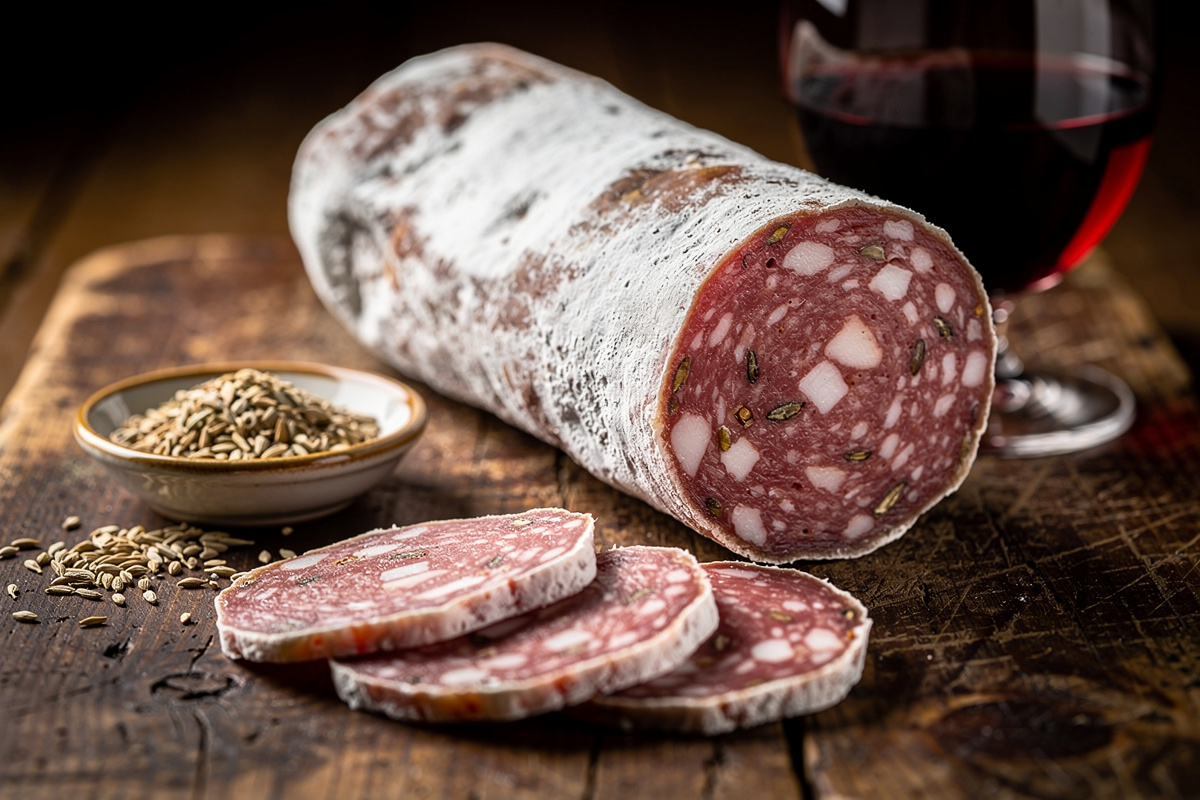

Finocchiona is a Tuscan dry salami flavoured with fennel — whole seed, often fennel pollen, and usually a splash of red wine. It uses a medium grind, the standard salami safety chemistry (salt, Cure #2, a starter culture and dextrose), a 48-hour ferment to drop the pH, and four to eight weeks of drying to a 30-35% weight loss. The fennel is what makes it unmistakable.
The name comes from finocchio, the Italian word for fennel, and the spice is the entire identity of the salami: warm, anise-sweet, herbaceous, cutting the richness of the pork. It is one of my favourite salami to make because the aromatics develop beautifully over a long cure — the fennel mellows and rounds as the meat dries, and the finished slice is fragrant in a way a peppered salami never is.
This is the finocchiona I build, with the ratios that keep it safe and the chamber conditions that dry it evenly. The shared techniques live in their own guides — the grinding guide, the casing guide, the starter culture guide, and the home salami making hub — so here I focus on the fennel, the grind, and how this salami differs from a Genoa or a soppressata.
The Fennel: Seed, Pollen, and Wine
Fennel is the defining flavour, and there are two forms worth using: whole fennel seed for texture and bursts of anise, and fennel pollen for a finer, more perfumed sweetness. A typical dose is 4-6 g of fennel seed per kilo, with an optional 1-2 g of fennel pollen if you have it. I lightly toast the seed and crack some of it to release the aromatic oils, leaving the rest whole for the visual fleck and the pops of flavour in the slice.
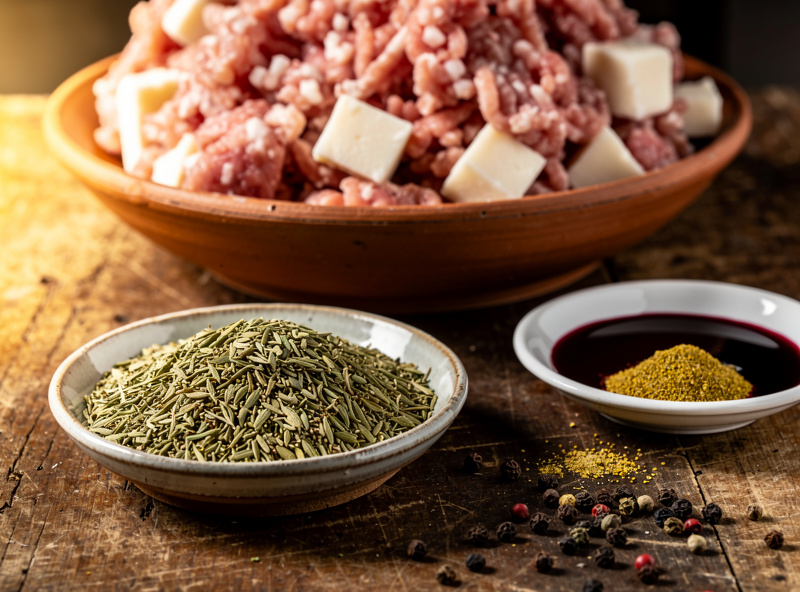
A splash of dry red wine — around 20-30 ml per kilo — is traditional and does real work: it carries the fat-soluble fennel aromatics, adds a faint acidity, and rounds the flavour. Some recipes add a little garlic and black pepper as a background note, but restraint matters here; finocchiona should read as fennel first. I keep the spicing simple so the fennel and the clean pork carry the salami, and I add the wine cold at the mixing stage so it does not warm the meat. Toasting the seed is the one step beginners skip — it is what turns a flat, dusty fennel note into a fragrant, sweet one.
Ingredients and Ratios
Like every dry salami, finocchiona is built on weighed percentages of meat, not volume, because the salt and cure must be exact. The base is 70-75% lean pork to 25-30% firm back fat, salted at 2.8%, with Cure #2 at 0.25% and dextrose at 0.5%. The fennel and wine are the flavour layer on top of that safety-critical base.
| Ingredient | Amount (per 1 kg meat+fat) | Percentage | Role |
|---|---|---|---|
| Pork shoulder (lean) | 700-750 g | 70-75% | Structure and flavour |
| Firm pork back fat | 250-300 g | 25-30% | Texture and richness |
| Salt | 28 g | 2.8% | Cure, bind, safety |
| Cure #2 (Prague Powder #2) | 2.5 g | 0.25% | Nitrite/nitrate — botulism & color |
| Dextrose | 5 g | 0.5% | Fuel for the ferment |
| Fennel seed (toasted) | 4-6 g | 0.4-0.6% | Signature flavour |
| Fennel pollen (optional) | 1-2 g | ~0.15% | Perfumed sweetness |
| Dry red wine | 20-30 ml | — | Carries aromatics, rounds flavour |
| Starter culture | per packet dose | — | Controlled pH drop |
The Cure #2 row is the one that keeps the salami safe. At 0.25% it provides about 156 ppm in-going nitrite, the established maximum for fermented sausage, guarding against Clostridium botulinum through the warm ferment and the long dry. Finocchiona hangs well past three weeks, so this is firmly in Cure #2 territory — Cure #1 and any “no-nitrate” approach are not safe for a salami dried this long.
Grind, Mix, and Stuff
Finocchiona is traditionally a medium grind — finer than a chunky soppressata but not a paste — so a 6mm plate (or a coarse-then-medium double grind) gives the right texture. Keep everything near-frozen so the fat stays in clean flecks. Mix the cold ground meat with the salt, cure, dextrose, toasted fennel, wine, and rehydrated culture until it binds and turns tacky, then stuff firmly.
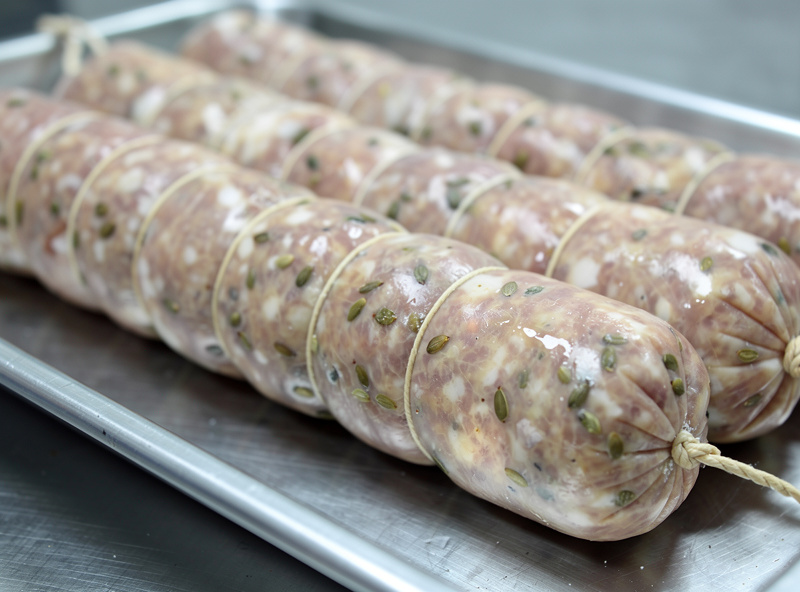
Beef middles (45-60mm) give the classic wide finocchiona you slice for a board, and the larger format suits the long, mellowing cure the fennel benefits from; hog casings make a slimmer, faster version. Stuff firm, prick out air pockets, and tie the ends. Larger pieces reward patience — the fennel deepens over weeks — but they also demand steadier humidity to avoid case-hardening, so match the casing to how well your chamber holds the band.
Ferment, Then Dry
Ferment the stuffed finocchiona at 24-26°C and high humidity for 48 hours to drop the pH to 5.0 or below — the critical safety window where the culture acidifies the meat and locks out pathogens. Then move it to the curing window: 12-15°C and 75-80% RH with gentle intermittent airflow. Dry until the salami loses 30-35% of its stuffed weight, typically 5-8 weeks for a beef-middle finocchiona.
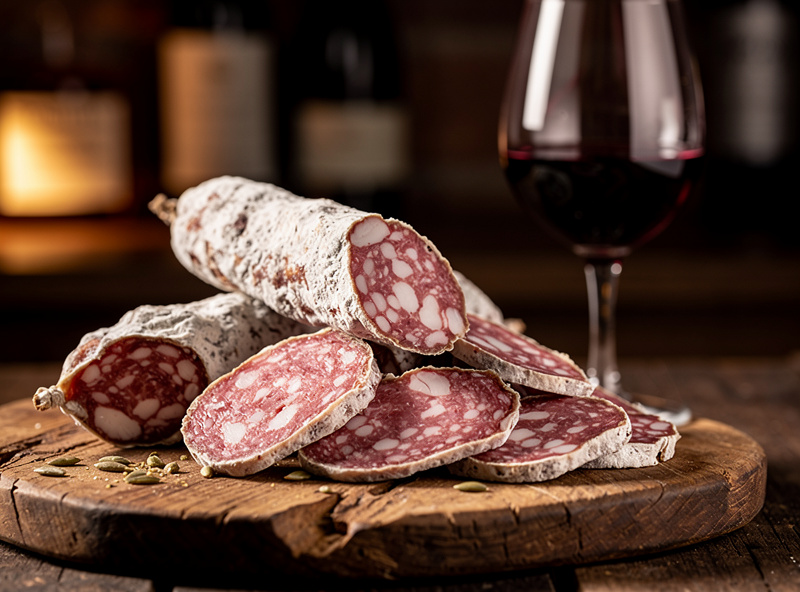
Weigh each piece at stuffing, tag the target weight, and weigh weekly — weight loss is the doneness signal, not the calendar. A white Penicillium bloom is welcome; black or green fuzz is not. Hold humidity at the top of the band for the first week so the surface does not seal ahead of the core, and the salami dries evenly into a firm, fragrant slice. The fennel aroma you get when you first cut into a properly aged finocchiona is the payoff for the wait.
Finocchiona is finished when it hits 30-35% weight loss and feels firm through to the core with no soft spots — the point where acid, salt, and reduced water activity (below aw 0.92) make it shelf-stable. I let mine rest a few extra days after reaching target weight, because the fennel keeps rounding and the texture settles. Slice it thin against the grain; the wide cross-section and the fragrant fennel are why this salami belongs on a board on its own. Store the cut piece wrapped in the fridge, or vacuum-seal what you will not eat within a week or two to hold the aroma.
Finocchiona vs Genoa vs Soppressata
These three classic salami share the same safety method but differ in grind and seasoning, which is the whole point of learning them as a set. Finocchiona is the fennel-and-wine Tuscan; Genoa is the wine-and-pepper, sometimes garlic, northern style; soppressata is the coarse, pepper-forward southern one, made hot or sweet.
| Salami | Grind | Signature seasoning | Character |
|---|---|---|---|
| Finocchiona | Medium (6mm) | Fennel seed + pollen, red wine | Aromatic, anise-sweet |
| Genoa | Medium | Black pepper, red wine, garlic | Balanced, winey |
| Soppressata | Coarse (8-10mm) | Black & red pepper | Rustic, bold, hot or sweet |
If you want to make all three, the workflow is identical from grind to hang — only the plate and the spice change. The detailed northern build is on the Genoa salami guide and the coarse southern one on the soppressata recipe; finocchiona is the fennel member of the family.
Disclosure: CuringChamber is reader-supported. As an Amazon Associate I earn from qualifying purchases made through links in this article, at no extra cost to you. I only point to gear I actually use or would buy for my own chamber.
For a finocchiona batch the buys that matter are good whole fennel seed (and fennel pollen if you can find it) for the defining flavour, a vertical sausage stuffer for clean filling, and a starter culture and Cure #2 kit to cover the ferment and the safety chemistry.
Frequently Asked Questions
What is finocchiona salami?
Finocchiona is a Tuscan dry-cured salami flavoured with fennel seed and often fennel pollen, usually with a splash of red wine. Its name comes from finocchio, the Italian word for fennel. It uses a medium grind and the standard ferment-then-dry salami method.
How much fennel goes into finocchiona?
A typical dose is 4-6 grams of toasted fennel seed per kilogram of meat, with an optional 1-2 grams of fennel pollen for extra perfume. Toast and partly crack the seed to release its aromatic oils, leaving some whole for texture and visible flecks.
Do I need Cure #2 for finocchiona?
Yes. Finocchiona dries for four to eight weeks, far longer than three weeks, so it needs Cure #2 at 0.25 percent of meat weight, about 156 ppm nitrite, to protect against Clostridium botulinum. Cure #1 and no-nitrate methods are not safe for a salami dried this long.
What grind size is best for finocchiona?
A medium grind, around a 6mm plate, or a coarse-then-medium double grind. Finocchiona is finer than a chunky soppressata but not a smooth paste. Keep the meat near-frozen so the fat stays in clean flecks rather than smearing.
How long does finocchiona take to cure?
To a finished 30-35 percent weight loss, a wide beef-middle finocchiona takes about 5-8 weeks; a slimmer hog-casing version is faster. Ferment 48 hours at 24-26 degrees Celsius first, then dry at 12-15 degrees and 75-80 percent humidity. Weigh weekly.
Why add red wine to finocchiona?
Dry red wine, about 20-30 ml per kilo, carries the fat-soluble fennel aromatics through the meat, adds a faint acidity, and rounds the flavour. Add it cold at the mixing stage so it does not warm the meat and risk fat smear.
What is the difference between finocchiona and Genoa salami?
Both are medium-grind, wine-laced dry salami, but finocchiona is defined by fennel seed and pollen for an anise-sweet aroma, while Genoa leads with black pepper and sometimes garlic. The safety method and curing process are identical; only the seasoning differs.