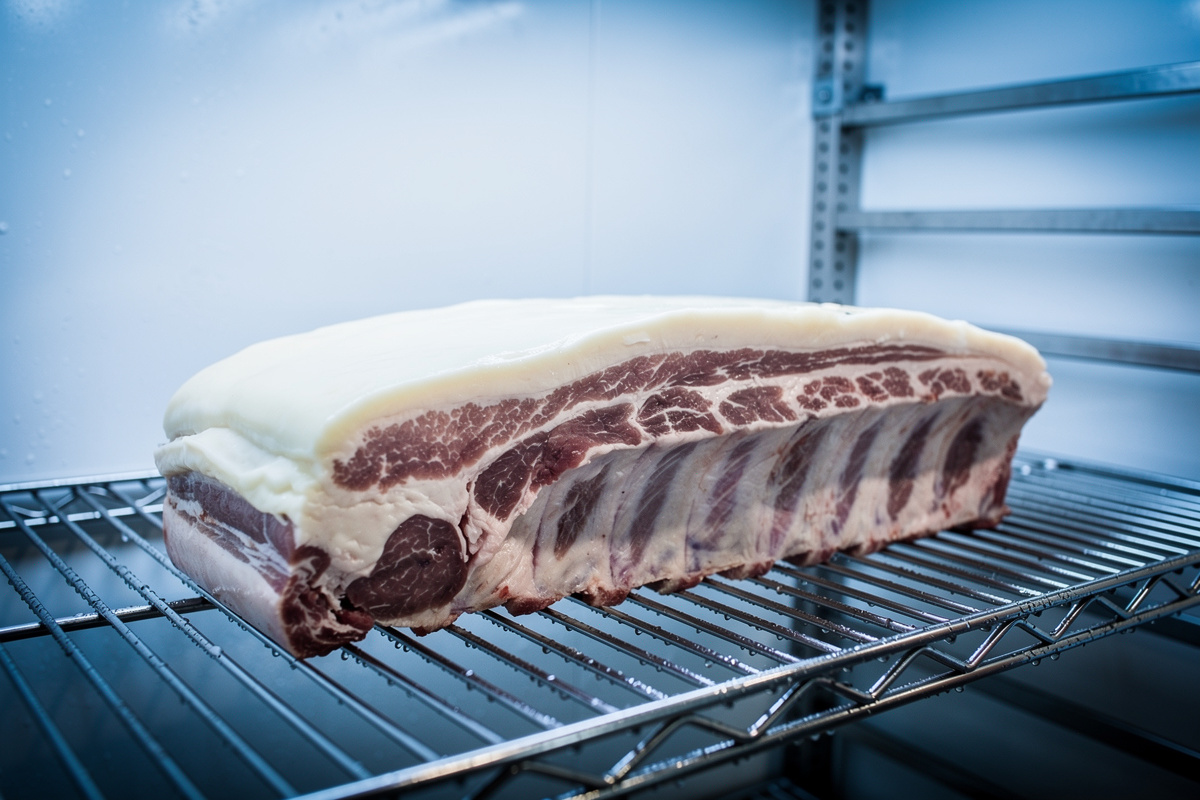

You can dry age pork at home, but treat it nothing like beef: keep it short — about one to two weeks maximum — on bone-in, well-fatted cuts held at 33-40°F (1-4°C), because pork fat turns rancid far faster than beef fat. For anything longer, the safe path is curing with cure #2, not dry aging. And always cook dry-aged pork to 145°F with a three-minute rest. The best dry aging bags I use for beef subprimals work for short pork ages too, but keep pork under two weeks.
This is the post where I have to be the safety adult, because dry-aging pork is where a lot of home cooks get into trouble by copying a beef workflow onto a meat that does not tolerate it. Here is exactly how far you can safely take it, which cuts work, and where the line is between a short pork dry-age and the curing that pork actually needs for the long haul.
Why Pork Is Not Beef
Pork fat is softer and far more prone to oxidation than beef fat, so it goes rancid in days where beef holds for weeks. That single difference caps how long you can dry-age pork in open air — about one to two weeks — before the fat develops off-flavors no trimming can fix. The flavor never reaches the deep funk of long-aged beef.
The enzymatic tenderizing that makes dry-aged beef magnificent does happen in pork too, but the limiting factor is the fat. Beef’s hard, stable fat survives a 45-day age; pork’s softer, more unsaturated fat starts to oxidize and turn rancid within days at refrigerator temperatures. Because that rancidity penetrates the meat rather than staying on a sacrificial bark, you cannot simply trim it away the way you do with beef. So a pork dry-age is a short, gentle process aimed at a little tenderness and mild flavor concentration — not the weeks-long transformation beef undergoes. If you want pork preserved and intensely flavored over months, that is charcuterie, and it requires curing salt, not open air. The two are different crafts that happen to share a chamber.
How to Dry Age Pork Safely
Hold the pork at 33-40°F (1-4°C) and roughly 75-85% relative humidity, target around 80%, for one to two weeks at most, on a rack in a clean, single-purpose space with gentle airflow. Watch the fat closely — any sharp, paint-like rancid smell means the age has gone too far and the cut should be discarded.
The climate envelope is the same as for beef: 33-40°F, around 80% RH, gentle air exchange with a fan never blowing directly on the meat, and drift held tight. What changes is the clock. Start checking by day five and plan to pull by day ten to fourteen. A controlled, contamination-protected environment matters even more than with beef because pork is less forgiving, which is why a sealed dry-aging bag is often the smarter route for pork than an open shelf — it limits oxidation and keeps the fridge’s other contents away from the meat. Source good pork from a reputable butcher; if trichinella is a concern with pork from unknown sources, the USDA freezing guidance for trichinae destruction (solid pieces no thicker than six inches frozen at 5°F for twenty days) addresses it before you ever start the age. Keep everything scrupulously clean, and when the smell, color, or fat looks or smells off, throw it out — the conservative call always wins with pork.
Best Pork Cuts for a Short Dry-Age
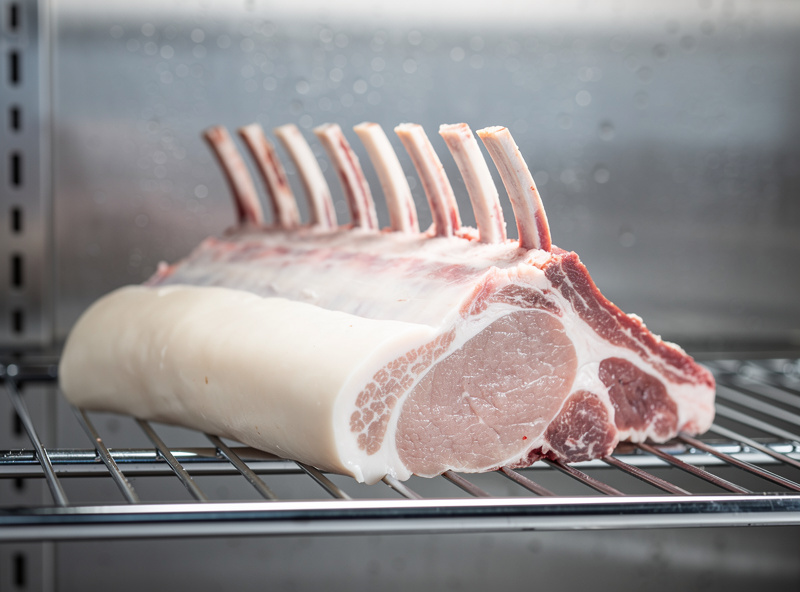
Bone-in, well-protected cuts dry-age best: a bone-in pork rack (rib roast), a bone-in loin, or thick bone-in chops. The bone and fat cap shield the meat, and the short age suits cuts you will roast or grill whole. Lean, thin, or skinless cuts are not worth aging — they dry and oxidize too fast.
A frenched pork rack is the showpiece cut here: the rib bones protect one whole face, the fat cap protects another, and a week to ten days of aging gives it a firmer texture and a slightly deeper, sweeter pork flavor. A bone-in loin behaves similarly. Thick bone-in chops can age in the same window if you keep them on a clean rack with airflow all around inside a dedicated aging refrigerator or a sealed bag. Skip pork belly and shoulder for dry-aging — belly’s place is bacon and pancetta, shoulder’s is coppa and sausage, and both of those are curing projects, not dry-age ones. The cut logic mirrors what makes beef cuts work, which I lay out in best beef cuts for dry aging: mass, fat protection, and a surface-to-volume ratio that survives the process.
Dry-Aging Pork vs Beef
The differences are stark enough that copying a beef routine onto pork is the core mistake. Here is how the two diverge on the variables that decide safety and results — read the pork column as a set of hard limits, not suggestions.
| Factor | Pork | Beef |
|---|---|---|
| Maximum dry-age duration | 1-2 weeks | 21-45+ days |
| Fat behavior | Oxidizes fast, turns rancid in days | Stable; survives long ages |
| Holding temperature | 33-40°F (1-4°C) | 33-40°F (1-4°C) |
| Safe cooking temperature | 145°F + 3-minute rest (required) | Medium-rare, cook to preference |
| Best cuts | Bone-in rack, loin, thick chops | Ribeye, striploin subprimals |
| Long-term preservation | Cure with cure #2 (charcuterie) | Freeze portioned steaks |
The two rows that matter most are duration and cooking temperature. Pork’s short ceiling is about rancidity, and its cooking requirement is about safety: unlike dry-aged beef, which you serve medium-rare, dry-aged pork must be cooked through.
Cook Dry-Aged Pork to 145°F
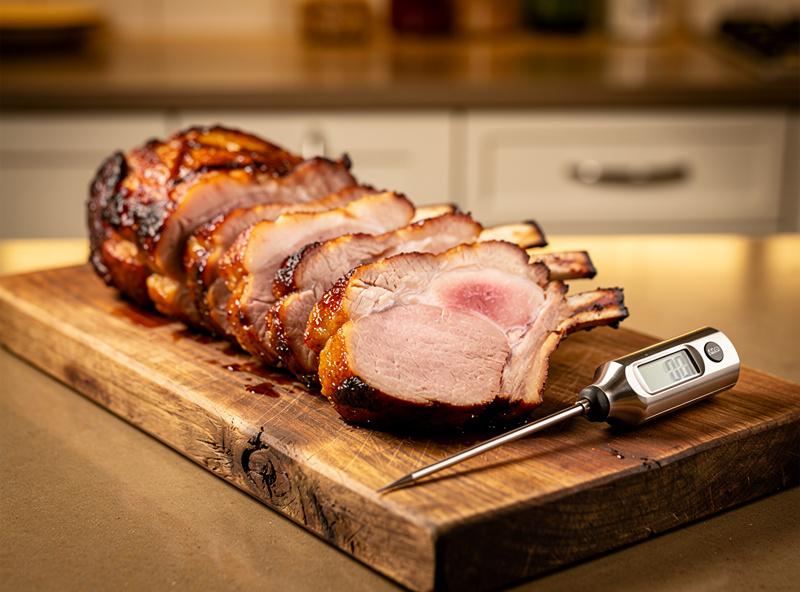
Dry-aged pork is still pork: cook it to a minimum internal temperature of 145°F (63°C) followed by a three-minute rest, per the USDA-FSIS safe minimum internal temperature chart. The short age does not make pork safe to serve rare the way dry-aging concentrates beef for a medium-rare sear. Use a thermometer and hit the number every time.
This is the non-negotiable safety line of the whole article. Aging changes texture and flavor; it does not change the fact that pork carries pathogens that proper cooking destroys. The USDA’s 145°F-plus-rest standard leaves the meat juicy and faintly pink at the center, which is perfectly safe and a long way from the gray, overcooked pork of decades past — but you confirm it with an instant-read meat thermometer, not by eye. A dry-aged pork rack roasted to 145°F and rested is genuinely excellent: firmer, sweeter, and more concentrated than a fresh one, without ever flirting with the undercooking that aged-beef habits might tempt you into.
As an Amazon Associate I earn from qualifying purchases.
When to Cure Instead of Dry-Age
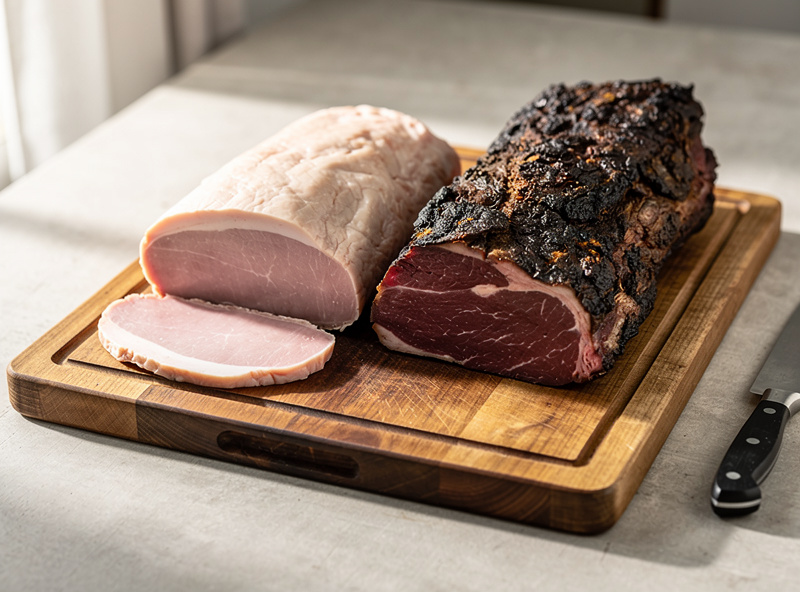
For anything beyond a two-week dry-age — months of preservation, deep flavor, sliceable charcuterie — pork must be cured with cure #2, never simply hung in air. Cure #2 (sodium nitrite plus nitrate) protects against botulism and other pathogens during the long, slow drop in water activity that curing requires. This is the real reason pork “ages” for months in Italy: it is cured, not dry-aged.
Pancetta, coppa, lonzino, guanciale, and dry-cured loin are all pork preserved over weeks to months, and every one of them depends on the correct curing salt for the method. Presenting a long, “natural, no-nitrate” hang of raw pork as a safe alternative is exactly the kind of dangerous shortcut this site refuses to publish — the botulism and listeria risk over a long, low-acid dry is real, and cure #2 is what controls it. If a short dry-age has whetted your appetite for the deeper stuff, the safe and rewarding next step is whole-muscle curing, which I cover in whole muscle charcuterie, with the salt-and-nitrite math in how to calculate salt percentage for equilibrium curing. The same chamber runs both; only the chemistry and the timeline change. For building that chamber, see how to build a curing chamber.
Frequently Asked Questions
Can you dry age pork at home?
Yes, but only for a short time — about one to two weeks — on bone-in, well-fatted cuts held at 33 to 40 degrees F. Pork fat oxidizes and turns rancid far faster than beef fat, so it cannot be aged for the long durations beef tolerates. For longer preservation, pork must be cured with cure #2 instead.
How long can you dry age pork?
One to two weeks at most in open air. Start checking the fat by day five and plan to pull by day ten to fourteen. Because pork fat goes rancid quickly and that rancidity penetrates the meat rather than staying on a trimmable bark, pushing past two weeks risks off-flavors no trimming can remove.
Why can’t pork be dry-aged as long as beef?
Pork fat is softer and more unsaturated, so it oxidizes and turns rancid within days at fridge temperatures, while beef’s hard fat survives weeks. The rancidity soaks into the meat instead of staying on a sacrificial bark, so you cannot trim it off. That caps a safe pork dry-age at roughly one to two weeks.
What temperature do you cook dry-aged pork to?
Cook dry-aged pork to a minimum internal temperature of 145 degrees F followed by a three-minute rest, per USDA guidance. Aging changes flavor and texture but not food safety — unlike dry-aged beef served medium-rare, dry-aged pork must be cooked through. Confirm the temperature with an instant-read thermometer.
What are the best cuts of pork to dry age?
Bone-in, well-protected cuts: a bone-in pork rack or rib roast, a bone-in loin, or thick bone-in chops. The bone and fat cap shield the meat during the short age. Skip belly and shoulder for dry-aging — those are curing cuts for bacon, pancetta, coppa, and sausage rather than dry-age projects.
Is it safe to dry age pork without curing salt?
Only for a short one-to-two-week dry-age that you then cook to 145 degrees F. For any long, months-long hang aimed at preservation or sliceable charcuterie, pork must be cured with cure #2 to control botulism and other pathogens. A long, no-nitrate raw hang is genuinely dangerous and should never be attempted.
What is the difference between dry-aging and curing pork?
Dry-aging is a short exposure to cold moving air for mild tenderness and flavor, after which you cook the pork through. Curing uses cure #2 and salt to safely preserve pork over weeks to months into pancetta, coppa, or lonzino. Dry-aging is brief and cooked; curing is long and made shelf-ready by chemistry.
Related Articles
- Dry Aging Beef at Home: The Complete Guide — the long-age process that pork specifically cannot follow.
- Whole Muscle Charcuterie: The Complete Guide — the cure #2 path for months-long pork preservation.
- How to Calculate Salt Percentage for Equilibrium Curing — the salt-and-nitrite math for curing pork safely.
- How to Build a Curing Chamber: The Complete Guide — the chamber that runs both dry-aging and curing.
- Best Beef Cuts for Dry Aging: Ribeye vs Striploin vs Sirloin — the cut logic that carries over to pork.