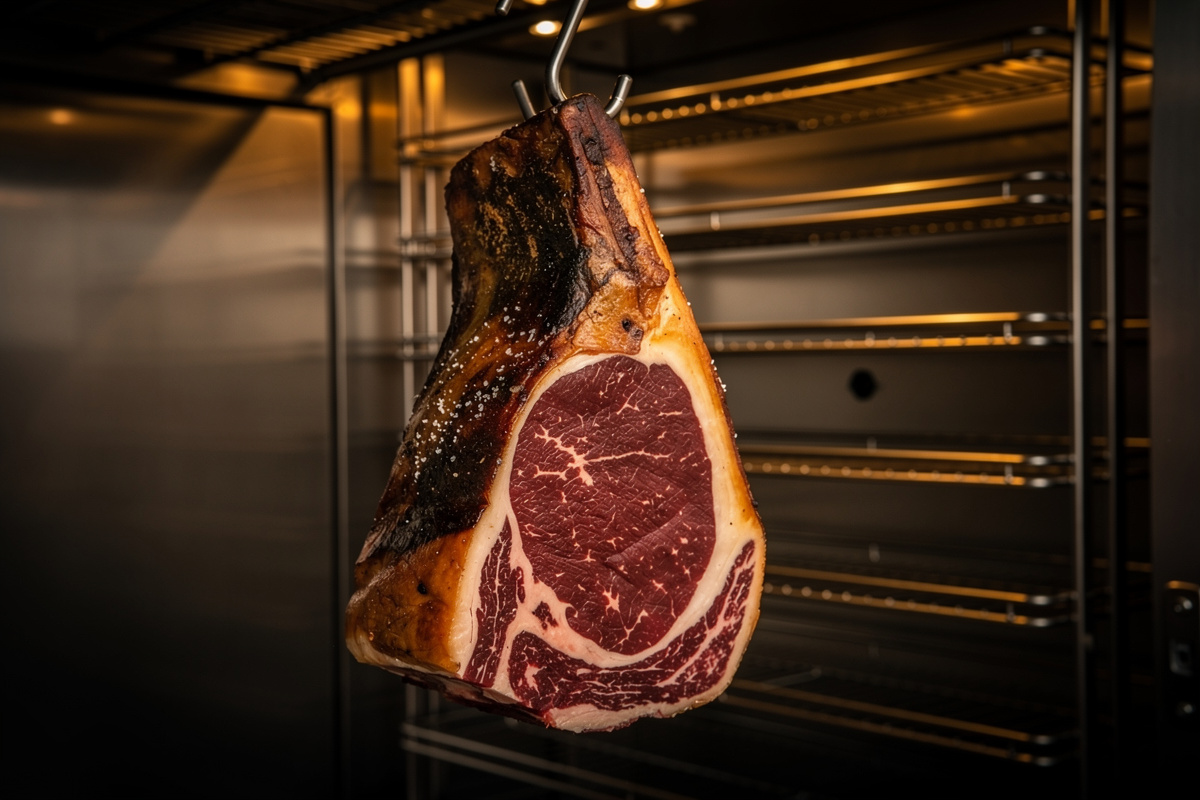

I run a 45-day dry-aged ribeye in my chamber every winter, and the daily 2-second smell check at the chamber door is the single most useful diagnostic in the whole process.
Healthy dry-aged beef smells nutty, slightly cheesy, and earthy — described by professional dry-aging operators as “blue cheese rind” or “browned butter” with a faint mushroom note. Dangerous spoilage smells fall into three categories: ammonia (proteolysis gone too far, ages 60+ days at high humidity), sulfur or rotten egg (anaerobic bacterial growth), and sour vinegar (acetic acid bacteria contamination). The decision is binary: nutty/cheesy = continue; ammonia/sulfur/sour = toss the affected area. The broader timeline, climate, and method choices that produce the smell profile you want are in dry aging beef at home: the complete guide.
The smell test is what every dry-aging operator does daily, before any visual inspection. Lean into the chamber, breathe deep through the nose for 2 to 3 seconds, and identify the dominant note. The smell of dry-aged beef changes predictably across the cure timeline — week 1 raw beef, week 2-3 mild nutty, week 4-6 deeper nut and cheese rind, week 8+ funky cheese with possible ammonia hint. This guide walks the timeline, the rescue thresholds, and the four common false alarms that aren’t actually problems. The ammonia smell that made me panic-trim a 45-day striploin — and the simple test that would have told me it was fine — is covered in False Alarms below.
The Normal Smell Timeline (Day 0 to Day 60)
Days 0 to 7: Smells like fresh raw beef, very mild blood note, no funk. The chamber should mostly smell of itself (clean fridge interior, faint mold) rather than the meat. If you smell strong meat in week 1, your chamber airflow is probably too low — increase fan run-time. My first attempt at dry-aging beef I had the chamber fan on a 30-min-on/30-min-off schedule that turned out to be too conservative; by day 5 the chamber air smelled overwhelmingly of raw beef and the bottom side of the ribeye had a slight tackiness. Switching to continuous fan for the first 10 days fixed it on the next attempt.
Days 8 to 14: First nutty notes appear, very faint. The pellicle (dried outer crust) is forming. Some operators describe it as “rare steak” smell intensifying. Still no funk.
Days 15 to 28: Distinct nutty character with first hints of cheese rind. This is when most home dry-aged beef gets cut and used — the flavor is pronounced but still familiar. Compares to aged Parmesan rind or browned butter. Slight sweet note develops.
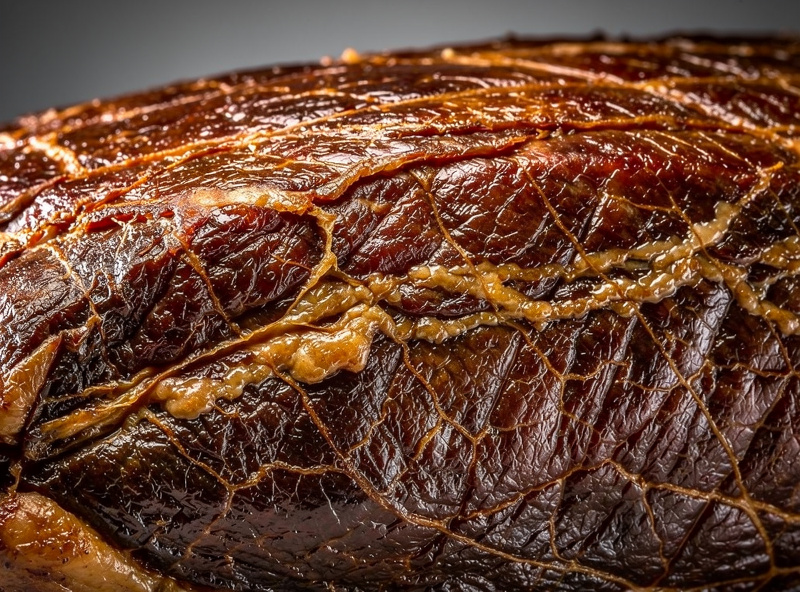
Days 29 to 45: Full development phase. Nutty, cheesy, slight blue-cheese funk, faint earthy mushroom note. This is the flavor profile dry-aging steakhouses target. Crust is dark amber, weight loss is 25 to 35%, and aroma is unmistakable but pleasant.
Days 46 to 60: Funkier and more complex, with stronger blue-cheese rind character. A faint ammonia hint may appear at the edge — this is normal proteolysis byproduct and is acceptable as long as it’s faint. Past 60 days at home (without commercial UV and tight humidity control), the risk of dangerous proteolysis crosses an acceptable threshold.
Smells That Mean Toss It
Strong ammonia (cat-litter smell): Proteolysis (protein breakdown) has produced excessive amine compounds. A faint ammonia hint at week 8+ is acceptable, but a strong unmistakable ammonia smell that fills the chamber when you open the door means the dry-aging has crossed into spoilage. Trim the affected outer 1 to 2 cm aggressively; if the smell persists in the inner meat after trimming, toss the entire piece.
Sulfur or rotten egg: Hydrogen sulfide produced by anaerobic bacteria (often Clostridium or Hafnia species) growing in pockets where airflow is poor. This is a hard food safety failure — a review of aged-meat safety research identifies sulfide odor as a direct marker of pathogenic and spoilage bacteria taking hold once the drying hurdles fail. Toss the entire piece, do not attempt to trim and salvage. The compounds may have penetrated beyond the visibly affected area.
Sour vinegar (acetic): Acetic acid bacteria (related to those that make kombucha or vinegar) have established in the chamber. The meat develops a sharp sour note that doesn’t belong in dry-aged beef. Toss the affected piece, deep-clean the chamber with 1:10 bleach, dry thoroughly, and re-inoculate the new batch with starter culture if appropriate.
Putrid or sweet-rotten: Late-stage bacterial decay. The smell is unambiguous and overwhelming — usually associated with chamber temperature failures (compressor died, chamber rose above 60°F for 24+ hours). Toss everything that was in the chamber during the temperature event.
False Alarms: Smells That Aren’t Actually Problems
Cheese rind smell: Sounds funky, smells funky, is completely normal. Specifically smells like Camembert or Brie rind around weeks 3 to 6. This is the desirable dry-aged character that steakhouses pay premium prices for. Don’t confuse cheese rind with cheese gone bad — fresh blue cheese rind is the target.
Faint mushroom or forest floor note: Beneficial yeast and mold metabolites. Often appears around weeks 3 to 5 and is associated with high-quality dry aging. Some operators specifically inoculate with mushroom-derived cultures to enhance this note.
Browned butter / nutty: Maillard-like reactions in the pellicle as it develops. Stronger in pieces with high marbling content. This is the flavor compound that defines premium dry-aged steaks.
Slight metallic or “iron” smell: Trace amounts of myoglobin oxidation, normal in any aging beef. Should be very faint — if it’s strong, your chamber may have copper or iron contamination from old metal hardware.
How to Run a Reliable Smell Test
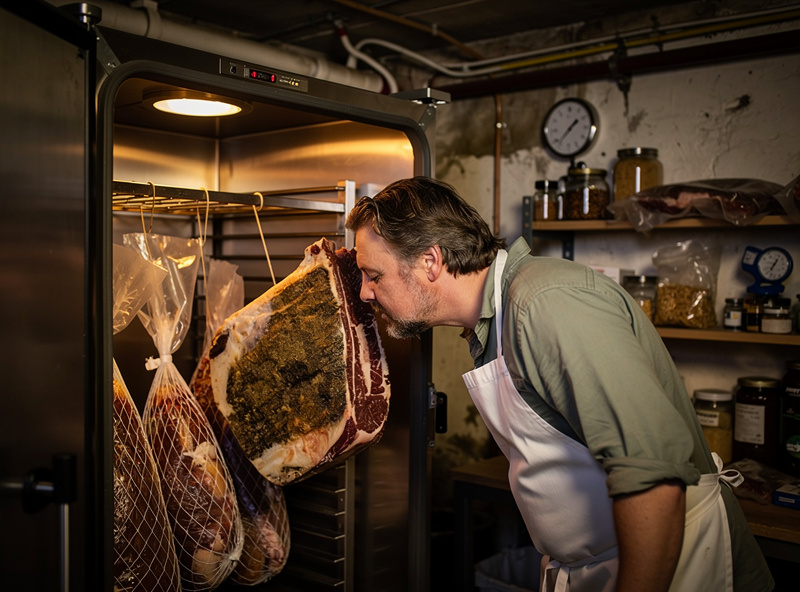
Open the chamber door, lean in, and inhale deeply through the nose for 2 to 3 seconds. The first impression is the most accurate — your nose adapts to chamber smells within 30 seconds, so multiple sniffs become unreliable. Step away from the chamber for 5 minutes and return for a second test (I log each sniff session in a SensorPush HT.W app entry, timestamped, so I can cross-reference against the humidity graph if a smell changes) if the first impression was ambiguous.
Test at the same time of day each session. Smells are subjective and your sensitivity changes through the day (most acute in late morning, dulled after large meals or strong-smelling food exposure). Morning sessions are the standard for professional dry-aging operators.
Test from multiple angles. Open the door from the top first to catch the warmer rising air, then from the bottom for the cooler descending air. Off-smells often concentrate at one zone — the bottom of the chamber if it’s bacterial spoilage, the top if it’s volatile proteolysis.
Don’t sniff the meat directly. Stay at chamber-door distance. Direct contact with the dry-aged surface gives an artificially intense reading that doesn’t represent the actual chamber air. The goal is to assess the air the meat is breathing, not the meat itself.
Smell-Based Action Cheat Sheet
| Smell | Severity | Cause | Action |
|---|---|---|---|
| Nutty, slight cheese | Normal | Lipid oxidation, mild proteolysis | Continue cure |
| Cheese rind, mushroom | Normal (week 3+) | Yeast and mold metabolites | Continue cure, this is the target |
| Faint ammonia (week 8+) | Acceptable threshold | Late proteolysis | Plan to cut soon |
| Strong ammonia | Spoilage | Excessive proteolysis | Trim 1-2 cm; if persists, toss |
| Sulfur / rotten egg | Dangerous | Anaerobic bacterial growth | Toss entire piece, sanitize chamber |
| Sour vinegar | Spoilage | Acetic bacteria contamination | Toss piece, deep-clean chamber |
| Putrid / sweet-rotten | Dangerous | Late bacterial decay | Toss everything in chamber |
| Strong fresh-meat smell (week 1) | Warning | Low airflow, stagnant chamber | Increase fan run-time |
Smell Changes Tied to Common Chamber Problems
Sour smell after week 4: Usually means humidity ran too high (above 85% sustained). Acetic bacteria thrive in humid conditions. Drop humidity to 70% immediately, increase airflow, and assess the meat — early-stage sour can sometimes be trimmed away if caught fast.
Strong meat / blood smell after week 2: Airflow is too low and the pellicle hasn’t formed properly. Without a dry pellicle, the meat surface stays moist and bacterial activity accelerates. Increase fan continuous operation, raise chamber temperature 1 to 2°F, and check that the chamber isn’t overloaded with too much fresh meat at once.
Ammonia at week 2 to 3 (way too early): Severe protein degradation, usually from a chamber temperature event you didn’t notice. Check controller logs and confirm chamber stayed at 34 to 38°F throughout. Early ammonia means the meat experienced abuse temperature for a sustained period — likely unsafe to consume even after trimming.
The curing chamber troubleshooting covers chamber failure diagnosis. The curing chamber climate control covers the underlying environmental controls that prevent these smell-changes from happening.
Cross-Section Visual Confirmation
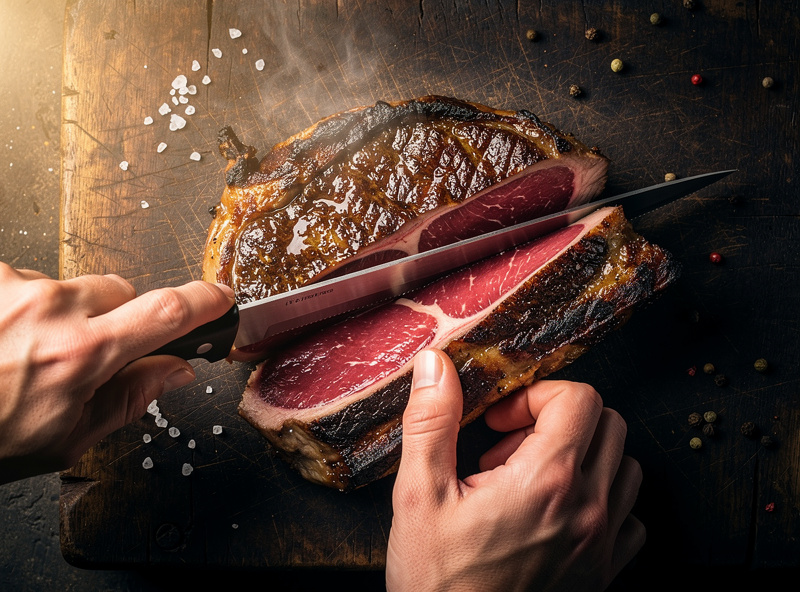
The smell test triggers a cut decision. When you cut into the meat to confirm what you’re smelling, the cross-section should show: bright red interior (oxygenated myoglobin), dark amber crust 5 to 15 mm thick, no green or brown veining, no slimy texture, no off-color patches. The interior smells like fresh beef when freshly cut — the dry-aged character is concentrated in the crust and the first 5 to 10 mm beneath it.
If the interior looks brown or gray rather than red, the meat may have been mishandled or oxidized too aggressively. Brown interior at trim time is a hard fail — toss. Gray patches suggest late-stage spoilage and trimming may not be enough. The dry aging beef at home hub covers what’s normal at trim time for various age points.
Discoloration that follows blood vessels or fat seams (rather than appearing as random patches) is usually normal — fat oxidation pathways concentrate at vessel boundaries. This isn’t spoilage, just visible chemistry. The cut surface should still smell nutty/cheesy/clean even with this minor discoloration. In cured meats rather than dry-aged beef, fat oxidation can progress further and produce genuinely rancid off-notes — the rancid cured meat prevention guide covers the fat-quality, salt-ratio, and packaging steps that stop oxidation before it starts.
Frequently Asked Questions
What is dry-aged beef supposed to smell like?
Nutty, slightly cheesy, and earthy — like blue cheese rind or browned butter with a faint mushroom note. Steakhouse-quality dry-aged beef at 30 to 45 days has unmistakable funk that is pleasant rather than sour or rotten. Sniff at chamber-door distance, deep breath for 2 to 3 seconds.
Is ammonia smell on dry-aged beef dangerous?
A faint ammonia hint at week 8+ is acceptable proteolysis. Strong unmistakable ammonia at any age is dangerous — proteolysis has crossed into spoilage. Trim the affected outer 1 to 2 cm; if the smell persists in inner meat, toss the entire piece. Strong ammonia at week 2 to 3 means chamber temperature failed.
Why does my dry-aged beef smell sour?
Sour vinegar smell means acetic acid bacteria have established in your chamber, usually from sustained humidity above 85 percent. Toss the affected piece, deep-clean the chamber with 1:10 bleach solution, dry thoroughly, and lower humidity to 70 percent for the next batch.
How do I tell normal dry-aged funk from spoilage?
Normal funk is nutty, cheesy, mushroom-like — pleasant when you stop and smell it. Spoilage is sulfur (rotten egg), strong ammonia (cat litter), sour vinegar, or putrid sweet — unpleasant and persistent. Trust your nose: if the smell makes you grimace, it is probably spoilage.
How long should you dry age beef at home?
30 to 45 days is the sweet spot for home chambers — full flavor development without crossing into the spoilage risk window. Past 60 days the risk of dangerous proteolysis exceeds the flavor gain unless you have commercial UV and tight humidity control.
Should the inside of dry-aged beef smell different from the outside?
Yes — the dry-aged character is concentrated in the dark crust and the first 5 to 10 mm beneath it. The interior should smell like fresh beef when freshly cut. If the interior also smells of strong cheese, ammonia, or sulfur, the funk has penetrated beyond the safe trim zone.
Related Articles
- Dry Aging Beef at Home: The Complete Guide
- Best Dry Aging Bags: Umai vs SteakAger vs DryBagSteak
- Ideal Humidity: Dry Aging Beef vs Charcuterie
- Black Mold on Charcuterie: Dangerous or Just Ugly?
- Curing Chamber Too Humid: How to Fix Oversaturation Fast