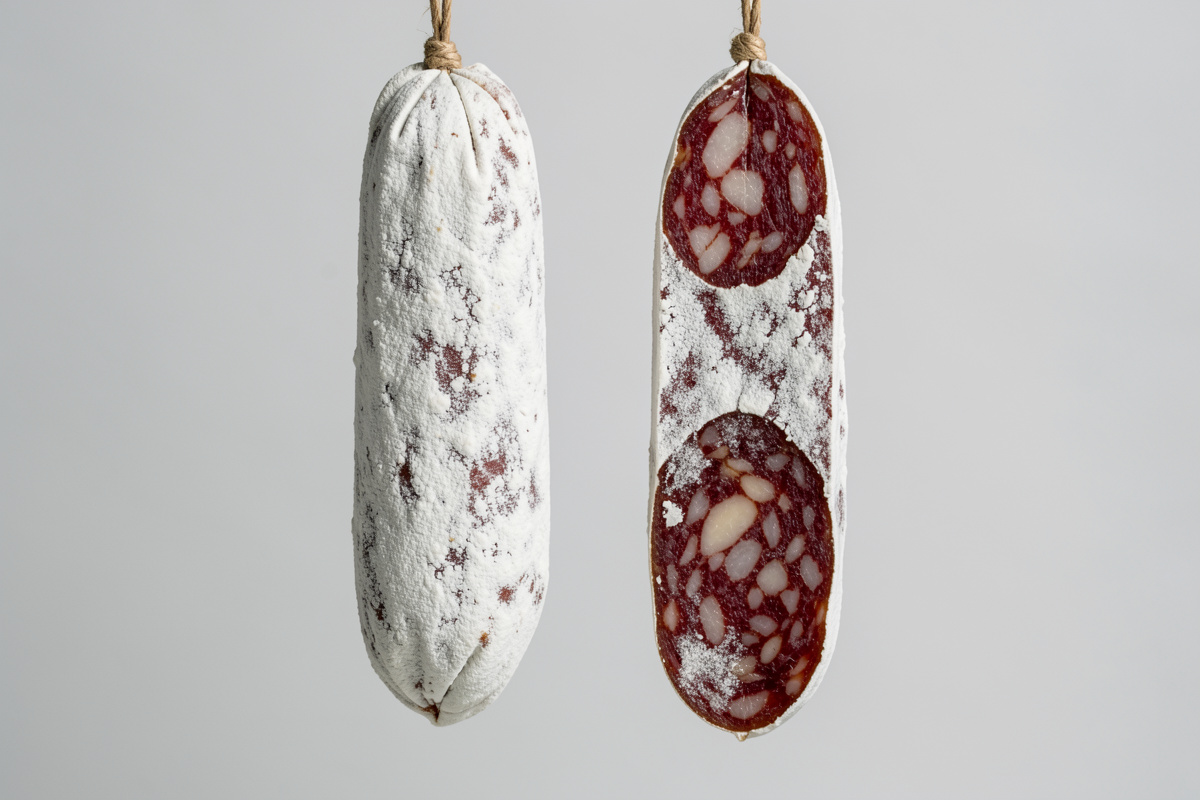

Patchy white mold is usually cosmetic, not a defect — the protective effect scales with coverage, so a salami that’s 60% bloomed still gets most of the benefit, it just looks less finished than a fully-coated one. Uneven coverage only becomes a real problem in two cases: when the bald areas invite other molds to move in, or when the patchiness is a symptom of a chamber fault like a dry spot, poor airflow, or pieces hanging in contact. Read why it’s patchy and you’ll know whether to shrug or to act.
I get asked about this constantly, usually with a photo of a perfectly good salami that happens to be bald on one face, and an anxious “did I ruin it?” Almost always the answer is no. The last soppressata batch I hung came in gorgeously even on the pieces with air on all sides and noticeably patchy on the two I’d crowded against the chamber wall — same cure, same culture, same day. The patchy ones dried fine and sliced clean. Coverage is mostly an aesthetic and a small drying-uniformity issue, not a safety line.
Knowing when patchy is fine and when it’s a warning is the last piece of managing mold in your curing chamber — the diagnostic read that ties the whole discipline together, from how you sprayed to how your chamber circulates air.
Is Patchy Mold a Problem or Just Cosmetic?
In most cases patchy mold is purely cosmetic — the white coat’s protective jobs (consuming surface oxygen, moderating the drying rate, out-competing spoilage molds) all still happen wherever the mold is present, and partial coverage delivers partial protection. A salami doesn’t need a flawless coat to be a good salami; plenty of traditional dry-cured products carry irregular, blotchy mold and are perfectly sound.
The reason people worry is that food photography and commercial salami show that even, velvety, uniform white coat, so anything less reads as “wrong.” It isn’t. What actually determines whether your salami is safe and good is happening inside the meat — the cure, the fermentation pH drop, the weight loss — not the evenness of the surface fuzz. The mold coat is a helper layer, and a partial helper is still a help. Where I’d start paying attention is not the patchiness itself but what’s growing in the bald spots: bare, clean casing is fine, but bare casing turning green or fuzzy is a different conversation, and one covered in wiping unwanted mold off without killing the cure.
Why Is My Salami Bald on One Side?
One-sided baldness almost always comes from a physical block — the piece hung against the chamber wall, touched a neighbor, or sat where the spray never reached and the air barely moves. Mold needs spore contact, humidity, and a little air exchange to establish; wherever one of those was missing during the first days, you get a bald patch.
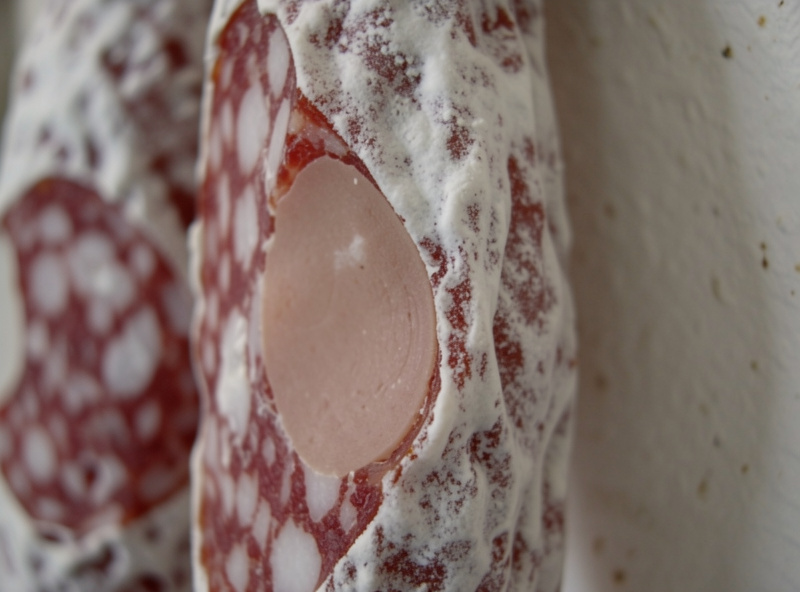
The three usual culprits: contact, spray gaps, and dead air. A face pressed against the wall or a sibling piece gets no spore drift and traps stale humidity, so it stays bald while the exposed sides bloom — this is the same contact issue that matters in how mold spreads between pieces. A spray gap is simple under-application: the back, the knot, or the underside you never rotated toward the sprayer, which is why the all-angles technique in spraying for even coverage matters. And a dead-air pocket — a corner of the chamber the fan doesn’t reach — will consistently under-bloom whatever hangs there. The good news is all three are easy to diagnose: if the bald spot is exactly where the piece touched something, it’s contact; if it’s random, it’s spray; if the same chamber location always under-blooms, it’s airflow.
When Does Patchy Coverage Actually Matter?
Patchy coverage matters when a bald area starts growing the wrong mold, or when the patchiness is a symptom of an environmental fault that will also hurt your drying. A bare patch that stays clean is cosmetic; a bare patch colonized by green, grey, or fuzzy mold is an opening you need to close, because the good coat that would normally exclude those organisms isn’t there to do its job.
The second case is subtler: whole-batch patchiness as a warning sign. If one piece is bald where it touched the wall, that’s mechanical and harmless. But if every piece is coming in blotchy, your chamber is telling you something — humidity too low for a full bloom, uneven circulation leaving dead zones, or a spray routine that’s consistently missing coverage. That same low humidity or poor airflow that produces patchy mold also raises your risk of case-hardening, where the surface dries and seals faster than the core, which is a genuine defect. So the patchiness itself is minor, but as a symptom it can point at a condition worth fixing. If a whole batch is patchy, don’t just shrug — check your numbers against the diagnostics in why white mold won’t grow in your chamber.
Patchy Coverage: Causes and Fixes at a Glance
Most patchiness sorts into a handful of causes, each with a clear fix. Here’s how I diagnose it standing at the chamber.
| What you see | Likely cause | Fix |
|---|---|---|
| Bald exactly where it touched wall or neighbor | Contact block | Rotate and space the piece; cosmetic, no worry |
| Random bald spots on one piece | Spray gap | Re-mist the bare areas from all angles |
| Same chamber location always under-blooms | Dead-air pocket | Improve circulation; move pieces there |
| Whole batch blotchy | Humidity too low or uneven | Raise early RH into mid-to-high 80s |
| Bald patch turning green or fuzzy | Bad mold in the gap | Wipe with brine or vinegar; re-seed |
The pattern of the baldness tells you the cause almost every time. Localized and tied to contact means relax; widespread or colored means investigate.
How Do I Fix Patchy Coverage Mid-Cure?
You can improve patchy coverage well into the cure by rotating the piece so the bald side faces open air, re-misting the bare areas with culture, and nudging the chamber humidity up if the whole batch is affected. Penicillium will happily colonize a bare area later in the cure as long as the surface hasn’t dried too hard and you give it spores plus humidity.
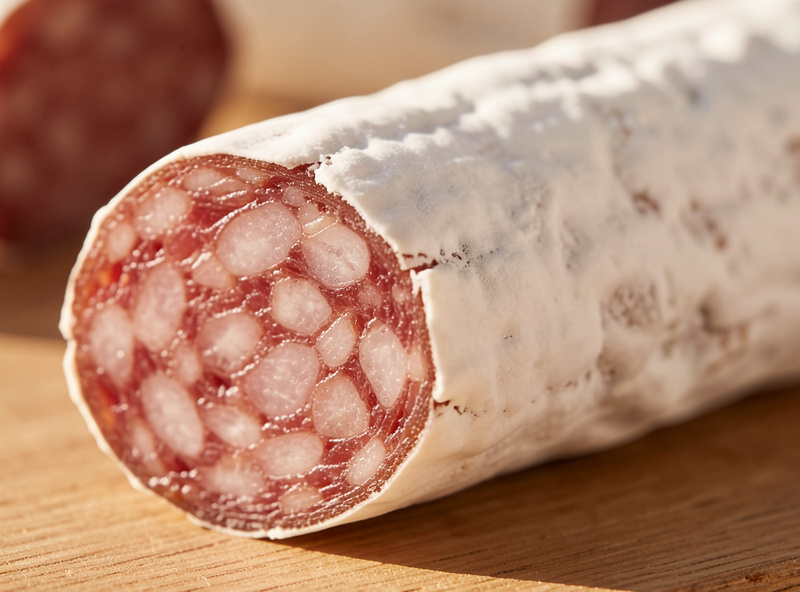
My mid-cure fix is undramatic. If a piece is bald on one face, I turn it so that face gets air and, if it’s early enough, mist a little reused-rind slurry or fresh culture onto the bare zone — the same slurry from reusing mold from a finished salami works perfectly for spot-touchups. If the whole batch is patchy and I catch it in the first week, I bump the humidity into the mid-to-high 80s for a few days to push a fuller bloom, then settle back to the drying envelope. The one limit is timing: late in the cure, once the surface has dried down hard, new mold takes poorly, so there’s a point where you just accept the coverage you have. And honestly, by then it doesn’t matter — a piece that’s dried most of the way to its target weight loss is nearly done being protected anyway. Getting a full bloom is easiest when the chamber holds a stable, even envelope, which the multi-zone chamber setup covers.
Does a Full Bloom Dry Differently Than a Patchy One?
Slightly — a fully-coated piece dries a touch more evenly because the mold moderates surface evaporation uniformly, while a patchy piece can dry a little faster on its bald areas, which in extreme cases nudges toward case-hardening on those spots. In practice, for home-scale pieces the difference is small and rarely decides the outcome, but it’s the one real functional reason to prefer full coverage beyond looks.
This is why I don’t stress about cosmetic patchiness but do pay attention to a persistently bald, hard-drying spot. On a thick coppa or a large salami, a bare patch that’s drying visibly faster than the coated areas is worth rotating and re-seeding, because uneven drying is the mechanism behind case-hardening — the defect that has killed more of my pieces over the years than bad mold ever has. The weight log tells the real story: I weigh every piece and track the loss toward that 30–40% target, and a piece that’s drying evenly loses weight on a smooth curve regardless of how photogenic its coat is. A patchy but evenly-drying salami is a good salami. A patchy, unevenly-drying one is worth a small intervention. Coverage for its own sake is the least of it; even drying to the right weight loss is what actually matters, and the mold coat is simply one tool that helps you get there.
Is patchy mold coverage on salami a problem?
Usually not. The protective effect scales with coverage, so a partially bloomed salami still gets most of the benefit and is perfectly sound. Patchiness only matters when the bald areas grow other molds or when whole-batch blotchiness signals a chamber fault like low humidity or poor airflow. A patchy but evenly-drying salami is a good salami.
Why is my salami bald on just one side?
Almost always a physical block. The bald face hung against the chamber wall or a neighboring piece, so it got no spore drift and trapped stale air, while the exposed sides bloomed normally. Rotate the piece to give that face open air and it will usually fill in. This kind of one-sided baldness is cosmetic, not a defect.
Can I fix patchy mold coverage during the cure?
Yes, if the surface has not dried too hard. Rotate the piece so the bald side faces open air, re-mist the bare areas with fresh culture or a reused-rind slurry, and nudge the humidity into the mid-to-high 80s if the whole batch is affected. Late in the cure, once the surface has dried down, new mold takes poorly and you accept the coverage you have.
When should I actually worry about uneven mold?
Worry when a bald patch starts turning green or fuzzy, because the good coat that would exclude those molds is missing there, or when every piece in the batch is blotchy, which points at low or uneven humidity or a dead-air pocket. Localized baldness tied to contact is harmless. Widespread or colored patchiness is worth investigating.
Does a full mold coat dry the salami better than a patchy one?
Slightly. A full coat moderates surface evaporation evenly, while a patchy piece can dry a bit faster on its bald areas, which in extreme cases nudges toward case-hardening there. For home-scale pieces the difference is small. Track weight loss toward 30 to 40 percent on a smooth curve, which matters more than how even the coat looks.
Further Reading
- Managing Mold in Your Curing Chamber: The Complete Guide
- Why Won’t White Mold Grow in My Chamber?
- How to Spray Penicillium Mold Culture on Salami
- How to Wipe Off Unwanted Mold Without Killing the Cure