How to Spray Penicillium Mold Culture on Salami for Even Coverage
July 14, 2026

To spray Penicillium mold culture on salami for even coverage, rehydrate the culture in non-chlorinated water, let it wake up for a few hours, then mist a fine, uniform coat over every surface of the casing within about a day of stuffing — while the chamber sits humid, around 85% RH. Chlorine kills the spores, uneven passes leave bald spots, and a dry chamber stalls germination. Get those three right and a full white bloom shows up in 5 to 9 days.
I learned the chlorine lesson the hard way. My first spray run in Sweden, I mixed the culture straight into cold tap water, misted a beautiful even coat, and hung the batch — and got nothing. Not a speck of white after two weeks, just bare casing slowly greying. Swedish municipal water is chlorinated enough to sterilize a mold culture on contact. Since I switched to distilled water for rehydration, I have not blanked a batch on the culture step once.
This is one skill inside the broader discipline of managing mold in your curing chamber — the seeding step. Nail it and the rest of the biome work gets easy.
What Culture Do I Use and How Do I Rehydrate It?
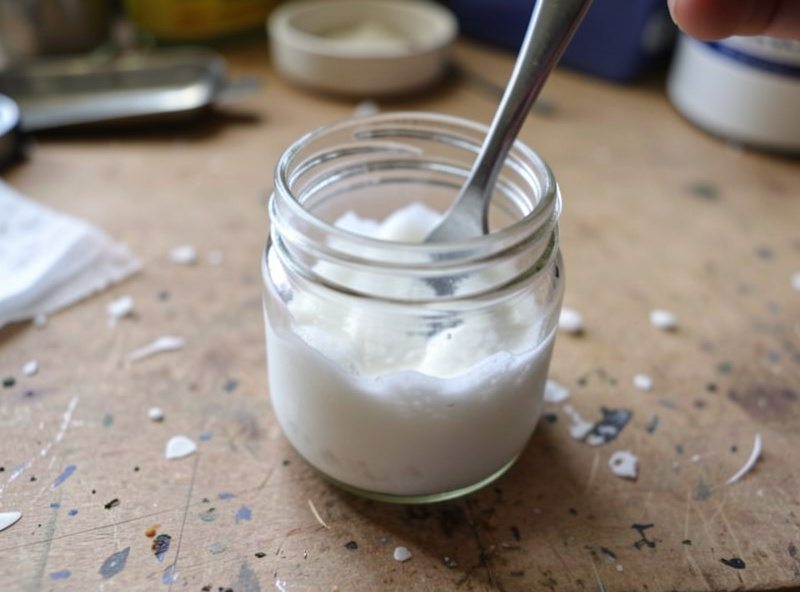
Use a food-grade Penicillium nalgiovense culture — the strain sold as Bactoferm Mold-600 and similar products — and rehydrate a pinch in distilled or dechlorinated water at roughly a quarter teaspoon per cup, then let it sit 3 to 6 hours before spraying. That rest matters: the freeze-dried spores need time to hydrate and start activating, and spraying them the instant they hit water gives a weaker take.
The water is the whole game. Chlorine and chloramine are added to municipal supplies precisely to kill microbes, and they do not distinguish your good mold from a pathogen. I keep a jug of distilled water on the shelf just for this. If you only have tap, either boil it and let it cool and stand overnight to off-gas chlorine, or use bottled distilled — do not shortcut it. The culture itself is cheap; a blanked batch is not. A single sachet of Penicillium nalgiovense culture seeds many batches, so measure small.
Mix gently — you want the spores suspended, not foamed. The rehydrated solution looks faintly cloudy and smells of almost nothing at first; the mushroomy note comes later, on the meat. Keep any leftover solution refrigerated and use it within a day or two; it is a live culture, not a stable stock.
When in the Process Do I Spray?
Spray within about 24 hours of stuffing, right as the salami goes into its fermentation phase, so the mold and the ferment establish together. Spraying onto a fresh, slightly tacky casing gives the spores a surface they can grip, and the warm, humid fermentation conditions that drop the salami’s pH also happen to be ideal for Penicillium germination.
There is a sequencing logic here worth understanding. During the fermentation phase you are holding the chamber warmer and very humid — often 20 to 24 °C and 90%+ RH for a day or two — to let the lactic acid bacteria drop the pH toward 4.6–5.2. That same window jump-starts the mold. By the time you settle the chamber down to the drying envelope of about 12–15 °C and 80% RH, the white coat is already establishing. If you are dialing in that fermentation step, my notes on dextrose vs sugar to feed the ferment and the full ‘nduja method cover the acidification side. The mold spray sits right on top of a good ferment.
One caution: spray after the casing has drained any surface brine but before it dries out completely. A dripping-wet casing dilutes and runs the culture off; a bone-dry one gives the spores less to cling to. Slightly tacky is the sweet spot.
What Sprayer Gives the Most Even Coverage?
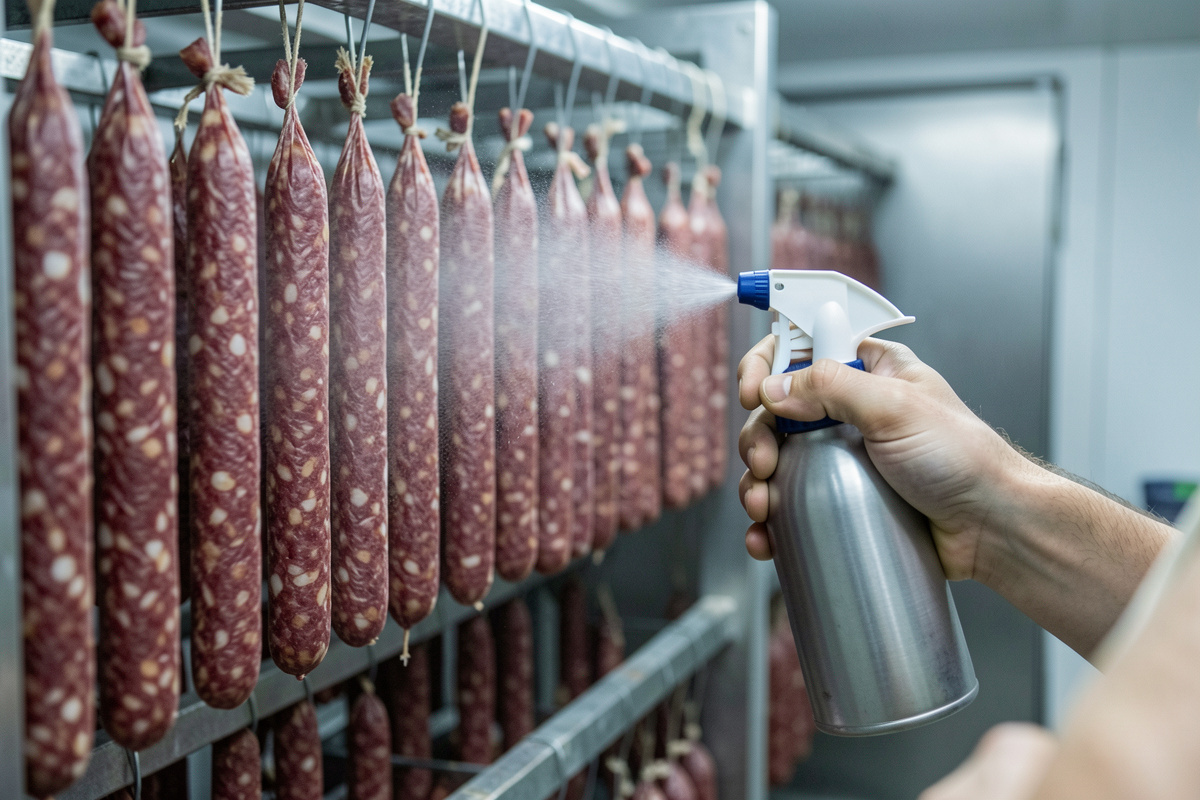
A fine-mist, continuous-spray bottle gives the most even coverage — the kind that throws a soft fog rather than a coarse jet. A pump-trigger bottle that spits fat droplets leaves wet streaks and dry gaps; you want a mist so fine it settles on the casing like dew.
I use a continuous-mist bottle — the type marketed for hair or plants that holds pressure and releases a steady fog when you squeeze. It coats without soaking, which is exactly what you want. A cheap trigger sprayer will work in a pinch if you hold it a good arm’s length back and keep the piece turning, but the coverage is never as clean. Whatever you use, dedicate it to culture only and rinse it with dechlorinated water between uses so no soap residue or chlorine lingers to knock back the next batch. A dedicated continuous fine-mist spray bottle is a couple of dollars well spent.
How Do I Get Even Coverage With No Bald Spots?
You get even coverage by hanging the pieces spaced a couple of inches apart, misting from every angle while slowly rotating each salami, and paying deliberate attention to the ends, the knot, and any side that faces a wall. Bald spots almost always fall where the mist could not reach — behind a knot, on the face pressed against a neighbor, or on the underside you never turned toward the sprayer.
My routine: hang the whole batch first with space between pieces, then work down the row misting the front of each, then walk back and rotate every piece 180 degrees and mist again. Two light passes from opposite sides beat one heavy pass every time. Heavy spraying just runs the culture down the casing and pools it at the bottom, giving you a dark wet tip and a dry top. Light, even, from all sides.
The other half of coverage is the chamber. Spores need humidity to germinate; if your RH is sitting in the 60s because the chamber can’t hold moisture, even a perfect spray job comes in patchy. Sort the environment out first — my multi-zone chamber setup covers holding a stable, uniform envelope, and cheese makers face the identical challenge, which is why the blue cheese mould guide obsesses over the same humidity numbers on a different substrate.
Dip or Spray: Which Applies the Culture Better?
Both work; spraying is better for batches of hanging pieces, while dipping suits small runs where you can immerse each salami before it hangs. Dipping guarantees total surface contact but uses far more culture solution and can waterlog a delicate casing. Spraying is thriftier and gentler but demands the all-angles technique above to avoid gaps.
| Method | Coverage | Culture used | Best for |
|---|---|---|---|
| Fine-mist spray | Even with good technique | Minimal | Hanging batches, most home runs |
| Dip / immersion | Total, guaranteed | High (fills a container) | Small runs, thick casings |
| Brush-on | Even but slow | Low | A single large piece like coppa |
| Reused-rind slurry spray | Even, vigorous strain | Free from last batch | An established house culture |
That last row is worth flagging: once you have a clean white bloom going, you don’t have to keep buying culture at all — you can slurry a piece of finished rind and spray with that, a reused-rind technique I return to in the chamber mold-management guide. It sprays exactly like a bought culture and the house strain adapts to your chamber over time.
What Are the Common Spraying Mistakes?
The three failures I see most are chlorinated water, an over-heavy spray that runs off, and a chamber too dry for the spores to take — in that order. All three produce the same disappointing result: bare casing days later and a home curer convinced the culture was dead. It usually wasn’t.
A fourth, quieter mistake is over-sanitizing the chamber right before you spray. If you have just wiped every surface with a strong sanitizer, residual chemical can suppress the very mold you’re trying to seed. Clean between batches, yes, but let the chamber air out and dry before you hang and spray a fresh run. If your spray truly took and still nothing grew, the fault is almost always environmental — humidity too low, water chlorinated, or residual sanitizer on the surfaces — not a dead culture.
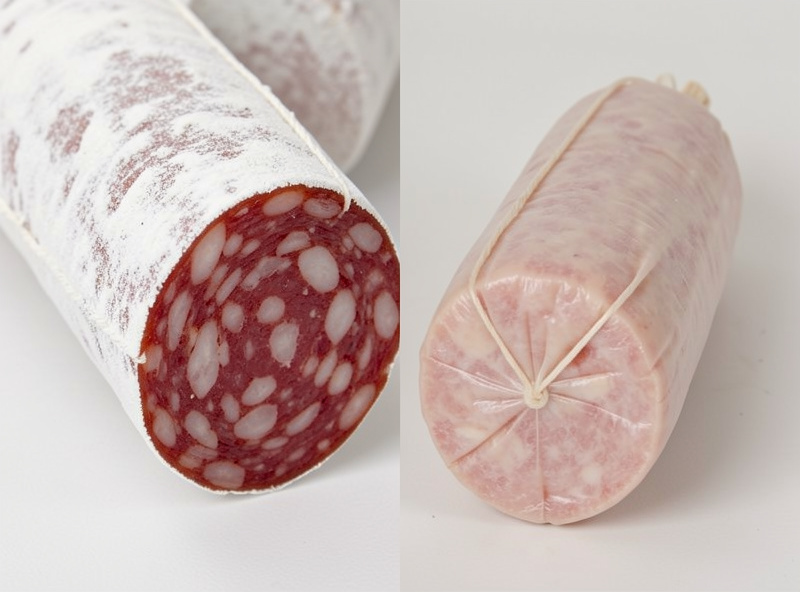
Finally, a word on what the mold is and isn’t doing. A gorgeous white coat is protective and helps the drying curve, but it is not the safety step. Your salami is safe because you used cure #2, fermented to a proper pH drop, and dried to 30–40% weight loss — the mold rides on top of that. Never let a beautiful bloom talk you out of doing the cure correctly.
As an Amazon Associate I earn from qualifying purchases.
What water should I use to rehydrate mold culture?
Use distilled or dechlorinated water. Chlorine and chloramine in municipal tap water kill the Penicillium spores on contact and will blank your whole batch. If you only have tap water, boil it and let it stand uncovered overnight to off-gas the chlorine, or just buy distilled. The culture is cheap and a failed batch is not.
How long after mixing should I wait before spraying?
Let the rehydrated culture rest 3 to 6 hours before spraying. The freeze-dried spores need time to hydrate and begin activating, so spraying immediately after mixing gives a weaker, patchier take. Keep any leftover solution refrigerated and use it within a day or two since it is a live culture.
When in the process do I spray the culture?
Spray within about 24 hours of stuffing, as the salami enters its fermentation phase. The warm, humid conditions that drop the pH also jump-start mold germination, so the coat establishes alongside the ferment. Spray onto a slightly tacky casing, after any surface brine has drained but before it dries out completely.
Why did my sprayed salami not grow any white mold?
The usual causes, in order, are chlorinated rehydration water, an over-heavy spray that ran off the casing, a chamber too dry for spores to germinate, or residual sanitizer suppressing the mold. Use distilled water, mist lightly from all angles, and hold about 85 percent RH for the first several days after spraying.
Is spraying or dipping better for applying the culture?
Spraying is better for hanging batches because it uses far less culture and does not waterlog the casing, but it needs an even all-angles technique to avoid bald spots. Dipping guarantees total contact and suits small runs or thick pieces, at the cost of using much more solution.
Further Reading
- Managing Mold in Your Curing Chamber: The Complete Guide
- Dextrose vs Sugar in Cured Sausage: Feed the Ferment
- How to Make ‘Nduja at Home: Calabrian Spreadable Salami
- Blue Cheese Making at Home: Mould, Piercing, and Aging