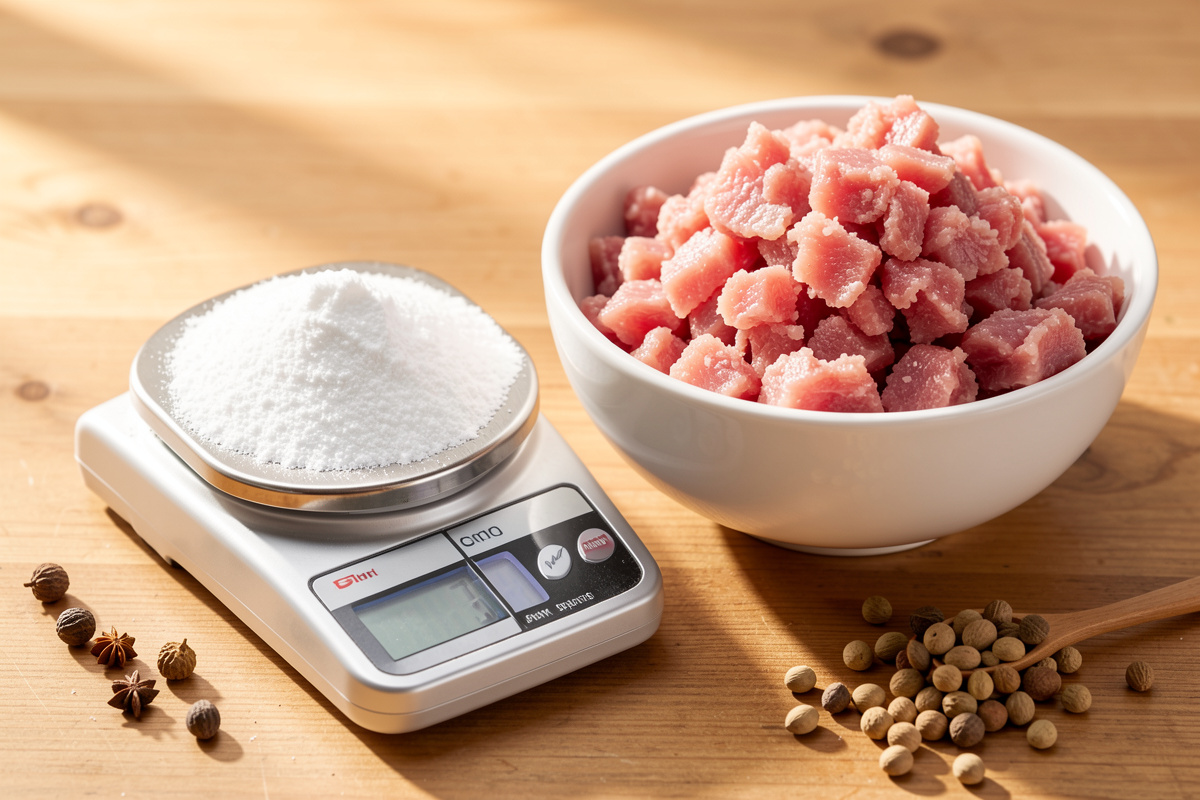

Dextrose is the standard sugar for fermented salami because it is a simple sugar the lactic acid bacteria metabolize fast and completely, giving a clean, predictable pH drop. Table sugar (sucrose) works, but more slowly and less completely, so the fermentation is harder to control. Use roughly 3 to 10 grams of dextrose per kilogram of meat — more sugar means more tang — and never skip it in a fermented sausage.
This is the ingredient beginners most often misunderstand, because it looks like it is there for sweetness and it is not. The sugar in a salame is bacteria food. Get it right and you get a reliable acid drop, a firm sliceable texture, and that clean lactic tang that defines a good salami. Get it wrong — too little, or the wrong sugar, or none at all — and you are gambling with both flavor and safety. Here is how dextrose and table sugar differ, how much to use, and why this small white powder is doing the most important microbial work in the whole recipe.
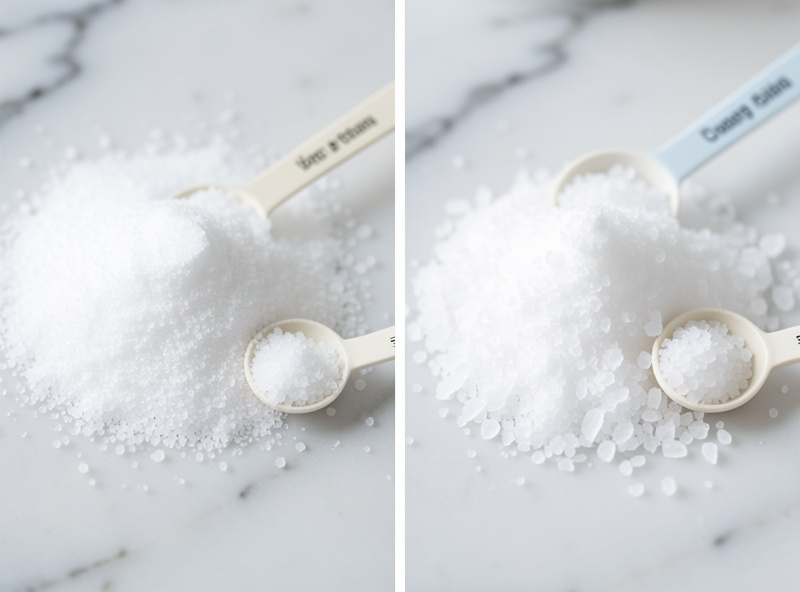
Dextrose vs Sugar in Cured Sausage: Which Should You Use?
For fermented sausage, dextrose is the better default because it ferments quickly and predictably; table sugar is a workable fallback but gives a slower, less complete acidification. Dextrose (glucose) is a monosaccharide — a single sugar unit that lactic acid bacteria eat directly. Table sugar (sucrose) is a disaccharide the bacteria must first split before they can use it, which slows things down and can leave residual sugar behind. Here is the practical comparison:
| Property | Dextrose (glucose) | Table sugar (sucrose) |
|---|---|---|
| Sugar type | Simple (monosaccharide) | Complex (disaccharide) |
| Fermentation speed | Fast, predictable | Slower, less predictable |
| Completeness | Fully consumed | Can leave residual sugar |
| pH drop control | Tight and reliable | Looser |
| Sweetness left behind | Minimal | Can leave a sweet note |
| Best use | Fermented salami, controlled tang | Fallback; mild-tang or cooked sausage |
In the chambers I run, dextrose is what I reach for on every fermented batch precisely because it takes the guesswork out of the acidification. When I want a specific, repeatable tang, I need a sugar that behaves the same way every time, and dextrose does. Table sugar is fine if it is all you have and you accept a softer, slower ferment — but for a few dollars a bag, dextrose is worth buying. It slots into the wider charcuterie seasoning system as the one “spice” that is really a microbial tool.
Why Does a Fermented Sausage Need Sugar at All?
Fermented sausage needs sugar because the lactic acid bacteria in your starter culture eat it and excrete lactic acid, which drops the pH, firms the texture, adds tang, and — critically — makes the environment inhospitable to the pathogens you are trying to exclude. No sugar means no reliable acid drop, and no acid drop means an unsafe, mushy, off-tasting sausage. The sugar is the fuel for the single most important safety step in fermented charcuterie.
This is the same chemistry I run in the fermentation crocks on the other side of my workshop: the pH drop that secures a salame is the same lactic-acid drop that turns cabbage into sauerkraut — same family of bacteria, different substrate, and in the salame we feed them dextrose instead of relying on the sugars already in the vegetable. If that parallel interests you, my notes on lactic fermentation and pH at Ferment Foundry come at the chemistry from the vegetable side. The lesson transfers: control the food, control the acid, control the outcome.
How Much Dextrose Per Kilo of Salami?
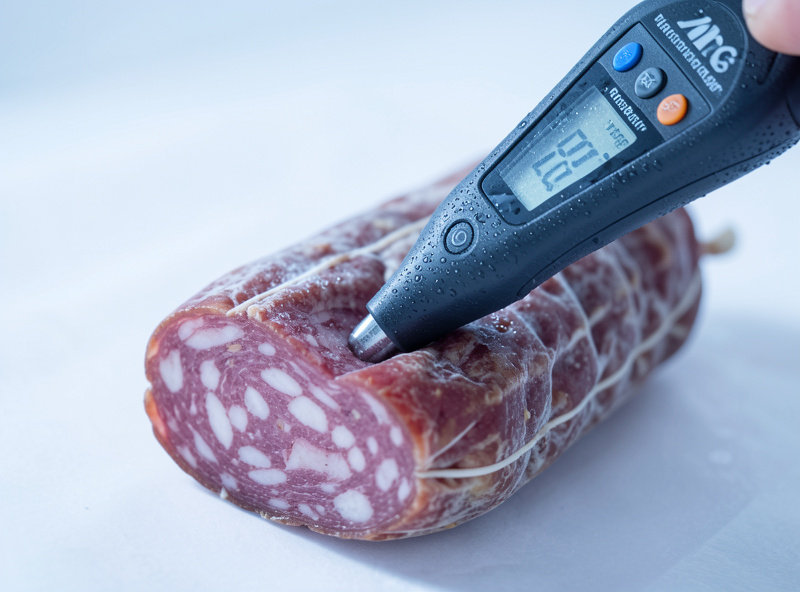
Use 3 to 10 grams of dextrose per kilogram of meat, with more sugar producing a faster and more pronounced acid tang and less producing a milder, rounder salame. I run around 5 to 7 g/kg for a classic tangy salame and drop toward 3 g/kg when I want a gentler, more European-style mild fermentation. The amount of sugar sets an upper bound on how much acid the bacteria can produce, so it is your primary lever on final tang.
There is a safety floor here that matters: you need enough sugar for the bacteria to drive the pH down into the safe zone, so I never go below about 3 g/kg on a fermented sausage. I learned that floor the hard way on an early soppressata, where I halved the dextrose to 1.5 g/kg because I was worried the batch would taste too tangy — the pH stalled at 5.6 instead of falling below 5.3, the texture stayed soft and pasty, and I ended up tossing the whole batch rather than gamble on an incomplete acidification. That single stalled batch is why the floor is non-negotiable in my chamber now. Weigh it precisely on the same gram scale you use for the cure — this is not an eyeball ingredient. Always pair the dextrose with a proper starter culture; sugar without the bacteria to eat it does nothing, and relying on whatever wild organisms happen to be present is exactly the gamble this hobby exists to eliminate. For turning these per-kilo figures into your actual batch, the arithmetic is in how to scale a charcuterie spice recipe by meat weight.
What pH Are You Aiming For, and How Do You Know?
The target for a fermented sausage is a pH below about 5.3 by the end of the fermentation phase, and the only way to know for sure is to measure it with a pH meter. Many home charcutiers aim for the 4.8 to 5.2 range for a firm, tangy, clearly acidified salame. That drop is what tightens the protein, expels moisture, and creates the hostile environment for spoilage and pathogenic organisms — it is the heart of why fermented sausage is safe to eat uncooked.
I keep both a calibrated pH meter and pH strips on the bench, and I trust the meter. Follow your starter culture manufacturer’s temperature guidance for the fermentation hold — typically a warm, humid window — and check the pH at the end of it before moving the salame to the cooler drying phase. If the pH has not dropped, something went wrong with the sugar, the culture, or the temperature, and you diagnose it before you commit to a three-month hang. The U.S. Department of Agriculture’s Food Safety and Inspection Service publishes guidance on fermented-sausage acidification that underpins these targets; when I am unsure, I defer to the conservative practice and to FSIS guidance rather than guess.
Can You Use Honey, Maple Syrup or Other Sugars?
You can, but understand the trade-off: any fermentable sugar will feed the bacteria, but honey, maple and brown sugar bring their own flavors, variable compositions, and less predictable fermentation than clean dextrose. They are flavor choices, not control choices. A little honey or maple can add a pleasant background note to a rustic sausage, but they make the pH drop harder to predict, and some of their sugars are less readily fermented, which can leave residual sweetness.
If you want to experiment, I would use dextrose as the backbone to guarantee the acid drop and add a small amount of honey or maple purely for flavor on top — not swap it in as the sole sugar. That way the safety-critical fermentation stays on the predictable dextrose, and the specialty sugar is just seasoning. The one sugar I would avoid entirely is anything with additives or a lot of moisture; keep the fermentable sugar clean and let the flavor come from your spices, wine and the meat itself.
What Happens If You Skip the Sugar Entirely?
Skip the sugar in a fermented sausage and the bacteria have nothing to eat, the pH does not drop, and you are left with raw ground meat sitting warm and humid — which is precisely the condition that invites dangerous bacterial growth, including Clostridium botulinum. This is not a flavor problem; it is the single most dangerous shortcut in fermented charcuterie. A warm fermentation hold is only safe because the culture is rapidly dropping the pH, and the culture can only do that if you fed it sugar.
This is why “let it ferment naturally” with no culture and no sugar is a gamble I will never endorse on this site. The controlled path — inoculate with a starter culture, feed it dextrose, hold it warm and humid just long enough for the pH to fall below 5.3, then move to the cool drying phase — is what makes the whole process safe. If any one of those pieces is missing, you do not have a fermented sausage; you have a science experiment with real stakes. Get the safety layer right and the tang, the texture, and the keeping quality all follow. That safety-first ordering is the spine of the entire seasoning and binder system on this site.
Does the Dextrose Make the Salame Taste Sweet?
No — in a properly fermented salame almost none of the sweetness survives, because the bacteria consume the sugar and convert it into lactic acid. What you taste at the end is tang, not sugar. This trips up a lot of first-timers who expect a few grams of dextrose per kilo to read as sweet; instead, the sugar disappears into the fermentation and leaves acidity in its place. That is exactly the point.
The one time you might notice residual sweetness is if you use table sugar or a specialty sugar that does not fully ferment, or if the fermentation stalls and the bacteria never finish the job. With clean dextrose and a healthy culture the sugar is spent, and any lingering sweet note usually signals an incomplete ferment worth investigating. If your salame tastes noticeably sweet at the end, check whether the pH actually dropped — a stuck fermentation is both a flavor flag and a safety flag.
Why Doesn’t Dry-Cured Whole Muscle Need Sugar Like Salami Does?
Whole-muscle charcuterie like coppa, lonzino and bresaola generally does not need added sugar because it is not fermented the way ground sausage is — there is no culture-driven pH crash to fuel. A whole muscle is cured with salt and cure #2, then dried slowly; its safety comes from the cure, the low water activity as it loses weight, and its intact structure, not from a fast acidification. Without a fermentation phase, there is nothing for a big dose of dextrose to feed.
That said, I often add a small pinch of dextrose — a couple of grams per kilo — to a whole-muscle cure purely to round and soften the harsh edge of the salt, not to drive any ferment. It is a seasoning role there, not a microbial one. This is one of the clearest lines in the craft: in a fermented sausage the sugar is load-bearing safety infrastructure; in a dry-cured whole muscle it is an optional flavor tweak. Knowing which job the sugar is doing in a given piece is exactly the kind of distinction the whole seasoning system is built to make clear.
What is the difference between dextrose and sugar in salami?
Dextrose is a simple sugar that lactic acid bacteria eat directly, giving a fast, complete and predictable pH drop. Table sugar is a complex sugar the bacteria must split first, so it ferments more slowly and can leave residual sweetness. Dextrose gives tighter control over the tang.
How much dextrose per kg of salami?
Use 3 to 10 grams of dextrose per kilogram of meat, around 5 to 7 grams for a classic tangy salame and closer to 3 grams for a milder one. More sugar means more acid and more tang. Do not go below about 3 grams per kilo on a fermented sausage, and always pair it with a starter culture.
Can you use table sugar instead of dextrose in sausage?
Yes, table sugar works as a fallback, but it ferments more slowly and less completely than dextrose and can leave a residual sweet note. For a controlled, repeatable tang, dextrose is worth the small cost. If you use table sugar, expect a softer, less predictable fermentation.
What pH should fermented salami reach?
Aim for a pH below about 5.3 by the end of the fermentation phase, with many home charcutiers targeting 4.8 to 5.2 for a firm, tangy salame. Measure it with a pH meter, since this acid drop is the key safety step. If the pH has not fallen, diagnose the problem before the long dry.
What happens if you skip the sugar in fermented sausage?
Without sugar the bacteria have nothing to eat, so the pH does not drop and the meat sits warm and humid, which invites dangerous growth including Clostridium botulinum. Sugar is the fuel for the acidification that makes fermented sausage safe, so it is never optional in a fermented recipe.
Keep Building
- The Charcuterie Spice, Seasoning & Binder Guide
- Wine in Salami: How Much, Red vs White, and What It Does
- How Much Black Pepper in Salami: Whole vs Cracked vs Ground
- How to Scale a Charcuterie Spice Recipe by Meat Weight