Curing Lardo Without a Marble Box: Vac-Bag and Crock Methods
July 10, 2026

You do not need a marble box to make lardo. A vacuum bag or a food-grade crock cures back fat just as safely and more repeatably — you weigh the salt and cure #2 to the fat, seal it cold for two to three weeks, then age it in your chamber. The marble conca is beautiful tradition, but it is a moisture and temperature buffer, and a controlled home setup replicates what it does without the slab of Carrara stone.
Every time lardo comes up, someone insists it is impossible without a marble basin from a specific Tuscan quarry. I have made excellent lardo in vacuum bags and in a plain ceramic crock in my Swedish chambers, and it is honestly easier to get consistent results this way. This guide walks through both no-marble methods, what the marble actually contributes, and how to cover for it — building on the hub on how to cure lardo at home.
What the Marble Box Actually Does
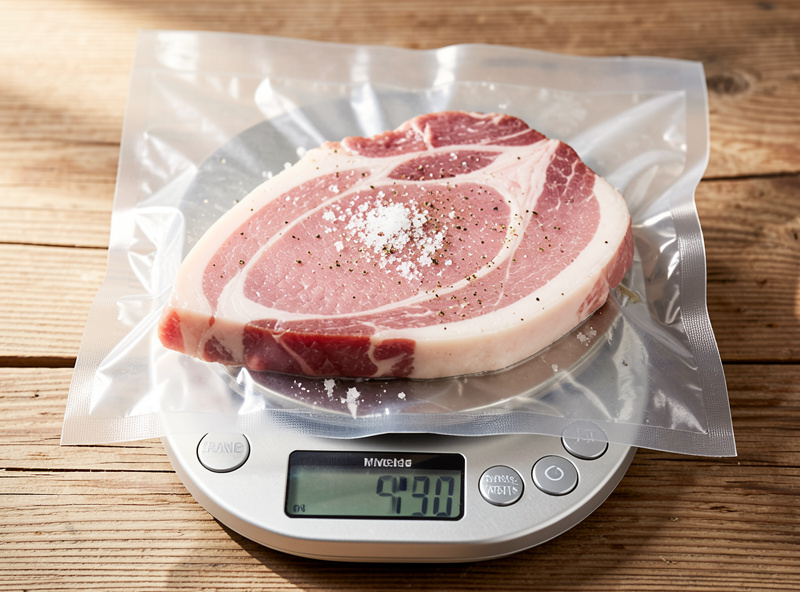
The traditional conca — a marble basin rubbed with garlic, packed with salt-covered fat, and left in a cool cellar — is not magic, it is physics. Marble is dense and cool, so it buffers temperature swings and keeps the fat at a steady low temperature. It is also slightly porous and unreactive, so it wicks a little surface moisture while never tainting the fat. And it is a sealed-ish packed environment, so the salt-covered slabs sit in a stable, near-anaerobic bed for months.
Every one of those functions can be reproduced. Temperature stability comes from a controlled fridge or a stable cellar — the same job your chamber controller already does. Moisture control comes from the vacuum bag or the salt bed itself. Unreactive contact comes from food-grade plastic, glass, or glazed ceramic. Once you see the marble as a buffer rather than a mystical ingredient, replacing it is straightforward.
The Vacuum-Bag Equilibrium Method
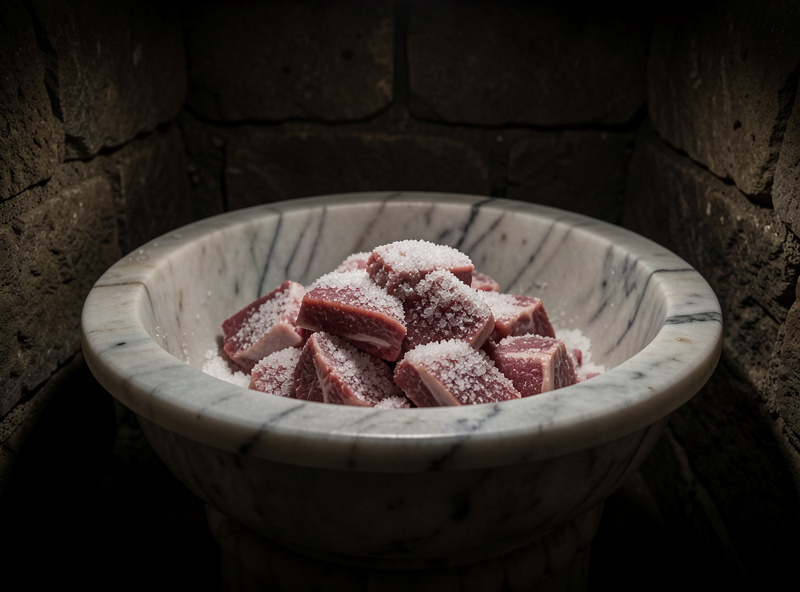
This is my default when I do not want to dedicate a crock, and it is the most repeatable route to lardo there is. Weigh your squared slab of firm back fat. Add exactly 2.75% fine salt and 0.25% cure #2 by the fat’s weight, plus your aromatics — cracked pepper, smashed garlic, rosemary, bay, a little sugar. Rub the cure into every surface, drop the slab into a vacuum bag, add the loose aromatics, and seal it.
Because it is an equilibrium cure, the salt cannot over-concentrate — there is a fixed amount in the bag and it simply redistributes evenly into the fat. Refrigerate at 3–4 °C for two to three weeks, flipping the bag every few days and massaging any liquid back over the slab. When the fat is firm and evenly seasoned, rinse it, pat it dry, and move it to the chamber to age. The vacuum bag does the marble’s moisture-and-stability job while you dialed the salt to the gram. It is the same precise-weight logic I use across the chamber, from sourcing to salting.
The Crock or Tub Method
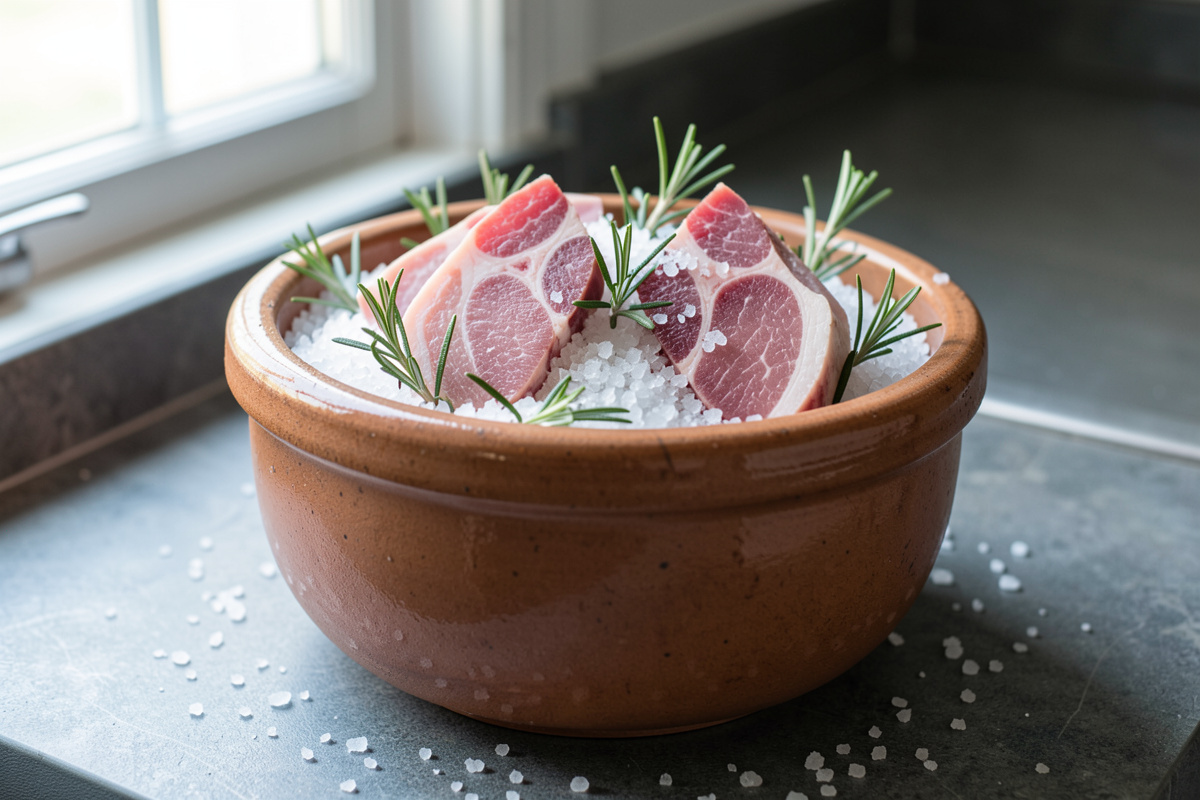
If you prefer the traditional salt-box feel, a food-grade crock, a glazed ceramic dish, or a plastic food tub stands in for the marble perfectly. Line the bottom with coarse salt, lay the fat on it, and pack more salt, aromatics, and your weighed cure #2 over and around every surface so no fat is exposed. Cover it loosely and refrigerate. For a batch, you can layer slabs with salt between them, exactly as the marble box does.
The crock route is more forgiving on salt — buried in a salt bed, fat seasons gradually and is hard to over-salt — and it is the better choice when you are curing several slabs at once or want the hands-on, cover-cure tradition. Turn the slabs and refresh the salt if it dissolves into brine. After two to three weeks, brush off the salt, rinse, dry, and age. Whether crock or bag, both end in the same place: the chamber at 12–15 °C and 75–80% humidity.
Vac-Bag vs Crock vs Marble
All three make real lardo. The differences are precision, capacity, and how hands-on you want to be. Here is how I choose between them.
| Factor | Vacuum Bag | Crock / Tub | Marble Box |
|---|---|---|---|
| Salt precision | Exact (equilibrium) | Approximate (cover) | Approximate (cover) |
| Over-salt risk | None | Very low | Very low |
| Batch capacity | One slab per bag | Several layered | Several layered |
| Space needed | Minimal (fridge) | Moderate | Large, heavy |
| Moisture control | Sealed bag | Salt bed | Salt bed + stone |
| Cost | Low (sealer + bags) | Low | High |
| Best for | Repeatable single slabs | Traditional batches | Tradition, display |
For a first lardo, I steer people to the vacuum bag — it removes the two variables beginners get wrong, salt level and moisture, and lets you focus on the aging. Once you have a feel for it, the crock is a lovely way to run a batch. Neither needs a scrap of marble.
Covering for What Marble Gave You
The one thing to be deliberate about without marble is temperature stability during the salt phase. Marble buffers a cellar that drifts; a fridge does it better, holding a steady 3–4 °C, so the vacuum-bag and crock methods actually improve on the traditional cellar for this stage. During aging, your chamber’s humidity and temperature control takes over — the same envelope I hold everything at, managed by a humidifier and controller rather than porous stone.
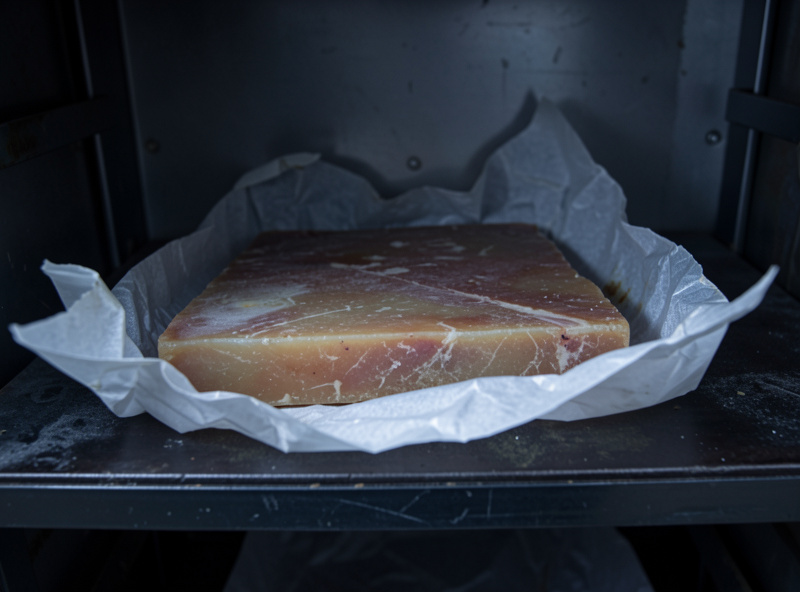
Keep the aging slab covered or wrapped once it firms, because the marble box’s other quiet job was shielding fat from light and moving air, the two accelerants of rancidity. A slab loosely wrapped in parchment, or rubbed with a little salt and kept in the dark, gets the same protection. Do that, and a home-cured no-marble lardo is indistinguishable from the Colonnata romance — I have served both, and the stone is not what people taste. The next question is simply how long to cure it.
A Note on Salt and Sealing
Whichever vessel you use, get the salt right. Use pure, non-iodized salt — plain sea salt, kosher salt, or a dedicated curing salt. Never iodized table salt; the iodine and anti-caking agents can taint the flavor and are simply not what you want touching a slab you will age for months. For the equilibrium bag I use fine salt so it dissolves and distributes evenly; for the crock I use coarse salt for the bed because it draws moisture into a brine that is easy to pour off. The cure #2 is always weighed to the fat, never guessed, because it is the one ingredient where precision is a safety matter, not a preference.
If you go the vacuum-bag route and do not own a chamber vac sealer, a household edge sealer works — just chill the slab first so the aromatics and any liquid do not get sucked into the seal. No sealer at all? The crock method needs nothing but a dish and salt, which is exactly why it survived for centuries before vacuum bags existed. The tools are a convenience; the fat, the salt, the cure, and a stable cold environment are the only things that are non-negotiable.
Keep Building
- How to Cure Lardo at Home: The Complete Guide
- Best Fat for Lardo: Back Fat Thickness and Where to Source It
- Lardo vs Salo vs Fatback: Three Ways to Cure Pork Fat
- Curing Chamber Humidifier: Ultrasonic vs Wick vs Steam
- Rancidity in Cured Meats: Why It Happens and How to Prevent It
Frequently Asked Questions
Can you make lardo without a marble box?
Yes. A vacuum bag or a food-grade crock cures lardo just as safely as marble, and the vacuum-bag equilibrium method is more repeatable. Marble is a temperature and moisture buffer, and a controlled fridge and chamber reproduce what it does.
How do you cure lardo in a vacuum bag?
Weigh the back fat, add 2.75 percent salt and 0.25 percent cure #2 by weight plus aromatics, rub it in, and vacuum-seal it. Refrigerate at 3–4 °C for two to three weeks, flipping every few days, then rinse, dry, and age in your chamber.
Is an equilibrium cure better than a salt box for lardo?
For consistency, yes. An equilibrium cure fixes the salt to the exact weight of the fat so it cannot over-salt, which is ideal for beginners. A salt box is more traditional and better for curing several slabs at once.
What does marble do for lardo?
Marble buffers temperature, wicks a little surface moisture, and gives the salt-covered fat a stable, unreactive bed for months. A controlled fridge, a vacuum bag or salt crock, and a humidity-controlled chamber reproduce all of those functions.
Do I still need cure #2 without a marble box?
Yes. The vessel does not change the food-safety math. Any back fat aged at cellar temperature for weeks to months should include cure #2 at 0.25 percent, whether it cures in a bag, a crock, or marble.