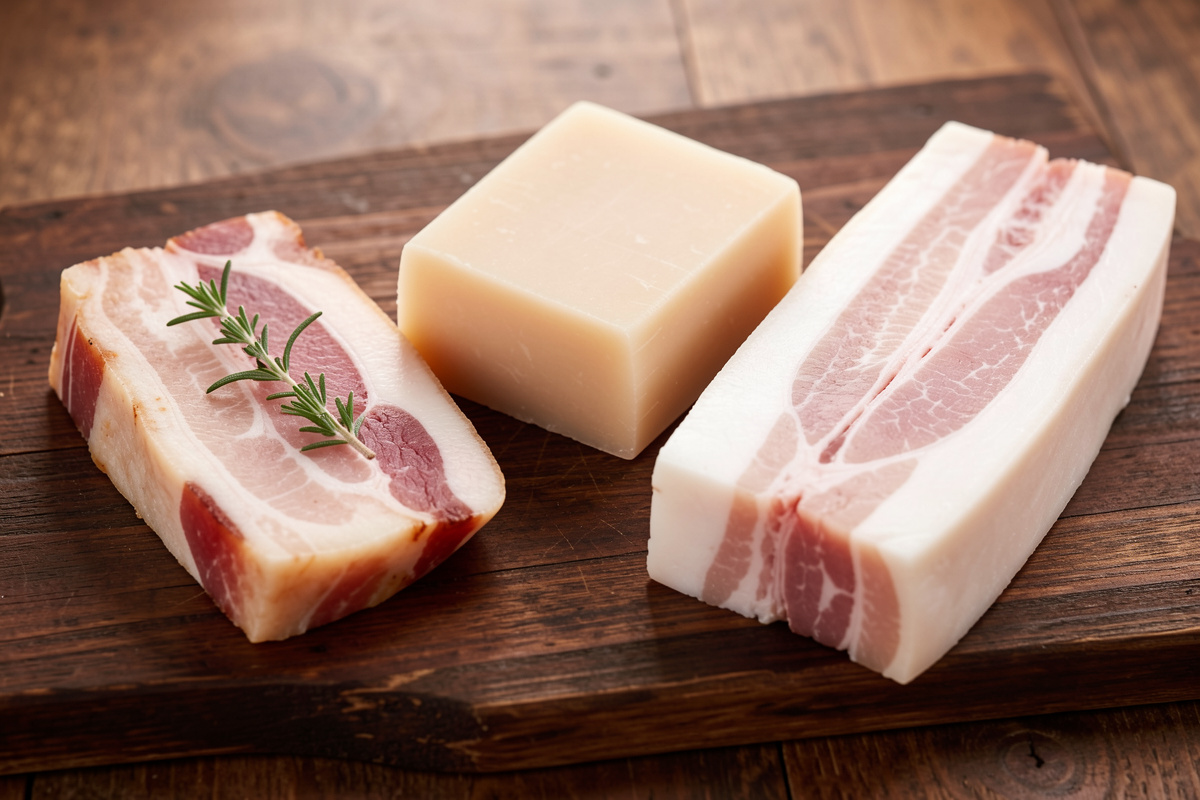
Lardo vs Salo vs Fatback: Three Ways to Cure Pork Fat
July 4, 2026

Lardo, salo, and fatback are all cured pork back fat — the difference is the method, not the meat. Lardo is Italian, salt-boxed with herbs and aged soft for months; salo is Slavic, heavily salted, kept firm and cold; fatback is the raw cut that both start from. Once you understand they share one raw material, choosing between them becomes a question of how long you want to wait and how you want to eat it.
Across the chambers I run in Sweden I have made all three, and the mistake almost everyone brings from lean-meat curing is treating back fat like muscle. It is not. It barely dries, it barely loses weight, and its enemy is oxidation, not a wet core. This guide sets the three preparations side by side so you can pick the right one before you ever pull out the salt. If you want the full workflow, start with the hub on how to cure lardo at home.
The One Cut Behind All Three
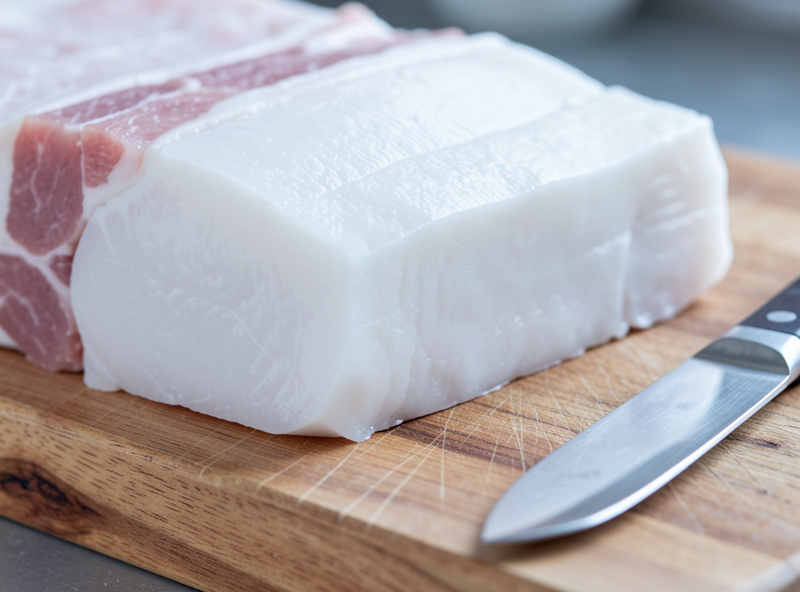
Fatback is the hard subcutaneous fat that runs along a pig’s spine — dense, white, and nearly pure lipid. Both lardo and salo are made from it, and the quality of that starting slab decides everything downstream. You want it firm, at least an inch thick, and ideally off the shoulder end where it is densest. Belly fat, soft fat, and thin trim do not cure into proper lardo or salo; they are better rendered or ground. I go deep on selecting and sourcing it in the guide on the best fat for lardo, but the headline is that “fatback” on its own is not a finished product — it is the canvas.
Because it is nearly all fat, back fat holds very little water — roughly 90% lipid against muscle’s 75% water. That single number explains why the two cured versions behave so differently from a bresaola or a coppa: there is almost no moisture to drive off, so the drying phase is gentle and the scale barely moves.
Lardo: The Long, Soft Italian Cure
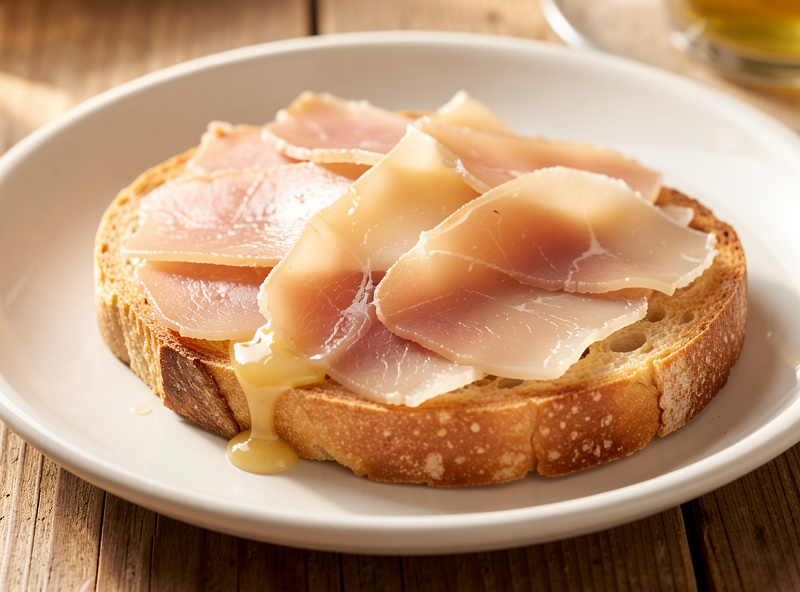
Lardo is back fat cured to melt. The traditional method buries the slab in coarse salt with rosemary, garlic, pepper, and sometimes warm spices, holds it cold for one to three weeks, then ages it at cellar temperature — around 12–15 °C — for two to four months until the fat turns faintly translucent and soft enough to spread on warm bread. For a cure that long and that cool, I use cure #2 at 2.5 g per kilogram, because a garlic-laden fat held warm for a season is exactly the anaerobic setting botulism wants. The payoff is a texture nothing else on the charcuterie board matches — sliced paper-thin and warmed, lardo liquefies on the tongue.
Lardo is the patience play. It rewards a stable chamber and punishes impatience, and it is closest in spirit to how I treat guanciale — the fat is the flavor, not a frame around lean meat. If your chamber holds a steady envelope, lardo is one of the most forgiving things in it, because there is no wet core to trap and no case hardening to fear.
Salo: The Firm, Cold Slavic Cure
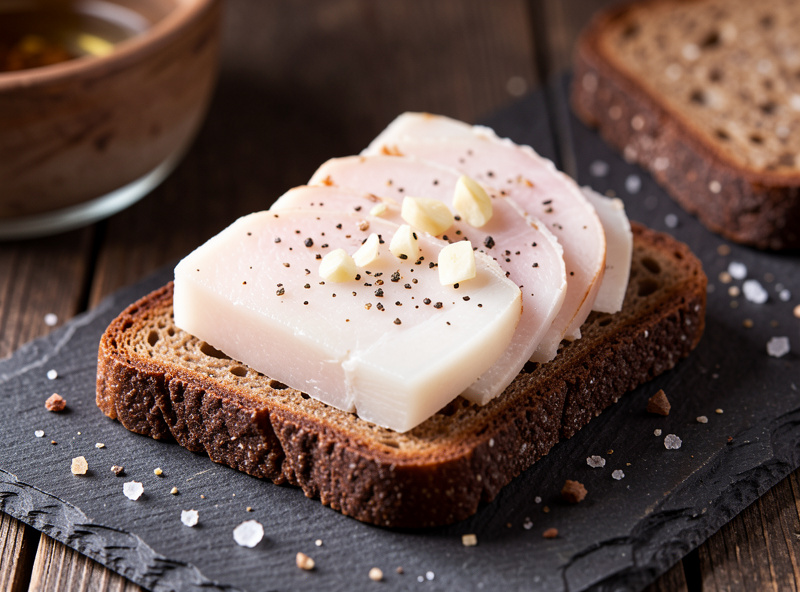
Salo takes the same fat in the opposite direction. Popular across Ukraine, Poland, and Russia, it is heavily salted — often a thick salt rub with plenty of garlic and black pepper — cured cold in the refrigerator for anywhere from three days to two weeks, and then kept firm and cold, usually frozen. It is not aged soft like lardo; it is eaten cool and dense, sliced thin onto black bread, often with raw garlic and a shot of something strong.
The safety logic of salo is different from lardo, and it is worth understanding rather than copying blindly. Traditional salo skips nitrate because it relies on heavy salt, cold cure, and frozen storage as its controls — botulinum does not grow in the freezer, and the cure never sits warm. That tradition genuinely works when you follow it fully; where people get into trouble is doing a salo-style salt-only cure and then hanging it warm like lardo. If you want salo you can store at cellar temperature, add cure #2. I lay out the safe version step by step in the guide on how to make salo.
Side by Side: Which Should You Make?
The choice comes down to time, storage, and how you like to eat fat. Lardo is a months-long project that ends in a soft, melting, aromatic product. Salo is a days-to-weeks project that ends in a firm, cold, garlicky one that lives in the freezer. Fatback is neither until you commit it to one path. Here is how they line up.
| Attribute | Lardo | Salo | Fatback (raw cut) |
|---|---|---|---|
| Origin | Italy | Ukraine / Poland / Russia | The cut itself |
| Cure method | Salt box or equilibrium + aromatics | Heavy salt rub, packed tight | None |
| Cure #2 | Yes, for long cellar aging | Optional if kept cold and frozen | N/A |
| Salt phase | 1–3 weeks cold | 3–14 days fridge | N/A |
| Aging | 2–4 months at 12–15 °C | None; kept firm and cold | N/A |
| Texture | Soft, translucent, melting | Firm, dense, cool | Hard raw fat |
| Served | Paper-thin on warm bread | Cold on black bread with garlic | Cooked or rendered |
| Storage | Sealed, cold, or frozen | Frozen in blocks | Fridge or freezer, short |
My rule of thumb: if you have a stable chamber and patience, make lardo. If you want cured fat this month, or you love the firm garlicky style, make salo. Either way, the sourcing and safety come from the same place — and both are covered under the broader charcuterie food safety rules that govern everything I hang.
What They Share, and Where They Differ
All three share the failure mode that makes cured fat its own track: rancidity. Fat oxidizes with exposure to air, light, and warmth, and a slab left uncovered on a fridge shelf goes off far faster than one kept sealed and dark. That is true of lardo, salo, and even raw fatback you are saving. If a piece smells sharp, waxy, or like paint thinner, that is rancidity, not aging, and it is not salvageable — a distinction I unpack in the guide on why lardo goes yellow.
Where they differ most is the doneness signal. On lardo you read firmness and translucency over months; on salo you read salt penetration over days; on lean charcuterie you read weight loss. Pure fat never sheds the 30–40% a coppa does, so if you carry the scale-based mindset over from muscle you will keep a lardo hanging forever waiting for a number that never comes.
Further Reading
- How to Cure Lardo at Home: The Complete Guide
- Best Fat for Lardo: Back Fat Thickness and Where to Source It
- How to Make Salo: Ukrainian Salt-Cured Pork Fat
- Homemade Guanciale: Cured Pork Jowl
- Charcuterie Food Safety: The Complete Guide
Frequently Asked Questions
Is salo the same as lardo?
They start from the same cut — pork back fat — but the methods differ. Lardo is salt-cured with herbs and aged soft for months at cellar temperature. Salo is heavily salted, cured cold for days to weeks, kept firm, and usually stored frozen and eaten cold.
Is fatback the same as lardo?
No. Fatback is the raw cut — the hard fat along a pig’s spine. Lardo is fatback after it has been salt-cured and aged. Fatback on its own is uncured and is cooked or rendered, not eaten as a cured product.
Which is easier to make, lardo or salo?
Salo is faster and more forgiving because it cures cold in days to weeks and relies on heavy salt and frozen storage. Lardo takes two to four months of stable cellar conditions, so it needs a controlled chamber and patience.
Do salo and lardo both need pink curing salt?
Lardo aged warm for months should use cure #2. Traditional salo can skip it because heavy salt, cold curing, and frozen storage are its safety controls — but any back fat held at cellar temperature for weeks should include cure #2.
Why does back fat not lose much weight when cured?
Back fat is roughly 90 percent lipid and holds very little water, so there is almost nothing to evaporate. A finished lardo loses only about 10–15 percent over months, unlike lean cuts that shed 30–40 percent.
Can I use belly fat instead of back fat?
Not for proper lardo or salo. Belly fat is softer and streaked with muscle, so it does not cure into the dense, translucent texture these preparations need. Save belly for pancetta or bacon and use firm back fat here.