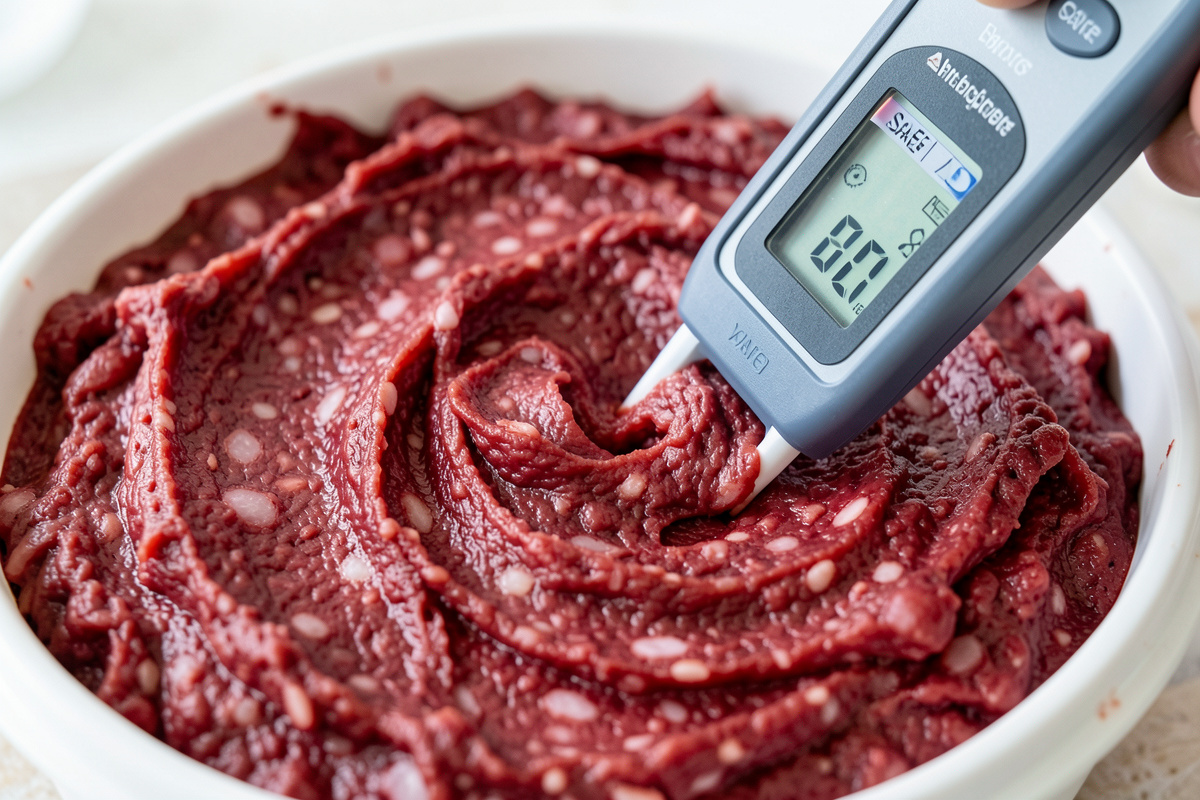
Is Spreadable Salami Safe? The Fermentation Rules for Soft Cured Sausage
July 20, 2026

Yes — spreadable salami like ‘nduja and sobrasada is safe when it is made by the rules: the correct curing salt (Cure #2 for a long ferment and dry), a starter culture that drops the pH below 5.3, salt around 2.75%, a controlled warm-humid fermentation, and enough drying to pull the water activity down. Safety comes from those stacked hurdles working together, never from any single step.
This is the question that should be asked more often, because a soft, uncooked, room-temperature sausage genuinely sounds risky — and made carelessly, it is. I treat food safety as load-bearing on every piece I hang, and spreadable sausage gets the most attention of all because it is dried the least. Here is how the safety actually works, what each hurdle does, and the specific shortcuts that turn a safe spread into a real hazard. None of this is romance; it is the chemistry that lets you eat raw fermented meat.
Why Soft, Uncooked Sausage Worries People
The concern is legitimate. Spreadable salami is never cooked, it sits stable outside the fridge during fermentation and drying, and it is softer and wetter than a hard salami. The pathogens that matter in cured meat — above all Clostridium botulinum, along with Listeria and the usual foodborne bacteria — thrive in exactly the warm, moist, low-oxygen meat environment you create during fermentation. So the question is not whether those risks exist; it is how the process neutralises them. The answer is the hurdle concept: several independent barriers that together make the meat inhospitable to anything harmful.
The Hurdle Concept: Why No Single Step Is Enough
Cured-meat safety is built on stacking barriers, not on one heroic step. Each hurdle — the cure, the acidity, the salt, the reduced water — handles a different part of the risk, and together they cover the gaps any one of them leaves. This is why you cannot trade one for another: a perfect ferment does not excuse skipping the cure, and a heavy salting does not excuse a failed pH drop. My broader charcuterie food safety guide lays out the full framework; spreadable sausage simply leans on the same hurdles with less help from drying, which makes getting the others right even more important.
Hurdle One: The Cure
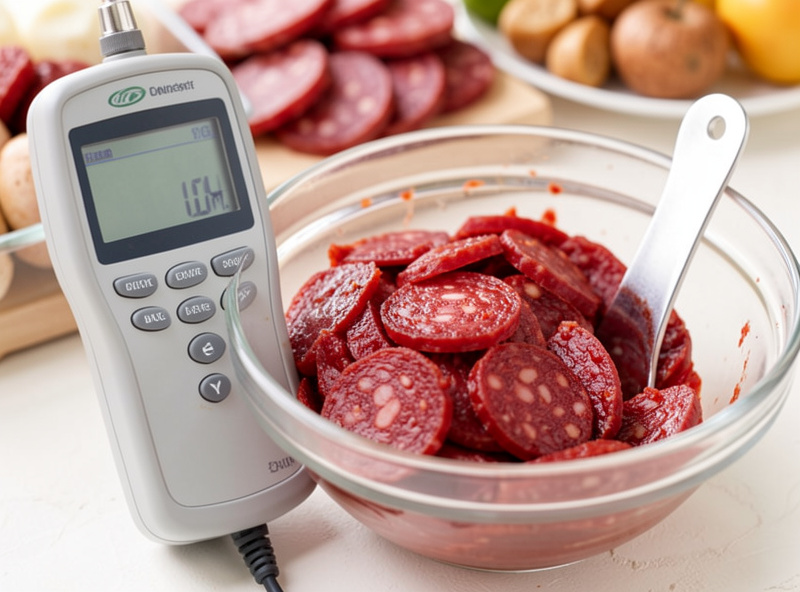
Because spreadable salami is fermented and dried over weeks, you use Cure #2 — a blend of sodium nitrite and sodium nitrate — at the standard rate of about 2.5 g per kilogram of meat (0.25%). The nitrite directly suppresses Clostridium botulinum, and the nitrate acts as a slow reservoir that converts to nitrite across the long dry, so protection lasts the whole cure rather than fading in the first days. This is the single most important safety input, and it is non-negotiable: a “natural, no-nitrate” long-fermented spreadable sausage removes the one barrier specifically aimed at botulism. I will not write that recipe, and you should not trust one that does.
Hurdle Two: The pH Drop
The fermentation acidifies the meat, and that acidity is the second major barrier. A starter culture of lactic acid bacteria eats the added dextrose and drives the pH down; the target is below 5.3, and I aim for the high 4s to low 5s. That acid environment halts the growth of pathogens during the vulnerable warm, moist phase. The critical rule: you must hold the sausage warm only while an active culture is acidifying it. Holding meat warm and moist with no acidification is the botulism window — the exact mistake that makes home fermenting dangerous. A reliable commercial starter culture seeds a known population so the drop is fast and predictable rather than a gamble on wild bacteria. If you do not own a pH meter, the sensory cues are in my guide to fermenting without one, but for spreadable sausage I genuinely recommend measuring.
Hurdle Three: Salt and Water Activity
Salt at around 2.75% does triple duty — flavour, controlling which bacteria thrive, and lowering the water activity (the free water available to microbes). Drying lowers water activity further. Here is the honest nuance for spreadable sausage: because ‘nduja and sobrasada are dried only to about 25–30% weight loss rather than a hard salami’s 35–40%, they reach a higher final water activity, so they are generally treated as refrigerated products rather than fully shelf-stable ones. The cure and the acid carry more of the load, and the reduced water finishes the job. This is why I keep finished spreadables refrigerated and do not pretend a soft sausage is as shelf-stable as a hard one. The role of water activity is worth understanding in full, which I cover in water activity and food safety.
The Hurdles at a Glance
| Hurdle | How you achieve it | What it controls |
|---|---|---|
| Cure #2 | 2.5 g/kg (0.25%) | Botulism (nitrite + nitrate reservoir) |
| pH drop | Starter culture + dextrose, below 5.3 | Pathogen growth in the warm phase |
| Salt | ~2.75% of meat weight | Water activity and bacterial selection |
| Drying | 25–30% weight loss | Further water-activity reduction |
| Good culture/mould | LAB + white Penicillium | Out-competing harmful organisms |
The Shortcuts That Make It Dangerous
Almost every unsafe spreadable sausage traces to one of a short list of shortcuts. Skipping the curing salt, or using a “no-nitrate” approach on a long ferment, removes the botulism barrier. Skipping the starter culture and hoping a wild ferment drops the pH is a gamble the wrong bacteria can win. Holding the sausage warm without an active culture acidifying it opens the botulism window directly. Using iodized table salt inhibits the ferment so the pH never drops properly. And dialling salt or cure by eye instead of weighing them lands you outside the safe band in either direction. Each of these is a removed hurdle, and the whole point of the system is that the hurdles back each other up — pull one and the margin can collapse.
Reading the Surface: Good Signs and Bad
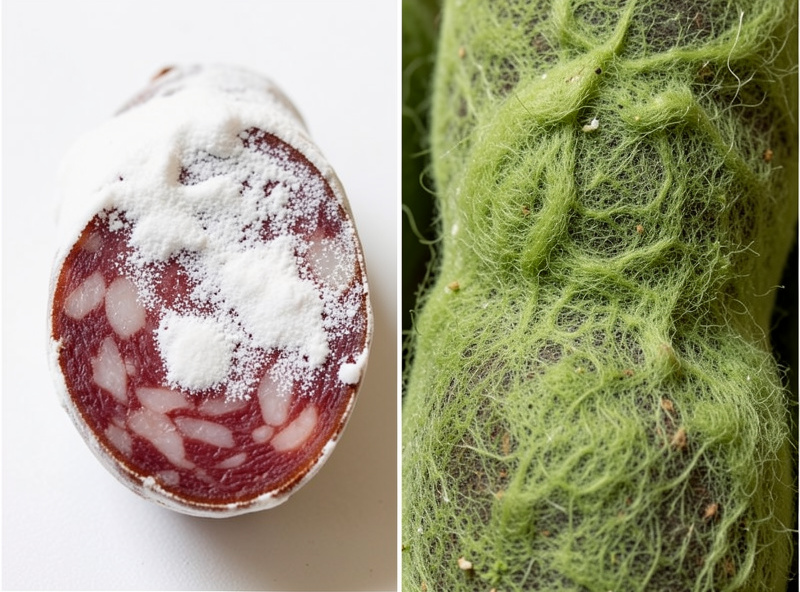
The chamber gives you signals to read. A powdery white mould bloom on the casing is normal and protective — it is the beneficial white mould you want, and you can seed it deliberately with a Penicillium culture. Fuzzy black, green, or “spider-web” growth, a slimy surface, or a genuinely putrid (not just tangy-fermented) smell are the opposite: when a piece looks or smells wrong, throw it out. There is no salvaging a spoiled spreadable sausage by trimming or cooking, and second-guessing your nose is not worth it. When in doubt, bin it — a single batch is never worth the risk.
The Honest Bottom Line
Spreadable salami is as safe as the discipline you bring to it. Follow the hurdles — correct cure, reliable pH drop, proper salt, adequate drying, clean surface — and ‘nduja and sobrasada are no riskier than any other dry-cured product, which is to say safe and deeply rewarding. Cut corners on the cure or the ferment and you are making something genuinely hazardous that happens to look like food. The whole point of building from the ‘nduja recipe outward is that every step has a reason, and the safety steps have the best reasons of all. Regulatory bodies like the USDA and EU food authorities codify much of this for commercial makers; at home, the same logic — weighed cures, measured pH, controlled climate — is what keeps you on the safe side.
Where Home and Commercial Rules Differ
It is worth being honest that commercial producers operate under formal controls a home maker does not — documented pH and water-activity targets, validated time-and-temperature schedules, lab testing, and inspection regimes set by bodies like the USDA in the States or EU food-safety authorities. Those rules exist because scale raises the stakes. At home you are not bound by that paperwork, but the underlying science is identical, and the smart move is to borrow the commercial logic: weigh your cure precisely, measure your pH rather than guessing, hold a controlled climate, and keep notes. The hobbyist who treats those professional habits as optional is the one who gets into trouble; the one who adopts them makes spreadable sausage every bit as safe as what you would buy.
Frequently Asked Questions
Is spreadable salami like ‘nduja safe to eat raw?
Yes, when made correctly. The safety comes from stacked hurdles: Cure #2 to suppress botulism, a fermentation pH drop below 5.3, salt around 2.75%, and drying to reduce water activity. None of these alone is enough; together they make raw fermented sausage safe. Made without them, it is genuinely hazardous.
Why does spreadable salami need Cure #2 and not Cure #1?
Because it is fermented and dried over several weeks. Cure #1 is for short cures and cooked products; its nitrite is used up quickly. Cure #2 adds a nitrate reservoir that converts to nitrite slowly across the long dry, so protection against botulism lasts the entire cure.
What pH makes fermented sausage safe?
Below 5.3, with many makers aiming lower into the high 4s to low 5s. The starter culture drives that acid drop during the warm, humid fermentation phase. The acidity halts pathogen growth during the most vulnerable stage and is one of the core safety hurdles.
Can I make spreadable salami without nitrates?
No, not safely. A long-fermented, long-dried sausage held without nitrite or nitrate removes the specific barrier against Clostridium botulinum. There is no safe natural substitute for cure in this application, which is why no-nitrate long dry-cured recipes should not be trusted.
Is spreadable salami shelf-stable like hard salami?
Generally no. Because ‘nduja and sobrasada are dried only to about 25 to 30% weight loss, they reach a higher water activity than a hard salami and are best treated as refrigerated products. The cure and acid keep them safe, but you should store finished spreadables in the fridge.
What should I do if my fermented sausage smells or looks off?
Throw it out. A powdery white mould is normal and good, but fuzzy black or green growth, a slimy surface, or a putrid smell mean spoilage. You cannot rescue a spoiled spreadable sausage by trimming or cooking. When in doubt, discard the whole piece.
Related Guides
- How to Make ‘Nduja at Home: Calabrian Spreadable Salami
- Charcuterie Food Safety: The Complete Guide
- Water Activity and Food Safety in Charcuterie
- Salami Starter Cultures: T-SPX vs F-LC vs B-LC-007
- How Long to Dry ‘Nduja: Soft-Spread Endpoint by Weight