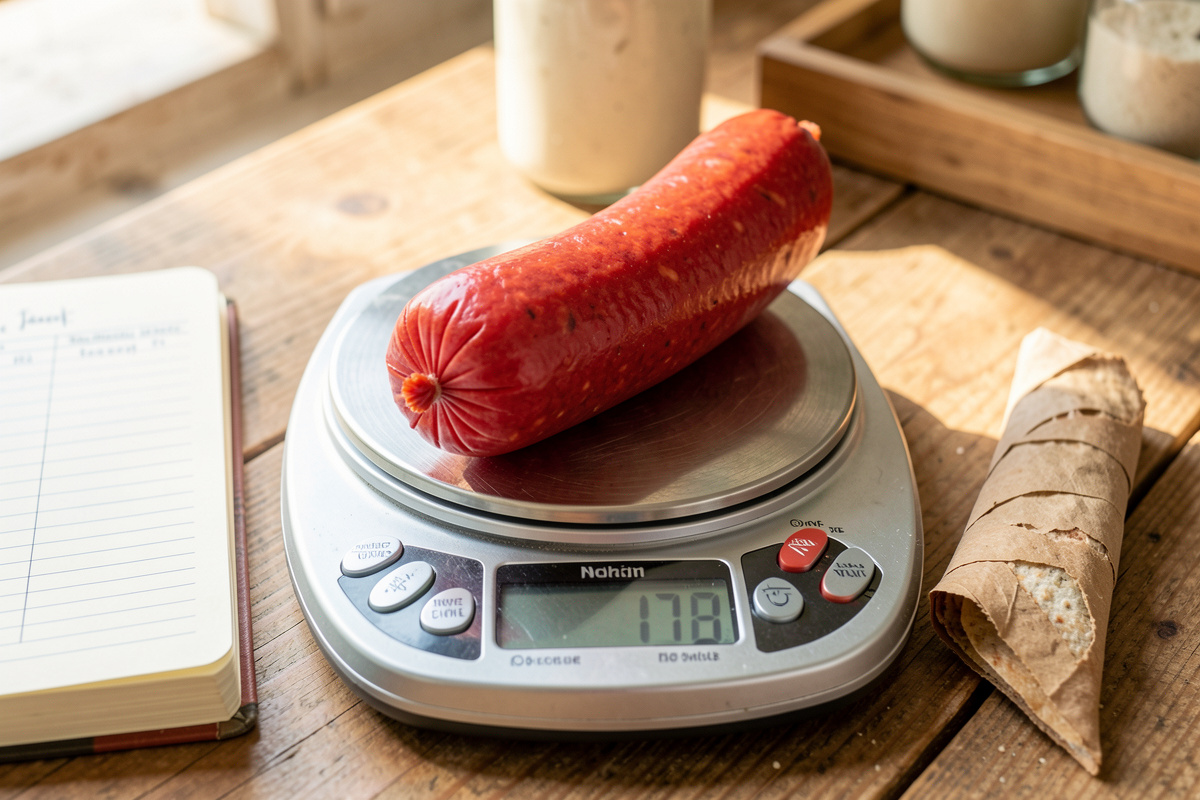

‘Nduja is done when it has lost about 25–30% of its stuffed weight — not after a set number of days. That soft-spread endpoint takes roughly 2–3 weeks for a narrow piece and 4–8 weeks for a fat beef bung, because diameter, humidity, and your chamber all change the pace. Weight loss is the honest signal; the calendar is a guess.
This is the question I get most about ‘nduja, and the answer frustrates people because they want a number of days. But I have dried these in narrow casings and fat bungs across two chambers, and the same recipe finishes at wildly different times depending on format and climate. The thing that does not change is the weight-loss target. Weigh, log, and pull when it hits the number — that is the whole method.
Why Weight Loss, Not Days
Drying time is set by how fast moisture leaves the sausage, and that depends on three things you cannot reduce to a calendar: the diameter of the casing, the humidity and airflow in your chamber, and the fat content of the paste. A fat, wide beef bung holds far more water and lets it out far more slowly than a narrow beef middle. A chamber sitting at 78% relative humidity dries slower than one at 72%. So two cooks following the same recipe can be days or weeks apart on time while landing at the identical weight-loss endpoint. That is why I anchor everything to the scale, exactly as I do for whole-muscle pieces in my main ‘nduja build.
The Target: A Soft-Spread Endpoint
‘Nduja is pulled at roughly 25–30% weight loss, deliberately less than a sliceable salami’s 35–40%. The point of stopping early is texture: you want it firm enough to be set and stable but soft enough to spoon and spread. Pull it too late and it dries past spreadable into a sliceable, slightly crumbly sausage — still edible, but no longer ‘nduja in the way you wanted. The high fat content means it never gets truly hard, but it will lose its luscious spoonable quality if you let the weight loss climb toward 40%.
How to Weigh and Log
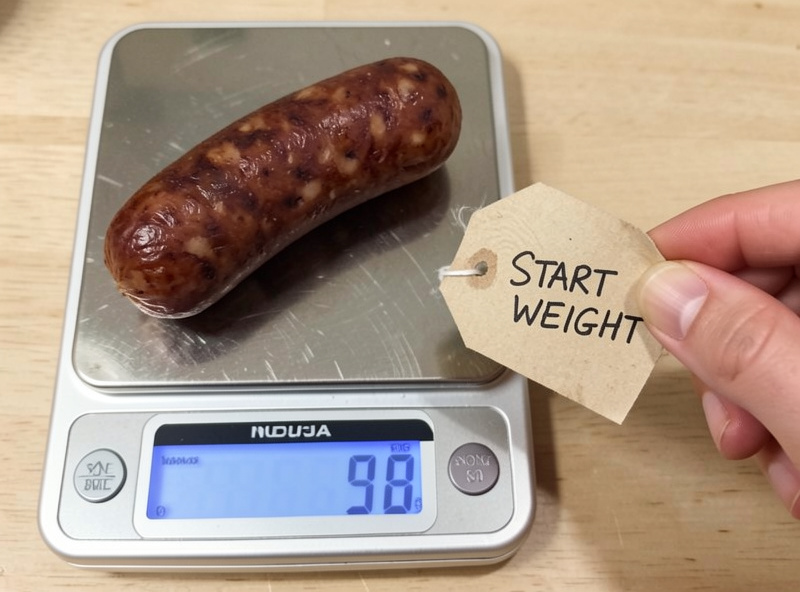
The method is simple and it never lies. Weigh the sausage right after stuffing and record that as the start weight — write it on a tag tied to the piece, and in a notebook or spreadsheet. Then weigh again periodically through the dry. The target weight is straightforward arithmetic: for 30% loss, multiply the start weight by 0.70. A 1000 g stuffed ‘nduja is done at 700 g; pull it anywhere from about 750 g (25% loss) to 700 g (30%) depending on how soft you like it. I weigh every few days near the end so I catch the window rather than overshoot it. A chamber data logger tracks the climate, but the meat scale tracks doneness.
Timeline by Diameter
With the caveat that your chamber will shift these, here is the rough timing I see for different formats reaching the 25–30% endpoint:
| Format | Approx. diameter | Typical time to 25–30% loss |
|---|---|---|
| Narrow beef middle | ~40–50 mm | 2–3 weeks |
| Medium sewn cap | ~50–60 mm | 3–5 weeks |
| Wide beef bung | ~70–90 mm | 4–8 weeks |
These are starting expectations, not promises — a damp basement winter or a chamber held a touch humid will stretch them out. The narrower formats I recommend for beginners in my ‘nduja casing guide are partly about this: a faster, more predictable dry is easier to learn on than an eight-week bung.
What “Done” Feels Like
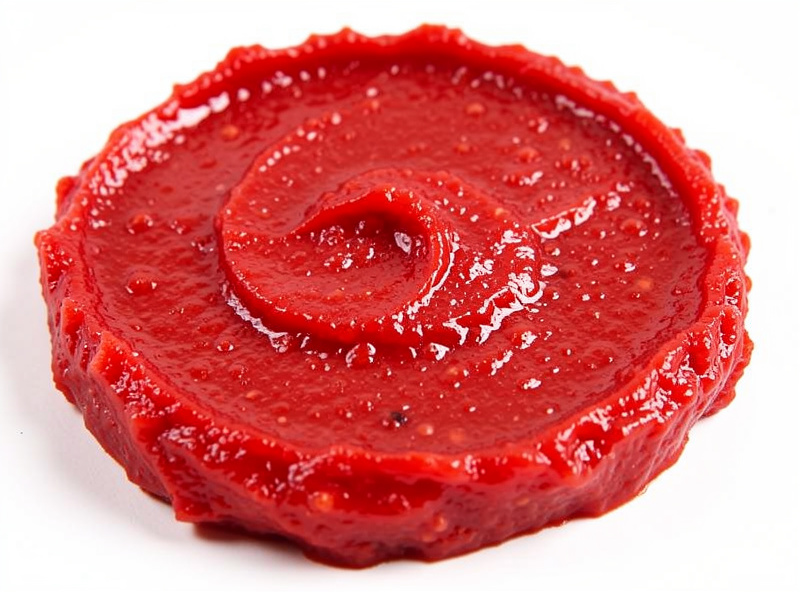
Beyond the scale, finished ‘nduja has a particular feel: the sausage is set and yields evenly when gently squeezed, with no soft, sloshy core that signals it is still wet inside. Cut one open and it should be a uniform, spoonable paste from edge to centre — bright red, glossy, and spreadable, with no wet ring at the core or hard band at the casing. A wet, mushy centre means it needs more time; a hard outer ring over a soft middle is case hardening, a humidity problem rather than a time one.
Pulling Too Early or Too Late
The two failure modes pull in opposite directions. Too early — before the weight loss target — and the sausage is still too wet and soft to be stable, and crucially you should never pull it before the fermentation pH drop is complete, because the acid drop is what makes it safe, not the drying alone. The dry reduces water activity on top of that acid hurdle. Too late and you sacrifice the spreadable texture that is the whole point. The weight log keeps you honest on both ends: it confirms enough moisture has left, and it stops you overshooting. The full safety logic of how pH, salt, cure, and drying stack up is in my spreadable salami safety guide.
Reading the Weight-Loss Curve
If you plot the weights, ‘nduja loses moisture fastest in the first week or two and then slows as the surface sets and the remaining water has further to travel. That shape is normal and useful: a curve that flattens too early usually means the surface has dried and is now holding water in — the early warning sign of case hardening — while a curve that keeps dropping fast can mean the chamber is too dry and the piece is heading past the spreadable window. I keep the numbers in the same weight log I use for every piece, and over a few batches you learn to read the curve and predict the endpoint within a few days. That predictive feel is the real payoff of logging, and it is something a recipe that just says “dry for four weeks” can never give you.
A practical tip: weigh at the same time of day relative to the airflow cycle, because a piece weighed right after a humidify burst reads a touch heavier than one weighed mid-dry-cycle. The difference is small, but near the endpoint, when a few percent decides whether you pull it, consistency in how you weigh removes one more source of noise from the decision.
Storing the Finished ‘Nduja
Once it hits the soft-spread endpoint, stop the dry by moving it to cooler, sealed storage — the fridge. Wrapped in butcher paper, a finished ‘nduja holds for months, and the same hurdles that made it safe (low pH, salt, cure, reduced water) keep it that way. The cut face firms and darkens slightly with air, which is normal; just spoon past it. For longer keeping I portion and freeze, and the high fat means it thaws with very little loss of texture. If you leave a finished piece hanging in the chamber instead of moving it to storage, it simply keeps drying past spreadable, so the endpoint is also the moment to get it out of the drying environment.
Holding the Climate Steady
Consistent drying time depends on a consistent chamber. My envelope is ~12–15 °C (54–59 °F) and ~75–80% relative humidity, held by dedicated controllers rather than a fridge thermostat. If the humidity swings, the dry stalls or races, and a racing surface is exactly what case-hardens a wide piece. Stable air exchange matters too — gentle, cycled airflow rather than a constant blast. The whole approach is in my curing chamber climate control guide; get the climate steady and the weight-loss curve becomes smooth and predictable, which is what lets you plan around the endpoint.
Frequently Asked Questions
How long does ‘nduja take to dry?
It depends on diameter and chamber conditions, not a fixed calendar. A narrow beef middle can reach the endpoint in 2 to 3 weeks, while a fat beef bung may take 4 to 8 weeks. The reliable signal is weight loss of about 25 to 30%, not the number of days.
What weight loss should ‘nduja reach?
About 25 to 30% of its stuffed weight, deliberately less than a sliceable salami’s 35 to 40%. You stop early so it stays soft and spreadable. A 1000 g stuffed sausage is done between roughly 750 g (25% loss) and 700 g (30% loss).
How do I know when ‘nduja is finished?
Weigh it. Record the stuffed start weight, then weigh through the dry until it reaches 25 to 30% loss. It should feel set and yield evenly with no sloshy core, and cut open to an even spreadable paste from edge to centre with no wet ring or hard band.
Can I eat ‘nduja before it hits the weight target?
No. Pulling it early leaves it too wet and soft to be stable, and you must never pull before the fermentation pH drop is complete, since the acid drop is what makes it safe. The drying then reduces water activity further. Wait for both the ferment and the weight loss.
Why is my ‘nduja drying so slowly?
Usually a wide casing, high chamber humidity, or low airflow. A fat beef bung holds a lot of water and releases it slowly, and humidity above the high 70s stalls the dry. Check your humidity is around 75 to 80% and that the chamber has gentle, cycled air exchange.
Related Guides
- How to Make ‘Nduja at Home: Calabrian Spreadable Salami
- Best Casing for ‘Nduja: Wide Beef Bung vs Sewn-End Caps
- Is Spreadable Salami Safe?
- Case Hardening on Salami: Fixing the Hard Ring
- Curing Chamber Climate Control: The Complete Guide