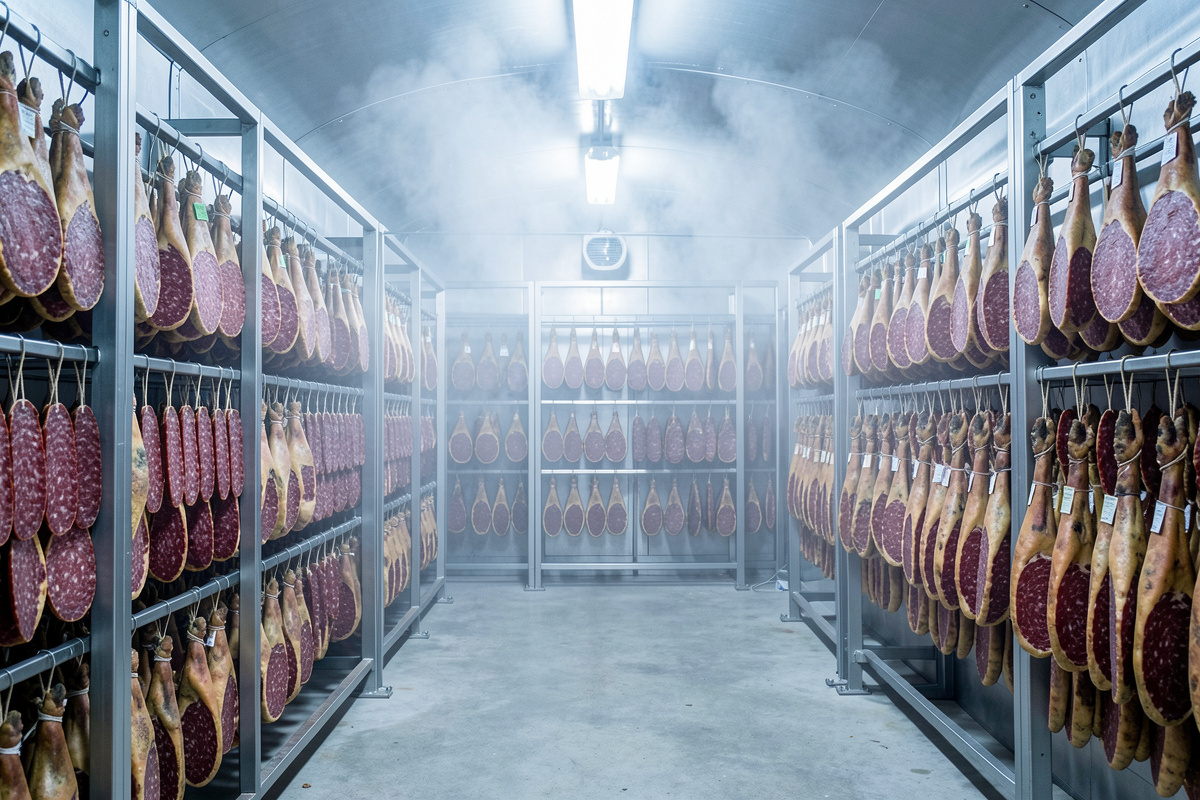

Controlling humidity in a large curing chamber means sizing active humidification and dehumidification to the box volume and giving the controller a tight band to work inside — a damp sponge that holds 78% RH in a bar fridge does nothing in a 300-litre larder box. The bigger the chamber, the more air there is to saturate and the more the humidity swings, so passive tricks stop working and you have to control the moisture actively.
Across the chambers I run, humidity is the variable that decides whether a batch succeeds, and it gets harder to hold as the box gets bigger. A large chamber overshoots high when you load a fresh wet batch and crashes low as that load dries down, all while more thermal mass swings the dew point around. This guide is how I tame that in a big box: sizing the kit, setting the band, killing stratification, and recovering when it drifts.
Why a Big Box Swings More
A large chamber is harder to hold steady for three compounding reasons: more air volume to saturate or dry, more thermal mass swinging the temperature and therefore the dew point, and more meat releasing moisture during the first weeks of drying. A fresh load of wet salami can push a big chamber to 90% RH for days, then as those pieces dry the same box drifts dry and you are suddenly fighting the opposite problem.
This is why methods that work in a small box fail at scale. A tray of water or a damp cloth simply cannot move enough moisture against a few hundred litres of air, and a single humidifier with no dehumidifier has no way to bleed off the early-batch spike. Large-chamber humidity control is therefore always active and two-sided — something adding moisture and something removing it, both under one controller. For the why behind the whole envelope, see my climate control guide, and the scaling overview in the advanced curing chamber guide.
Sizing the Humidifier to the Volume
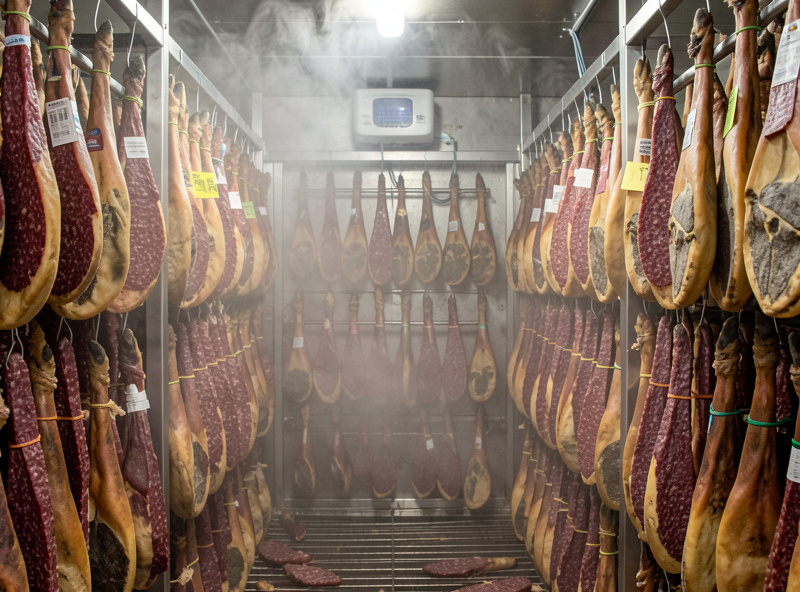
The humidifier has to add moisture faster than a large air volume and a hungry compressor can strip it out, which means an ultrasonic cold-mist unit with a real tank rather than a passive evaporator. For a full-height chamber I run an ultrasonic humidifier with output I can throttle, plumbed so its mist enters near the circulation fan and gets distributed rather than dumped in one wet corner.
The rule I use is simple: pick a humidifier that can take the empty chamber from room humidity to 80% RH within an hour or two, because if it can do that it can easily keep up with steady-state losses. Undersize it and you will watch the chamber sag dry every time the compressor runs. The device options and their trade-offs — ultrasonic versus wick versus steam — are laid out in my humidifier comparison. An ultrasonic unit with a decent reservoir, such as a large-tank cold-mist humidifier, is my default for a big box. As an Amazon Associate I earn from qualifying purchases.
Sizing the Dehumidifier for the Early Spike
The dehumidifier is the half people skip, and it is exactly what a large chamber needs when a fresh batch dumps moisture into the air. For the first week or two after loading wet salami, RH wants to sit at 90% no matter what — that is when surface mold can turn slimy and bad — and only active dehumidification pulls it back to the 78% target. A small Peltier or desiccant dehumidifier on the controller’s dehumidify output handles it.
You do not need a giant unit; you need one that can claw back the early spike and then sit idle once the load dries down. In a cool chamber, a compressor dehumidifier struggles because it ices up at low temperature, which is why Peltier and desiccant types suit the job better. Size it with my dehumidifier guide, and if you are in an emergency oversaturation right now, the fast recovery steps are in curing chamber too humid.
Setting the Control Band So Devices Do Not Fight
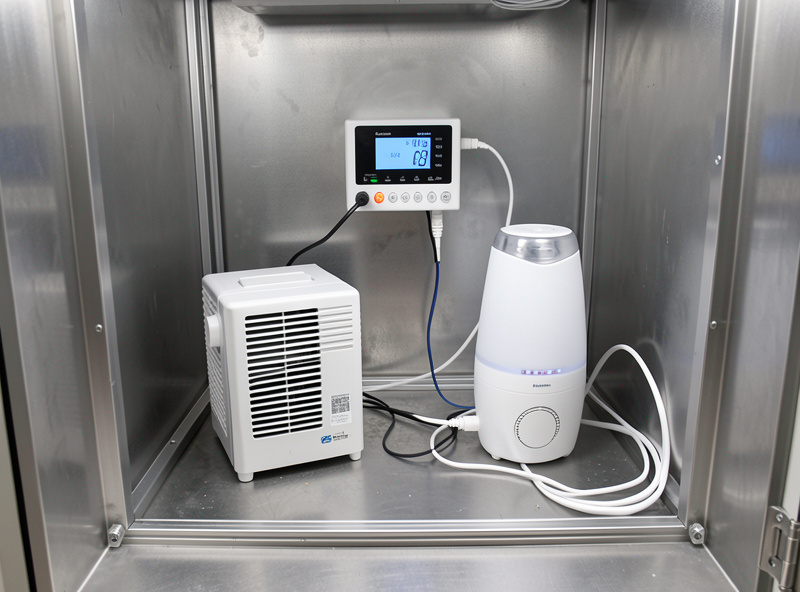
The most common large-chamber mistake is a control band so tight that the humidifier and dehumidifier switch on top of each other and saw the RH back and forth. Each device needs its own trigger point with a dead zone between them: I set the humidifier to kick in below about 74% and the dehumidifier above about 82%, leaving a quiet band around the 78% target where neither runs.
That dead band is what gives a big chamber a flat humidity line instead of a jagged one. A dedicated humidity controller like the Inkbird IHC-200 lets you set the humidify and dehumidify points independently, which is the whole reason it beats a single-setpoint device. Dial it in with my Inkbird controller upgrade guide, and remember the readings are only as good as the sensor — calibrate it with the salt and ice tests and place a trusted reference at meat height per my sensor guide.
Airflow: The Hidden Half of Humidity Control
You cannot control humidity you cannot move, and a large chamber stratifies badly — humid air pools at the bottom, drier air sits up top, and a single sensor reads a number that is wrong for most of the box. Gentle internal circulation homogenises the air so the controller’s one reading actually represents the whole chamber, and timed fresh-air exchange swaps stale, moisture-laden air for room air.
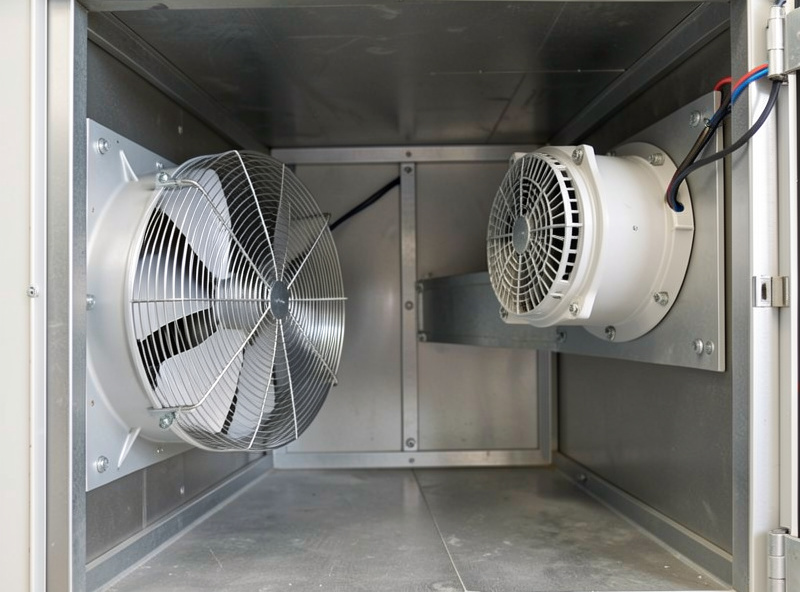
In my big chamber a slow circulation fan runs to keep the air even, while a 120 mm fan on a 5-minutes-on, 25-minutes-off timer handles exchange — never a fan blasting directly on the meat, which surface-dries it and causes case-hardening. Get the fan sizing, CFM and placement right with my airflow guide, and automate the cycle using smart plug schedules. The same humidity-is-destiny lesson runs across my projects — the chamber and the hydroponic reservoir teach it in different rooms.
Reading the Curve and Recovering Drift
A large chamber moves slowly, so the discipline is to change one variable and wait a full day before judging — its thermal mass means a tweak that looks like it did nothing at 10 minutes has fully landed by the next morning. I read the humidity log alongside the weight log: if RH is high and weight loss has stalled, the chamber is too wet; if RH is low and pieces are losing weight too fast with a firming shell, it is too dry and case-hardening is the risk.
Recovery is methodical, not panicked. Too wet: raise dehumidify duty, increase air exchange, and check the door seal for a leak letting humid room air in. Too dry: raise the humidify trigger, reduce exchange frequency, and slow the airflow over the meat. The full fault-by-fault method is in my humidity troubleshooting guide and the general troubleshooting guide. Throughout, the cure rules are unchanged: long dry-cures and fermented sausage need Cure #2, and humidity control never substitutes for correct curing salt — the National Center for Home Food Preservation is blunt that nitrite, not climate, is what keeps a long cure safe.
Frequently Asked Questions
Why is humidity harder to control in a large curing chamber?
A large box has more air to saturate, more thermal mass swinging the dew point, and more meat releasing moisture early in a batch. So RH overshoots high when you load fresh wet pieces and crashes low as they dry down. Passive tricks fail at volume; you need active humidification and dehumidification.
How big a humidifier do I need for a large chamber?
Pick an ultrasonic cold-mist humidifier that can take the empty chamber from room humidity to about 80% relative humidity within an hour or two. If it can do that, it will keep up with steady-state losses. Undersized passive evaporators cannot move enough moisture against a few hundred litres of air.
Do I really need a dehumidifier in a curing chamber?
In a large chamber, yes. When a fresh wet batch is loaded, RH sits near 90% for a week or two and only active dehumidification pulls it back to target. A small Peltier or desiccant unit suits a cool chamber because compressor dehumidifiers ice up at low temperature.
What control band stops the devices from fighting?
Give each device its own trigger with a dead zone between them. Set the humidifier to switch on below about 74% and the dehumidifier above about 82%, leaving a quiet band around the 78% target where neither runs. A dedicated humidity controller with independent setpoints makes this possible.
Why does my large chamber read different humidity at top and bottom?
Stratification. Humid air pools low and drier air sits high, so one sensor misreads most of the box. A gentle internal circulation fan homogenises the air so the controller’s single reading represents the whole chamber, while a timed exchange fan swaps stale moist air for room air.
How long should I wait before judging a humidity change?
A full day. A large chamber’s thermal mass means it responds slowly, so a tweak that looks like it did nothing after ten minutes has usually fully landed by the next morning. Change one variable at a time and read the humidity and weight logs together before adjusting again.
Related Guides
- Advanced Curing Chamber Guide
- Curing Chamber Humidifier: Ultrasonic vs Wick vs Steam
- Curing Chamber Dehumidifier: Sizing It Right
- Troubleshooting Chamber Humidity Issues
- Curing Chamber Too Humid: Fast Fixes