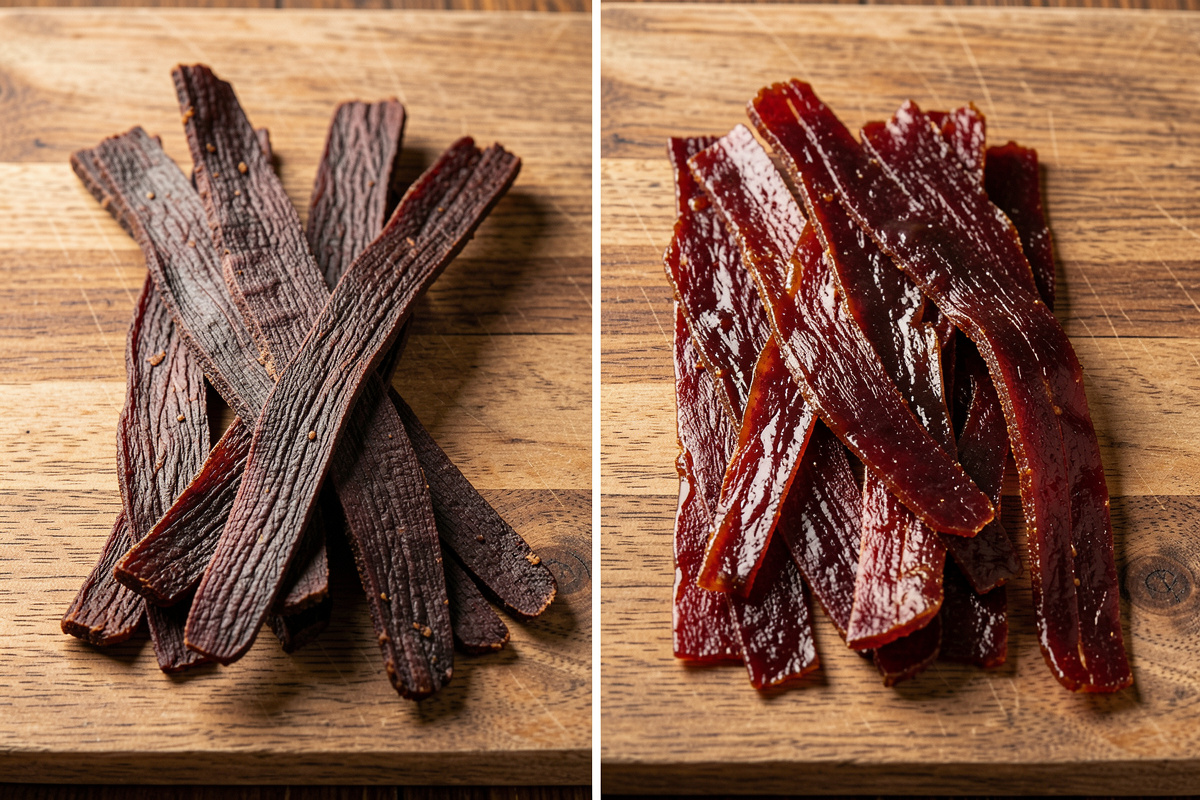

Biltong and jerky are both dried beef, but the methods barely overlap: biltong is sliced thick with the grain, vinegar-cured, and air-dried raw over days, while jerky is sliced thin against the grain and dried with heat over hours. One is a cured raw product; the other is cooked and dried. The USDA recommends jerky meat reach 71 °C (160 °F).
I make biltong, not jerky, but I have made plenty of both to know where the lines are — and the confusion between them causes real mistakes, like people trying to “air-dry” jerky without heat or running biltong through a dehydrator and wondering why it tastes cooked. They are different animals with different safety models. Here is the honest side-by-side, drawn from the main biltong guide, so you can decide which one you actually want to make.
The Core Difference: Acid and Air vs Heat
Everything else follows from one fact. Biltong is made safe to eat raw by three things working together — acid from vinegar, heavy salt, and fast drying in moving air — with no cooking at any stage. Jerky is made safe primarily by heat: the meat is brought to a pathogen-killing temperature, and drying then preserves it. That is why biltong hangs at ambient temperature for days while jerky sits in a dehydrator or low oven for hours.
This is not a stylistic choice; it is two genuinely different preservation routes. You cannot take the biltong shortcut (skip the heat) on a jerky recipe that relied on heat for safety, and you cannot rush biltong through high heat without turning it into something closer to jerky. The water activity explainer covers why both routes ultimately have to drop moisture low enough to be shelf-stable, just by different paths.
The Cut and the Slice
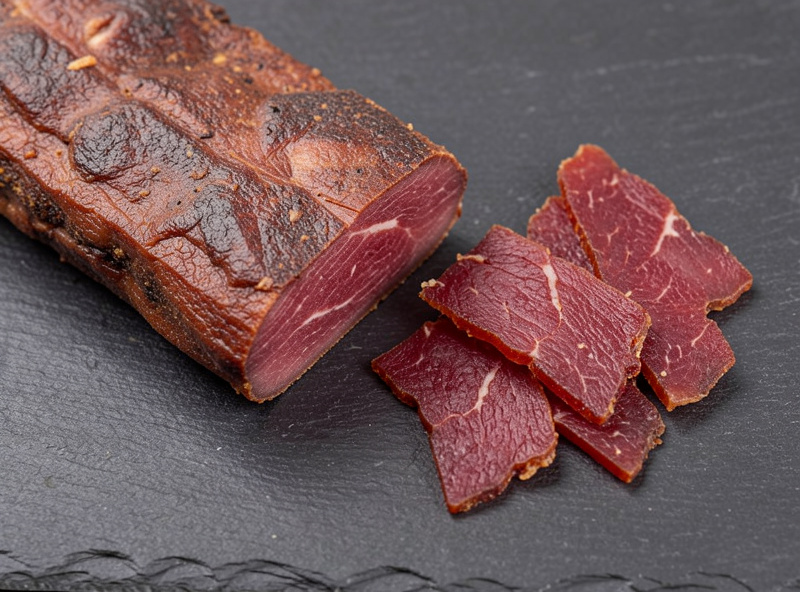
Biltong uses thick strips — 2 to 3 cm — sliced with the grain, which gives that long, fibrous chew. Jerky is sliced thin, often only a few millimetres, against the grain, so it bites cleanly and snaps. The grain direction alone changes the eating experience completely. Biltong’s thickness also means it dries slower and is eaten in chunks you slice off; jerky’s thinness is what lets heat penetrate and dry it quickly.
The Marinade and Flavour
Biltong’s flavour is built on vinegar, salt, and toasted coriander with black pepper — savoury, tangy, and aromatic, as covered in the cure and spice guide. Jerky marinades lean sweet and umami: soy sauce, Worcestershire, brown sugar, sometimes liquid smoke and chilli. Biltong tastes like cured beef and coriander; jerky tastes like a seasoned, often sweet, cooked snack. Neither is better — they are aiming at different things.
Heat, Temperature, and Safety
This is where it matters most. For jerky, the USDA recommends heating the meat to 71 °C (160 °F) — either before drying or during — because drying at typical dehydrator temperatures alone may not reliably kill pathogens. Biltong never sees that heat; its safety rests instead on vinegar acidification, salt, and the speed of drying in oxygen-rich moving air, which is hostile to the anaerobic bacteria that matter. If you add insurance to biltong it is cure #1 at 2.5 g per kilogram, not heat.
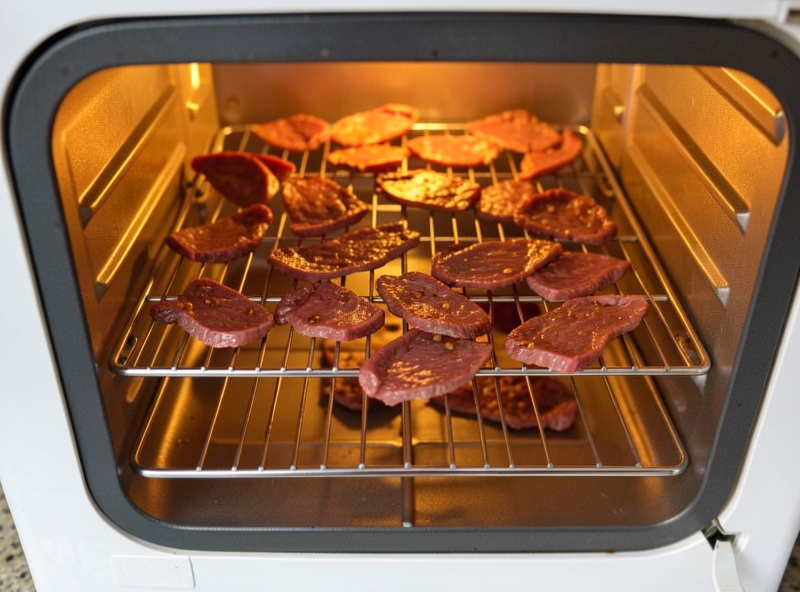
The practical takeaway: if you are making jerky, get the meat to temperature — do not treat it like biltong and skip the heat. If you are making biltong, do not crank a dehydrator hot and cook it; let it air-dry. Mixing the safety models is where people get into trouble.
Texture, Fat, and Shelf Life
Biltong is denser and chewier, can carry a little fat because it is usually eaten within a couple of weeks, and ranges from moist “wet” styles to firm dry ones depending on how far you dry it. Jerky is typically drier, leaner (fat goes rancid over its longer intended shelf life), and chewy-to-brittle. Jerky is often made for longer storage and portability; biltong is often made to eat fresher and moister.
Side-by-Side Comparison
| Attribute | Biltong | Jerky |
|---|---|---|
| Slice | Thick (2–3 cm), with the grain | Thin (mm), against the grain |
| Cooked? | No — raw, cured | Yes — heated to 71 C (160 F) |
| Safety model | Vinegar acid + salt + fast air-dry | Heat + drying |
| Drying | Air-dried at ambient, days | Dehydrator/oven heat, hours |
| Signature flavour | Coriander, pepper, vinegar tang | Soy, sugar, smoke (sweet/umami) |
| Typical curing salt | None traditional; cure #1 optional | Cure #1 common |
| Fat | Some fat tolerated | Lean preferred |
| Texture | Dense, long chew | Chewy to brittle, clean bite |
| Equipment | Biltong box (bulb + fan) | Dehydrator or low oven |
Which Should You Make?
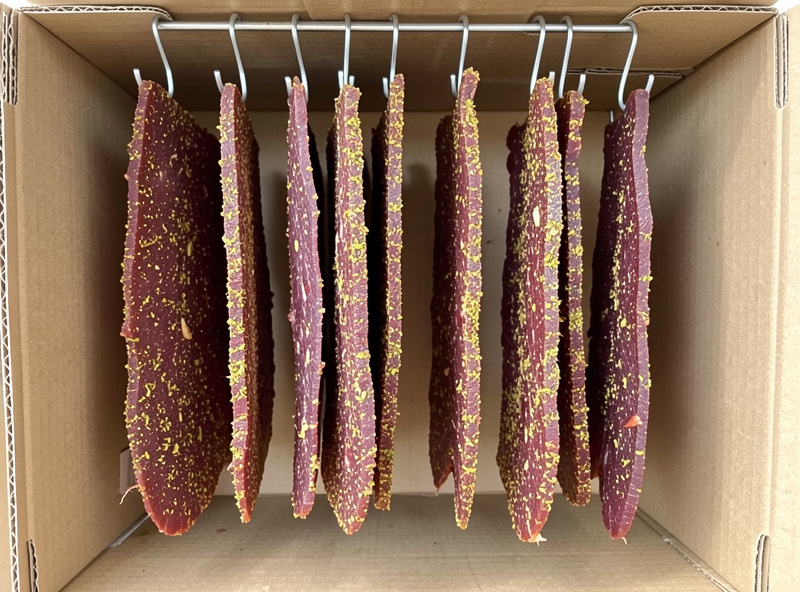
If you want a deep, savoury, coriander-forward cured snack and you are happy to let it hang for a few days, make biltong — and you only need a simple biltong box. Mine is a converted cabinet with a low-watt bulb for gentle warmth and a 120 mm computer fan for air exchange, with a SensorPush HT.W watching the temperature so it never creeps into cooking range. If you want a quick, sweet-and-smoky snack done in an afternoon and you have a food dehydrator, make jerky. They scratch different itches, and once you understand that they are two preservation routes rather than two recipes for the same thing, you will stop trying to make one behave like the other.
As an Amazon Associate I earn from qualifying purchases.
Storage and Shelf Life Compared
The two snacks keep differently because they reach dryness by different routes. Jerky is usually dried hard and lean specifically for portability and shelf life — it is the classic backpack food precisely because low fat and low moisture let it sit at room temperature for a long time in a sealed pack. Biltong, especially the popular wet style, is often eaten moister and fresher, which means shorter keeping and a stint in the fridge. Take biltong to a high weight loss and it closes much of that gap, but the everyday reality is that jerky is built to last and biltong is frequently built to enjoy soon.
Fat is the deciding variable for both. The fat that makes biltong rich is also what limits its shelf life, since fat goes rancid long before lean muscle does; jerky stays lean for exactly that reason. Whichever you make, the underlying clock is moisture: lower moisture and lower water activity mean longer, safer storage — once water activity drops below about 0.85 the pathogens that matter can no longer grow, and that principle does not care which preservation route got you there.
Common Mistakes That Blur the Two
The errors I see most both come from treating one method like the other. People try to “air-dry” a jerky recipe with no heat, not realising that recipe leaned on heat for safety — that is genuinely risky. Others run biltong through a hot dehydrator and end up with a cooked, jerky-like result, then wonder why it lost the cured-beef character they wanted. Keep the methods whole: if it is jerky, bring the meat to temperature; if it is biltong, let it air-dry at ambient with a fan and lean on the vinegar-and-salt cure for safety. Respect which route you are on and both turn out well.
Frequently Asked Questions
Is biltong healthier than jerky?
They are both high-protein dried beef, and which has less sugar or salt depends entirely on the recipe. Biltong is typically less sweet because jerky marinades often add sugar, while biltong can carry a little more fat. Rather than make health claims, compare the specific ingredients of the version you are making.
Is biltong raw and jerky cooked?
Essentially yes. Biltong is a raw cured product made safe by vinegar acidification, salt, and fast air-drying. Jerky is cooked and dried, with the USDA recommending the meat reach 71 C (160 F) to kill pathogens. They use different safety models.
Can I make biltong in a dehydrator?
You can use a dehydrator on a low setting with good airflow, but if you run it hot you are cooking the meat and effectively making jerky. True biltong air-dries at ambient temperature, which is why a simple biltong box with a fan suits it better than a hot dehydrator.
Why is biltong sliced thick and jerky thin?
Biltong is sliced thick and with the grain for a long, fibrous chew and to air-dry slowly. Jerky is sliced thin and against the grain so heat penetrates quickly and it bites cleanly. The slicing follows directly from each method’s drying approach.
Does jerky need curing salt?
Cure #1 is common in jerky for colour, flavour, and an added safety margin, though heat is the primary safety step. Biltong traditionally uses no nitrite at all, relying on vinegar, salt, and fast drying, with cure #1 as an optional margin.
Related Guides
- Biltong Guide: Air-Dried Beef in a Warm, Dry Box
- How to Make Biltong at Home
- Biltong Cure Recipe and Spice Guide
- Biltong Drying Time and Moisture Guide
- Water Activity and Food Safety in Charcuterie