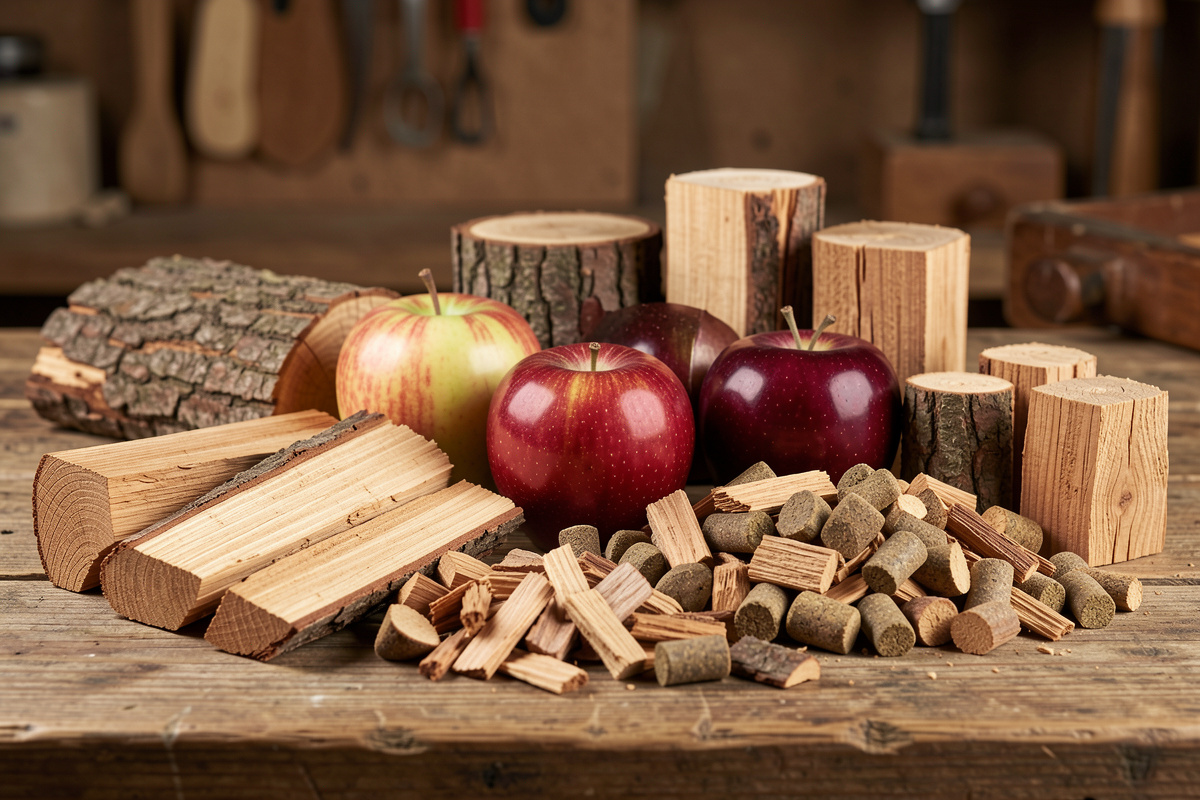

The best wood for smoking meat is any clean hardwood matched to the protein: alder and fruit woods like apple and cherry for fish and poultry, oak and hickory for beef and pork, and never a resinous softwood like pine or cedar. More important than the species is how you burn it — thin blue smoke from a hot, well-fed fire tastes sweet; thick white smoke tastes like an ashtray. Meat takes on most of its smoke in the first 2-3 hours, while the surface is still cool and moist, so the burn matters far more than which species is in the firebox.
I keep beech, oak, alder, apple, cherry, and hickory on the shelf for both my hot smoker and my cold-smoking chambers, and after years of running them I am convinced people overthink the species and underthink the fire. A clean burn of a “wrong” wood beats a smouldering burn of the perfect one every time. Here is how I actually choose, from the curing side where smoke is a finishing flavour layered onto meat I have already salted with intent.
The only rule that really matters: thin blue smoke
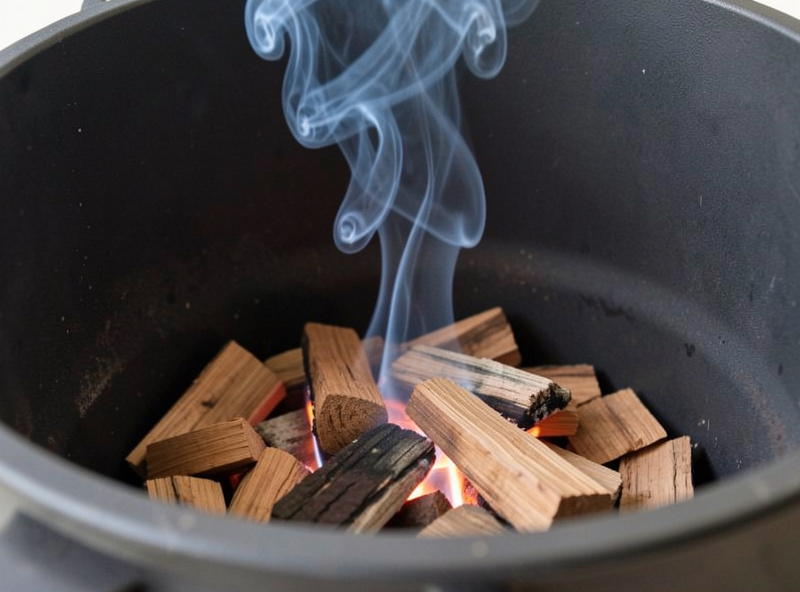
Before species, before pairing, get the smoke itself right. You want thin, almost invisible blue smoke coming off a hot, oxygen-fed fire. Thick, billowing white or grey smoke comes from wood that is smouldering and starved of air, and it deposits the bitter, sooty compounds that make home-smoked meat taste acrid and harsh.
This single factor accounts for most “I don’t like smoked food” complaints. The fix is airflow and heat: give the fire enough oxygen to burn cleanly rather than choking it down to a smoulder. On my cold-smoke maze the same principle applies even without heat — a clean-burning bed of pellets gives sweet smoke, a damp or packed one turns bitter. Get the smoke clean and almost any hardwood will make good food; get it dirty and the finest cherry wood will not save you.
The hardwood spectrum, mild to strong
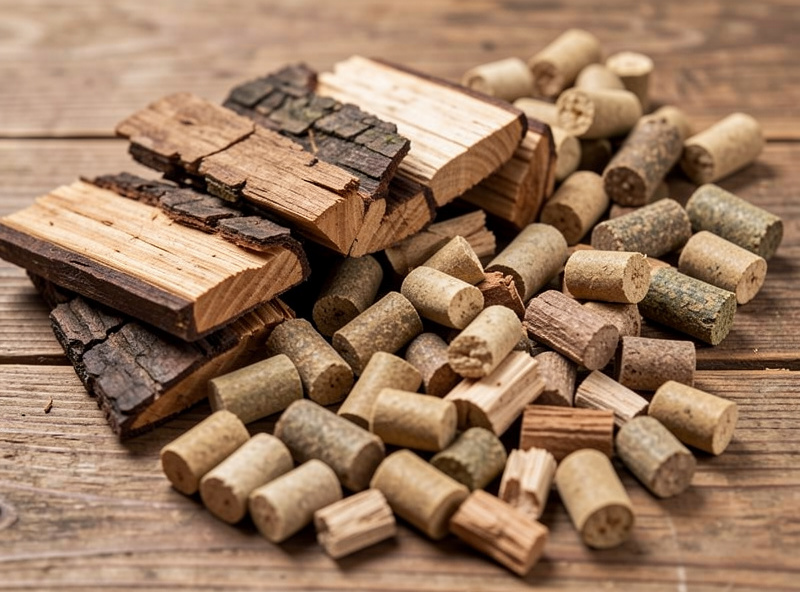
Smoking woods fall on a spectrum of intensity, and matching that intensity to the meat is the heart of the craft. Mild woods — alder and the fruit woods like apple, cherry, and peach — are sweet and gentle, perfect for fish and poultry that strong smoke would overpower. Medium woods like oak, beech, maple, and pecan are the versatile middle, good on almost anything.
Strong woods — hickory, mesquite, and walnut — are assertive and best on rich red meat that can stand up to them. The classic beginner mistake is reaching for the strongest wood in the bag because “more smoke equals more flavour,” then wondering why the chicken tastes bitter. It is the opposite: delicate foods want delicate smoke. I lean mild far more often than strong, and I blend — a little hickory into apple gives backbone without harshness.
Matching wood to meat
This is the pairing chart I work from. Treat it as a starting point, not a law — the regional traditions vary, and personal taste is the final arbiter — but these pairings are reliable and hard to get wrong.
| Wood | Strength | Best for |
|---|---|---|
| Alder | Mild | Salmon, fish, delicate poultry |
| Apple | Mild, sweet | Poultry, pork, fish |
| Cherry | Mild, sweet | Poultry, pork, good colour on anything |
| Beech | Mild-medium | Fish, sausage, all-rounder |
| Maple / Pecan | Medium | Poultry, pork, ham |
| Oak | Medium | Beef, brisket, lamb, sausage |
| Hickory | Strong | Pork, ribs, bacon, beef |
| Mesquite | Very strong | Beef, short hot cooks only |
For my own work, alder and apple do most of the fish and poultry, oak and hickory handle the brisket and pork, and beech is my quiet workhorse on the cold-smoke side for salmon and cheese. The parallel chart for the cold chamber is in best wood for cold smoking, where the species matters even more because there is no heat to round off harsh smoke.
Woods to never use
Never smoke with resinous softwoods — pine, fir, spruce, cedar, cypress, and the like. They are loaded with sap and resins that produce acrid, sooty smoke and unpleasant, potentially harmful compounds. The lone exception is the cedar plank used as a grilling surface, which is a different technique from burning cedar for smoke. As a rule, if it is a needle-bearing evergreen, keep it out of the smoker.
Also off the list: any wood that has been painted, stained, glued, pressure-treated, or salvaged from pallets and construction offcuts, all of which can carry toxic chemicals. And never use mouldy or rotten wood. Stick to clean, seasoned hardwood sold for smoking or cut from a known food-safe hardwood, and you sidestep the whole problem. This is one of the few genuine safety rules in wood selection, and it does not bend.
Chunks, chips, pellets, and dust
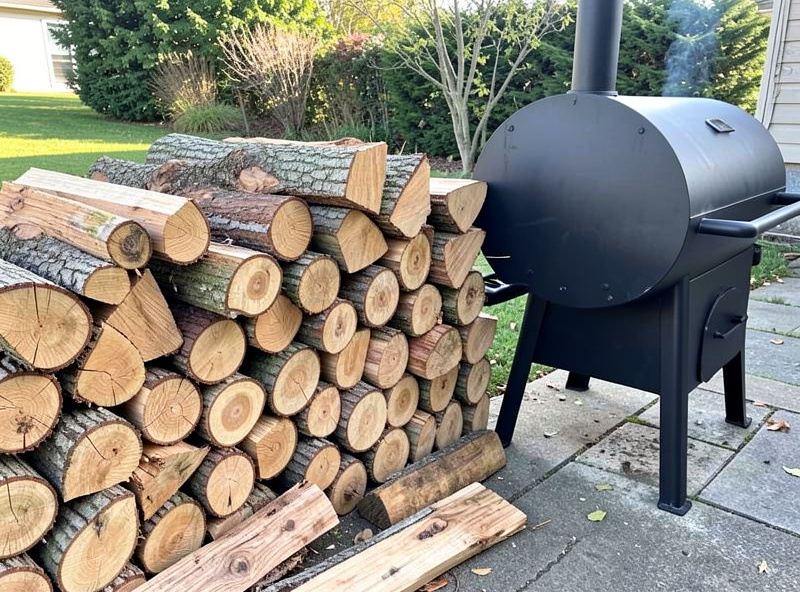
The form of the wood matters as much as the species, and it depends on your smoker. Chunks suit charcoal and offset smokers, burning slowly for a long, steady smoke. Chips ignite fast and burn out quickly, better for short hot smokes or gas grills where you top them up. Pellets feed pellet grills and cold-smoke mazes. Fine dust is for cold-smoke generators that need a slow, cool smoulder.
Match the form to the job: a long brisket wants chunks or logs that last; a quick hot-smoked fish is fine on chips. On my cold-smoke maze I run pellets and dust precisely because they smoulder cool and slow without adding heat — the whole point of cold smoking. Using the wrong form is a common frustration: chips in a setup that wants chunks burn out in twenty minutes and leave you constantly refilling.
The soaking myth and seasoned wood
You do not need to soak wood chips. Soaked wood does not “smoke more” — the water just sits on the surface and has to boil off before the wood can combust, producing steam first and delaying clean smoke. If anything it encourages the cool, smouldering burn that makes bitter smoke. I gave up soaking years ago and my smoke got cleaner for it.
What does matter is using seasoned, dry hardwood rather than green, freshly cut wood. Green wood is full of moisture and sap, smoulders rather than burns, and tastes harsh — the same problem as soaking, baked in. Properly seasoned wood has been dried for months until its moisture is low, and it lights and burns clean. If you cut your own, give it the better part of a year to season before it goes near food. Dry wood, clean fire, thin blue smoke: that is the whole recipe.
Blending woods and how much smoke
Once you are comfortable with single woods, blending is where the fun starts. A base of a mild, sweet wood with a small fraction of something stronger gives complexity without harshness — apple with a little hickory is my standard for pork, and oak with a touch of cherry adds colour and a faint sweetness to beef. Think of the mild wood as the body and the strong wood as the seasoning, used sparingly.
How much smoke a piece takes is mostly decided early in the cook, while the surface is still cool and moist, so you do not need to pile on wood for the entire session. On a long brisket I run smoke heavily for the first few hours and let the back half coast; flooding it with smoke the whole time just pushes it toward bitter. Meat also stops absorbing smoke flavour meaningfully once the surface dries and warms, which is another reason the pellicle and the early hours matter most. More smoke for longer is not more flavour past a point — it is just more bitterness, the single most common way enthusiastic beginners overshoot.
Storing your smoking wood
Keep smoking wood dry and off the ground, ideally under cover with airflow around it, so it stays seasoned and never goes mouldy. Damp wood smoulders and tastes harsh; mouldy wood goes straight in the bin. I store chunks and logs in a ventilated rack and keep pellets and dust in sealed tubs, because pellets in particular swell and crumble to useless mush the moment they take on moisture. Buy wood in quantities you will actually use within a season or two, and a small, well-kept stock will always beat a damp pile of the perfect species.
Frequently Asked Questions
What is the best all-round wood for smoking meat?
Oak is the most versatile all-rounder, clean and steady on almost anything from beef to sausage. For poultry and fish, apple or alder are the best mild choices. Match the wood’s strength to the meat, and keep the smoke thin and blue.
Can you use pine or cedar to smoke meat?
No. Resinous softwoods like pine, cedar, fir, and spruce produce acrid, sooty smoke and harmful compounds. Only clean hardwoods are safe for smoking. The cedar plank used for grilling is a different technique from burning cedar for smoke.
Should I soak wood chips before smoking?
No. Soaked wood does not smoke more; the water boils off as steam first, delaying clean combustion and encouraging the smouldering burn that makes bitter smoke. Use dry, seasoned hardwood and feed the fire enough air to burn clean.
Why does my smoked meat taste bitter?
Bitter, acrid meat comes from thick white smoke produced by smouldering, oxygen-starved wood, or from over-smoking with too strong a wood. Aim for thin blue smoke from a hot, well-fed fire, and use milder woods on delicate foods.
Related Guides
- Hot Smoking for Charcuterie: The Complete Guide
- Best Wood for Cold Smoking
- Hot-Smoked Salmon Guide
- Hot-Smoked Chicken and Poultry
- BBQ Brisket From a Curing Perspective
- Cold Smoking at Home: The Complete Guide