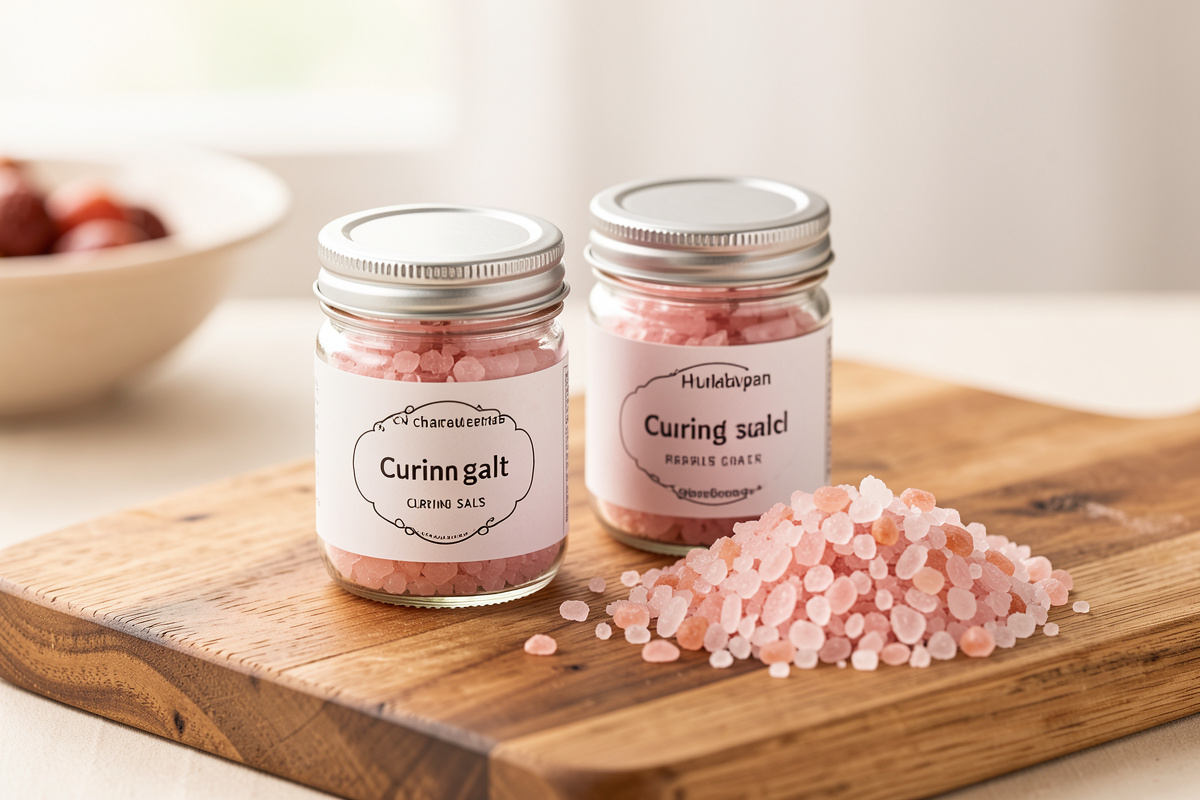

Pink salt in charcuterie is not the rosy Himalayan rock salt sold for grinders — it is curing salt, dyed pink on purpose so you never mistake it for table salt, and its active ingredient is sodium nitrite (with sodium nitrate added in the long-cure version). At the standard home dose of 2.5 grams per kilogram of meat, it delivers the nitrite that protects cured meat against botulism, holds the cured pink color, and keeps the fat from going rancid. Confusing the two pink salts is the single most common beginner mix-up I see, so let me clear it up properly.
I run converted-fridge curing chambers in Sweden, and curing salt sits on the most carefully labeled shelf in the workshop. Everything below is the chemistry I actually rely on — what nitrite and nitrate do, why the pink dye exists, how much to use, and why the popular “natural, no-nitrate” framing is more marketing than safety. This is a guide to using the stuff correctly, not a health verdict on whether cured meat is good or bad for you; that is a separate question I am careful not to answer with hand-waving.
Two Different Pink Salts, One Dangerous Confusion
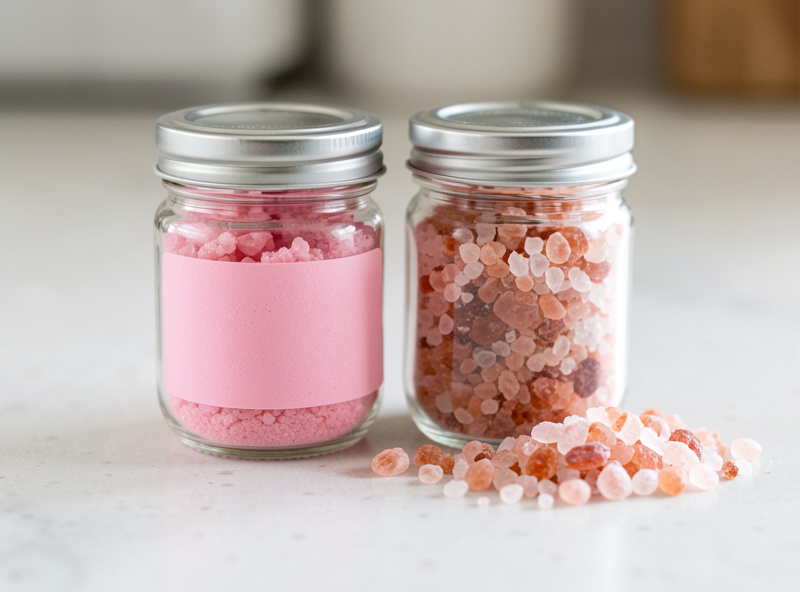
Himalayan pink salt is just sodium chloride with trace minerals that tint it pink — a finishing salt, nothing more. Pink curing salt is regular salt deliberately colored with a tiny amount of dye and blended with sodium nitrite. They look superficially similar and share a color, but they do completely different jobs, and they are emphatically not interchangeable. Using Himalayan pink salt where a recipe calls for pink curing salt leaves a long-dried sausage with no botulism protection at all; using curing salt as a finishing salt would be a dosing error in the other direction.
The dye is a safety feature. Sodium nitrite at the concentration used in pure Cure #1 would be dangerous to eat by the spoonful, so the pink tint guarantees you can never confuse the small jar of curing salt with the big box of kitchen salt. Treat that pink jar like the potent ingredient it is: weigh it, label it, keep it away from where a guest might grab it as ordinary salt, and never scale up the dose because “a little more cure can’t hurt.” A little more absolutely can.
What Sodium Nitrite Actually Does
Sodium nitrite is the workhorse, and it earns its place by doing several jobs at once. The headline job is botulism control: nitrite specifically inhibits Clostridium botulinum, the anaerobic bacterium whose toxin is the deadly risk in the low-oxygen interior of a sausage or a sealed cure. No other common ingredient targets that organism the way nitrite does, which is why it is the dedicated safety hurdle in cured meat.
Nitrite also does the visible work. As it breaks down it forms nitric oxide, which binds to the meat’s myoglobin and fixes the stable pink-red color you recognize in salami and prosciutto — without it, cured meat dries to a dull grey-brown. And it is an antioxidant: it slows the fat oxidation that turns cured meat rancid and stale, the “warmed-over” flavor that ruins a piece long before anything dangerous happens. So one ingredient is buying you safety, color, and shelf life together. I dig into the spoilage side in rancidity in cured meats, and the color chemistry overlaps with the green ring question when curing goes uneven.
Where Sodium Nitrate Comes In
Sodium nitrate is the slow-release version, and it is the difference between Cure #1 and Cure #2. Nitrate on its own does very little — it has to be converted to nitrite by bacteria and time before it becomes active. That conversion is exactly what you want on a long cure: a coppa or a salami hanging for two or three months needs nitrite protection across that whole stretch, far longer than the initial nitrite charge would last. The nitrate acts as a reservoir, slowly feeding the cure with fresh nitrite over weeks.
This is why Cure #2 — which adds sodium nitrate to the nitrite — is the correct choice for anything air-dried over weeks or months without cooking, and Cure #1 (nitrite only) is for products cooked or cold-smoked and eaten relatively soon, like bacon. I cover that decision in depth in curing salt type 1 vs type 2, and the panic moment of grabbing the wrong tub in Prague Powder #1 vs #2 mixup. The rule of thumb: if it gets cooked, Cure #1; if it air-dries for the long haul, Cure #2.
The Pink Salts You Might Have in the Kitchen
Here is the disambiguation table I wish every beginner saw before their first order. Three “pink” things, three completely different roles.
| Product | What it contains | What it is for | Dose in curing |
|---|---|---|---|
| Cure #1 (Prague Powder #1) | 6.25% sodium nitrite, rest salt, pink dye | Short cures, cooked or cold-smoked meats (bacon, cooked sausage) | 2.5 g per kg of meat |
| Cure #2 (Prague Powder #2) | 6.25% sodium nitrite + ~4% sodium nitrate, rest salt, pink dye | Long air-dried, uncooked (salami, coppa, pancetta, bresaola) | 2.5 g per kg of meat |
| Himalayan pink salt | Sodium chloride + trace minerals | Finishing/seasoning only — no curing function | Not a curing salt |
If you take one thing from this article, take that table. The pink color tells you nothing about the job; only the label and the nitrite content do.
How Much to Use, and Why the Number Is Fixed
The home standard for both Cure #1 and Cure #2 is 2.5 grams per kilogram of meat — a level I weigh on a 0.1-gram scale every single time. That dose lands the ingoing nitrite at roughly 156 parts per million, comfortably inside the limits regulators set for cured products, while still delivering full botulism protection. It is not a number to round up by feel. The whole point of the equilibrium approach to curing is that you weigh the meat, weigh the cure to match, and never exceed what you measured.
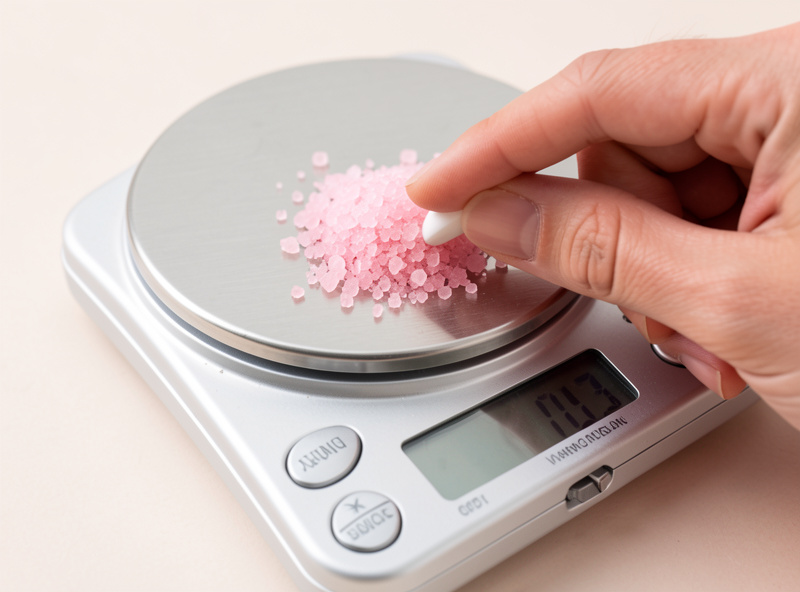
In practice I weigh the cure into the total salt for the batch, mix it thoroughly so the nitrite distributes evenly through the salt, then apply that salt-and-cure blend to the weighed meat. Even distribution matters: a clump of cure in one spot and none in another is both a color defect and a safety gap. For whole muscle I rub the blend on and seal the piece to let it equilibrate cold; for sausage I mix it through the ground meat. The arithmetic for the surrounding salt percentage is in calculating salt for equilibrium curing, and the bacon-specific ratios — a frequent first project — are spelled out in bacon curing salt ratios.
As an Amazon Associate I earn from qualifying purchases. If you are stocking the shelf, you want both tubs clearly labeled — a Prague Powder #1 curing salt for your cooked and short cures and a separate Prague Powder #2 curing salt for the long dry-cured pieces. A cheap 0.1-gram scale matters more than which brand you buy.
The “Natural, No-Nitrate” Claim, Honestly
Plenty of products advertise “no added nitrates” and cure with celery powder or other vegetable concentrates instead. Here is the thing worth understanding: those vegetable powders are high in natural nitrate, which bacteria convert to nitrite — so the meat still gets cured by nitrite, just from a less precisely measured source. “Uncured” on a label is, in many cases, a regulatory wording technicality rather than a nitrite-free product. There is no free lunch where a long-dried sausage gets botulism protection from nothing.
For a home maker, the practical risk runs the other way. Going genuinely nitrate-free on a long air-dried cure removes your dedicated botulism hurdle, and substituting an unmeasured celery concentrate makes your dosing a guess. I would rather weigh a known amount of a known compound than hope a vegetable powder delivered the right dose. The romance of “no chemicals” is exactly where home curing gets dangerous. If you want to understand the health conversation around nitrates rather than the marketing one, I summarize what the research actually reports — without overclaiming — in cured meat, headaches, and nitrates.
Using Curing Salt Safely: The Short Version
Weigh it, never eyeball it. Use Cure #1 for cooked and short cures, Cure #2 for long air-dried pieces. Keep it labeled and separate from your finishing salts. Distribute it evenly through the meat or the salt blend. Stick to 2.5 grams per kilogram and do not scale up. And remember that curing salt is one hurdle among several — it works alongside the right salt percentage, a controlled ferment for sausage, and enough drying to lower water activity, all of which I tie together in the charcuterie food safety guide and the dedicated botulism prevention piece. Curing salt does its job when the rest of the method is right too.
Frequently Asked Questions
Is pink curing salt the same as Himalayan pink salt?
No. Himalayan pink salt is plain sodium chloride with trace minerals, used only for finishing. Pink curing salt is regular salt dyed pink and blended with sodium nitrite to protect against botulism and fix the cured color. They are not interchangeable, and using the wrong one on a dry cure removes your botulism protection.
What does sodium nitrite do in cured meat?
Sodium nitrite inhibits Clostridium botulinum, fixes the stable pink cured color by binding to myoglobin, and acts as an antioxidant that slows rancidity. At the standard 2.5 grams of cure per kilogram, ingoing nitrite is about 156 parts per million, within regulatory limits while still providing full protection.
What is the difference between nitrite and nitrate?
Sodium nitrite is immediately active and is the main curing agent. Sodium nitrate is inactive until bacteria convert it to nitrite over time, acting as a slow-release reservoir. That is why nitrate-containing Cure #2 suits long air-dried products, while nitrite-only Cure #1 suits short or cooked ones.
How much pink curing salt do I use?
Both Cure #1 and Cure #2 are used at 2.5 grams per kilogram of meat, weighed on a precise scale and distributed evenly. This is a fixed dose, not one to increase by feel. More cure does not mean more safety; it means exceeding the intended nitrite level.
Are no-nitrate or celery-powder cures safer?
Not necessarily. Celery powder and similar vegetable concentrates are high in natural nitrate that bacteria convert to nitrite, so the meat is still cured by nitrite from a less measured source. Going genuinely nitrate-free on a long dry-cure removes your dedicated botulism hurdle, which is a real risk rather than a clean upgrade.
Related Guides
- Charcuterie Food Safety: The Complete Guide
- Curing Salt Type 1 vs Type 2: Which to Use
- Testing for Botulism Prevention in Charcuterie
- Prague Powder #1 vs #2 Mixup: How to Tell
- Bacon Curing Salt Ratios