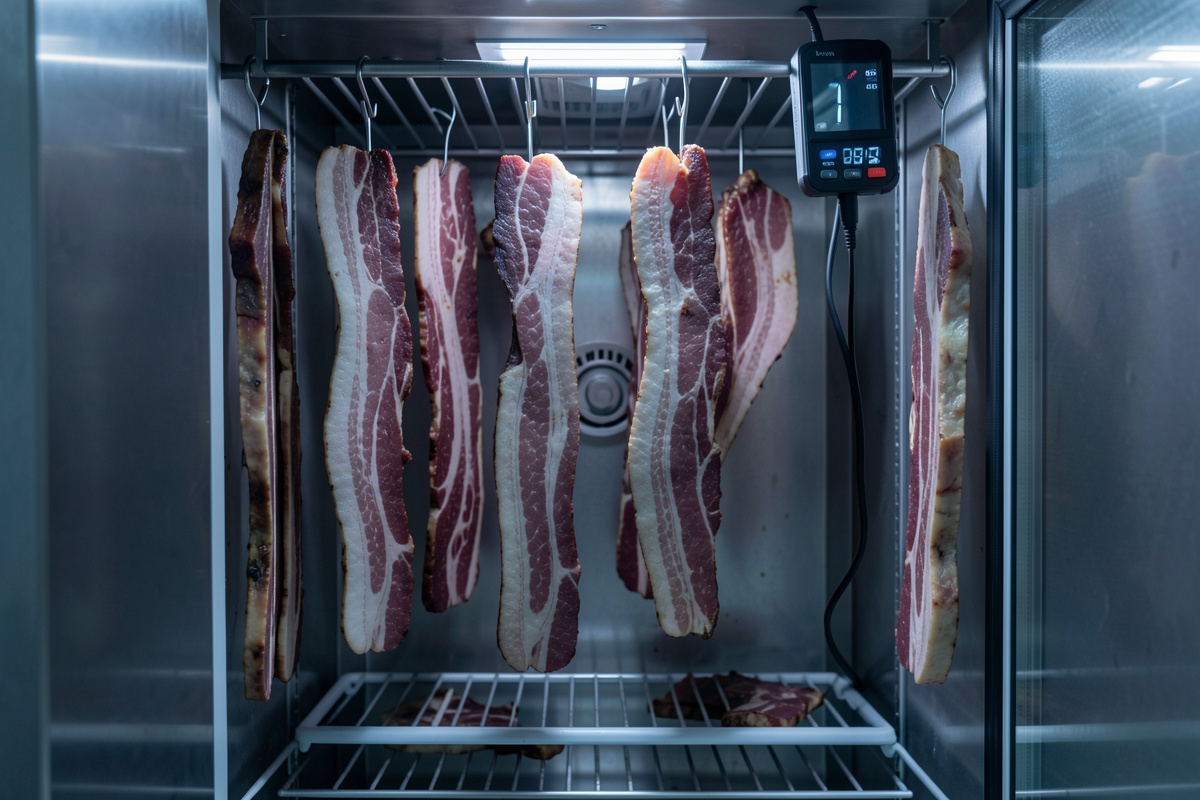

Cold smoking is risky precisely because it never heats the food. The product sits for hours inside what the USDA Food Safety and Inspection Service calls the Danger Zone — 40 to 140 F (4 to 60 C) — the range where bacteria multiply, and Clostridium botulinum is the one that matters most. FSIS reports that proteolytic C. botulinum can grow at temperatures as low as about 10 C (50 F) in low-oxygen conditions, which is exactly the environment a cold smoker creates.
This is the one article on my site where I’ll tell you plainly: cold smoke does not preserve, and it does not make anything safe. It is a flavour step layered onto a piece that has already been made safe by salt, curing salt, and drying. Get that order wrong and a low-temperature smoke becomes an incubator. Below is what the published guidance from USDA/FSIS says, why nitrite is the load-bearing safeguard against botulism, and where home cold smokers most often cross the line. Where a number is a regulatory or safety figure, I cite the authority — and on anything beyond home practice, defer to your local food-safety authority or a process authority.
Why Is Cold Smoking a Botulism Risk?
Cold smoking holds food in the Danger Zone (40–140 F / 4–60 C) for hours without cooking it, and C. botulinum is an anaerobe that thrives in the low-oxygen, low-acid, moist interior of meat. FSIS reports the proteolytic strains can grow from roughly 10 C upward, so a cold smoke that never cooks the product cannot, by itself, stop them.
The bacterium itself is common and usually harmless — the hazard is the neurotoxin it produces when it grows unchecked in an oxygen-poor environment, which is among the most lethal substances known and is not reliably destroyed by the gentle temperatures of cold or even warm smoking. That is why every safe cold-smoked product depends on a barrier the smoke does not provide: enough salt to lower water activity, curing salt (nitrite) to inhibit the organism, sufficient acidity or drying, and refrigeration. Smoke contributes some surface antimicrobial compounds, but FSIS and the cured-meat literature are consistent that smoke is not a primary preservative. Treat it as seasoning on an already-safe piece.
How Nitrite (Cure #1 and Cure #2) Prevents Botulism
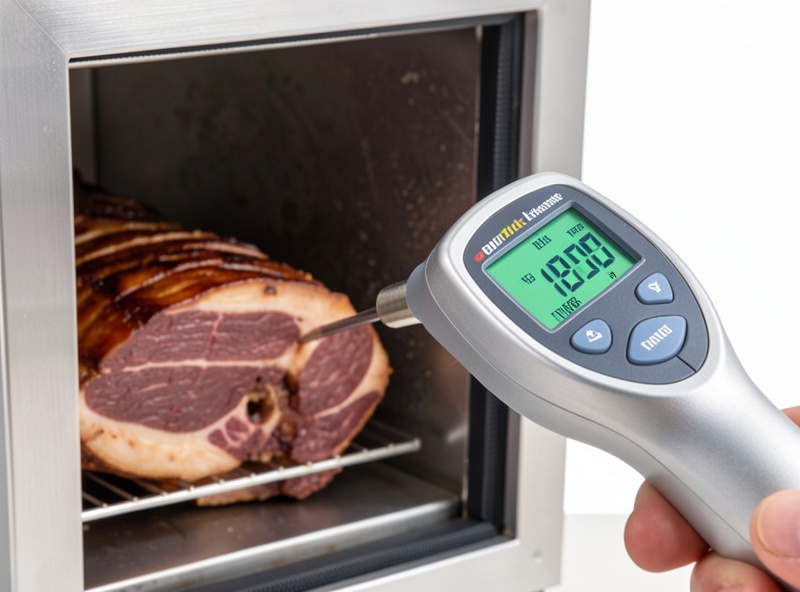
Sodium nitrite is the specific safeguard against C. botulinum in cured meats. The published review literature concludes nitrite retards C. botulinum growth and delays neurotoxin formation, which is why USDA regulations require it for cold-smoked and dry-cured products rather than treating it as optional.
USDA/FSIS sets the permitted ingoing levels: about 120 ppm sodium nitrite for wet-cured bacon, 156 ppm for most cured sausages and comminuted products, and up to 200 ppm for dry-cured bacon. In home practice that translates to Cure #1 (6.25% sodium nitrite) at the standard rate for short cures and anything cold or hot smoked, and Cure #2 (which adds sodium nitrate as a slow-release reservoir) for long-dried and fermented pieces that hang for weeks to months. The distinction matters: a fermented salami or a long whole-muscle cure spends far longer in the risk window than a bacon belly does, and Cure #2 is formulated to keep protecting it across that whole time. Mixing the two up is a genuine hazard, which is why I treat telling Prague Powder #1 from #2 as a basic safety skill before any cold smoke. This is the hard line on my site — “natural” or “no-nitrate” long dry-curing is not a safe substitute, because nothing else fills nitrite’s specific antibotulinal role.
The Temperature Rules That Keep Cold Smoking Safe
Keep cold-smoked product below 30 C (86 F) at all times, and ideally in the 10 to 21 C (50 to 70 F) band, then refrigerate it. The lower you stay, the slower any surviving organism moves; the closer you drift to 35 C the faster proteolytic C. botulinum grows, since FSIS reports its optimum is around 35 to 40 C.
I measure temperature at the meat, not at the smoke inlet, using a logged probe so I can see the whole session rather than a single reading. The other clock that matters is total time: FSIS’s general guidance is that food should not accumulate more than about 2 hours in the Danger Zone when it is not protected by cure and salt — but a properly cured, salted cold-smoke piece is relying on those hurdles, not on beating a 2-hour clock, which is exactly why the cure cannot be skipped. If your ambient is too warm to hold under 30 C, generate the smoke off-box and duct it into a refrigerated chamber, or wait for cooler weather. A warm “cold smoke” is the single most common way home smokers walk a cured piece into the botulism window — and it is exactly the line that separates cold smoking from hot smoking, where the heat itself cooks the meat.
Cold Smoking Safety Reference
The table below collects the figures I keep posted by my chamber. The temperatures and nitrite levels are from USDA/FSIS guidance and the cured-meat literature; treat them as a floor for safe practice, not a target to push.
| Safeguard | Target / limit | Source / basis |
|---|---|---|
| Danger Zone | 40–140 F (4–60 C) | USDA FSIS |
| C. botulinum growth (proteolytic) | From ~10 C; optimum 35–40 C | FSIS / food-safety literature |
| Cold-smoke product temperature | Under 30 C (86 F); ideal 10–21 C | Cold-smoking practice |
| Nitrite, cured sausage / general | 156 ppm ingoing | USDA limit |
| Nitrite, wet-cured bacon | 120 ppm ingoing | USDA limit |
| Cure type, short / smoked | Cure #1 (sodium nitrite) | Standard practice |
| Cure type, long-dried / fermented | Cure #2 (nitrite + nitrate) | Standard practice |
Home Cold Smoking Mistakes That Cause Botulism Risk
The dangerous mistakes are all the same shape: relying on smoke instead of cure. Skipping curing salt on a long dry-cure, letting the chamber run too warm, sealing an under-cured piece in a vacuum bag, and fermenting without a culture or acidification path are the four that turn a hobby into a hazard.
Vacuum sealing deserves a specific warning: it creates the anaerobic, oxygen-free environment C. botulinum prefers, so a piece that wasn’t properly cured and dried before sealing is worse off in the bag, not safer. Fermenting sausage warm without a starter culture or a reliable pH drop leaves it sitting in the exact warm, moist, low-oxygen window the organism wants. And the “no-nitrate, all-natural” long cure is a marketing idea, not a safety method — celery-powder “uncured” products still rely on nitrite, just from a different source. If a piece smells off, feels slimy in a way salt and smoke don’t explain, or shows fuzzy black or green growth, don’t taste-test your way out of it — throw it out. When you’re unsure whether something is safe, it isn’t, and no home judgment call is worth botulism. For any process outside ordinary home charcuterie, consult your regional food-safety authority.
Frequently Asked Questions
Can you get botulism from cold smoking?
Yes, if the meat is not properly cured. Cold smoking holds food in the Danger Zone (40 to 140 F) without cooking it, and Clostridium botulinum can grow in those low-oxygen conditions. The cure, salt, and curing salt prevent it, not the smoke. FSIS treats cold smoking as a controlled process that requires curing.
Does cold smoking kill bacteria?
No. Cold smoking stays under about 30 C and does not reach temperatures that kill bacteria or destroy botulinum toxin. Smoke adds only mild surface antimicrobial compounds. Safety comes from salt lowering water activity, nitrite curing salt inhibiting C. botulinum, and drying or refrigeration.
What temperature kills Clostridium botulinum?
The botulinum toxin is broken down by boiling, but the heat-resistant spores survive normal cooking and are not reliably destroyed by cold or warm smoking. This is why cured-meat safety relies on inhibiting growth with nitrite, salt, acidity, and refrigeration rather than on smoking temperature.
Why is nitrite required for cold smoking?
USDA/FSIS requires nitrite (Cure #1 or Cure #2) because it specifically retards Clostridium botulinum growth and delays toxin formation. The published review literature confirms this antibotulinal role. No natural substitute fills it, which is why no-nitrate long dry-curing is not a safe method.
What is the maximum safe temperature for cold smoking?
Keep cold-smoked product under 30 C (86 F) at all times, ideally in the 10 to 21 C band. FSIS reports proteolytic C. botulinum grows from about 10 C with an optimum near 35 to 40 C, so the closer you stay to the bottom of that range, the safer the process.
Is vacuum-sealed smoked meat safe?
Only if it was properly cured and dried first. Vacuum sealing creates the oxygen-free environment C. botulinum prefers, so sealing an under-cured piece makes it more dangerous, not less. Cure to a safe water activity with the correct nitrite level, then seal and refrigerate.
How do I know if cured meat has gone bad?
Discard any piece that smells off, feels slimy beyond what salt and smoke explain, or shows fuzzy black or green growth. When you cannot tell whether something is safe, treat it as unsafe and throw it out. No taste test is worth the risk of botulism.
Related Guides
- Cold Smoking at Home: The Complete Guide
- Cold Smoking Fish at Home: Safety and Method
- Cold Smoke vs Hot Smoke Bacon: What Is the Difference?
- Prague Powder #1 vs #2: Don’t Mix Them Up