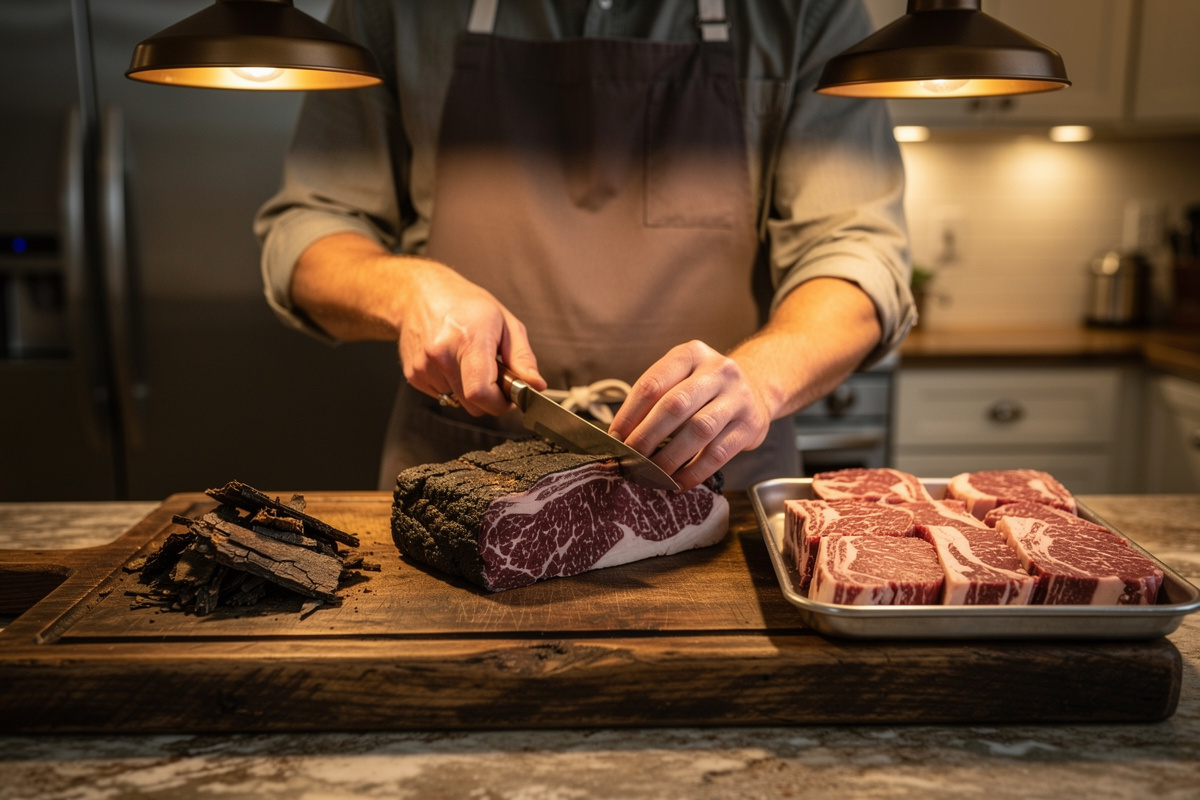

To trim a dry-aged steak, work the whole subprimal cold on a sanitized board: slice off the hard dark bark on every exposed face down to moist red meat, cut away any oxidized exterior fat, then portion into steaks. Expect to discard 30-40% of the aged weight as bark and rancid fat — that loss is normal and necessary.
Trimming is the step that decides whether a beautiful 28-day age tastes magnificent or funky-bad, and it is almost always under-trimming, not over-aging, that ruins a piece. Here is exactly how I break a subprimal down, what to keep, what to bin, and how to lose the least usable meat in the process.
Why the Bark Has to Come Off
The bark is a sacrificial layer, not food. Over weeks of aging the outer surface dries into a hard, dark crust that protects the interior, but it also concentrates the oldest fat and the surface flora, so it turns rancid and inedible. You trim it off entirely to reach the dense, tender meat it was guarding.
Think of the bark as armor the steak grew to survive the age. It does its job by being inhospitable — dry, slightly acidic from microbial activity, and increasingly oxidized — which is exactly why you cannot eat it. The thin white or pale-blue mold that develops on a properly aged subprimal is beneficial and contributes flavor, but it comes off with the bark all the same. What you are protecting is the interior: darker than fresh beef, denser, and carrying all the nutty concentration the age built. The single most common mistake is timidity here. A 28-day age that looks perfect outside but tastes harshly funky inside has almost always been under-trimmed; the off notes live in the bark and the old fat, and they wipe out with the knife.
Tools You Need
Trimming a subprimal needs only a few tools, but they must be sharp. A stiff boning knife rides the bone and lifts the bark; a long cimeter or butcher knife faces off flat surfaces and slices steaks; a board large enough for the whole cut keeps it stable. Sharpness, not force, makes the cuts clean and safe.
My kit for a break-down is short: a stiff boning knife for working around bone and removing the bark in sheets, a long cimeter butcher knife for portioning, a heavy cutting board at least 24 inches wide, disposable gloves for sanitation, and a tray for the keep pile and one for the bin pile. A dull knife is the real hazard — it skids instead of cutting and forces you to push, so it slips. Pass each blade over a steel before you start and again partway through. Keep everything and the meat cold; a cold subprimal firms up and cuts far more cleanly than one that has warmed on the counter.
Step by Step: Breaking Down the Subprimal
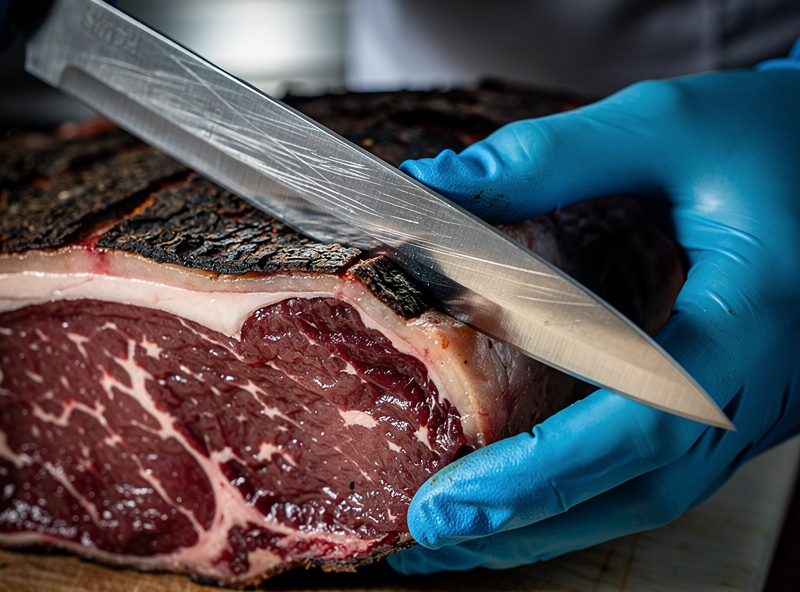
Work in order: remove the bark, trim the fat, free the bone, then portion. Doing it in this sequence keeps the cut stable and means you never slice a steak through a section you should have trimmed first. Plan on 20-30 minutes for a full subprimal the first few times.
1. Face off the bark. Lay the subprimal on its side and slice the hard, dark crust off each exposed face in long, shallow strokes, cutting just deep enough to reach moist, dark-red meat — usually an eighth to a quarter inch. The fat-cap face and the bone face are protected and need much less — published research on bone-in shell loin found weight loss under a protective bone and fat cover stayed below 10% even at 60 days, versus far more on exposed lean faces2 — while the open-grain ends need the most.
2. Trim the oxidized fat. The exterior fat that has gone hard, yellow, or smells sharply rancid comes off. Clean white interior fat and the marbling stay — that fat is flavor. Pare the fat cap down to a thin, clean layer rather than removing it entirely.
3. Free the bone (bone-in cuts). Run the boning knife along the chine and rib bones to either remove them or expose the line you will cut between. For a frenched presentation, scrape the rib bones clean; otherwise just cut between them.
4. Portion into steaks. Slice 1.5 to 2 inch steaks with the cimeter in a single smooth draw — thick steaks reverse-sear best and show off the dense interior. Wipe the blade between cuts.
What to Keep and What to Discard
Sorting the subprimal into a keep pile and a bin pile clarifies the yield. The steaks and clean trim are food; the bark and rancid fat are not. Here is how every part of an aged subprimal sorts out, and what the keepers are good for.
| Part | Keep or Discard | Use |
|---|---|---|
| Hard dark bark | Discard | Inedible sacrificial layer; bin it |
| White / pale-blue surface mold | Discard (with the bark) | Beneficial during aging, not eaten |
| Oxidized exterior fat (yellow/hard) | Discard | Rancid; carries off-flavors |
| Clean interior fat and marbling | Keep | Flavor; leave on the steak |
| Portioned steaks (interior) | Keep | Cook; the whole point of the age |
| Clean meat trim (re-shaping) | Keep | Grind for dry-aged burgers |
| Clean fat trim | Keep (optional) | Render into beef tallow |
Black, green, pink, or fuzzy “spider” mold is a different story — that is not normal surface flora, and it signals a climate or sanitation problem rather than a healthy age. If you find it, inspect the meat underneath before deciding whether the cut is salvageable; the diagnosis is in dry aging smell: what is normal vs what means trouble.
Understanding the Yield Loss
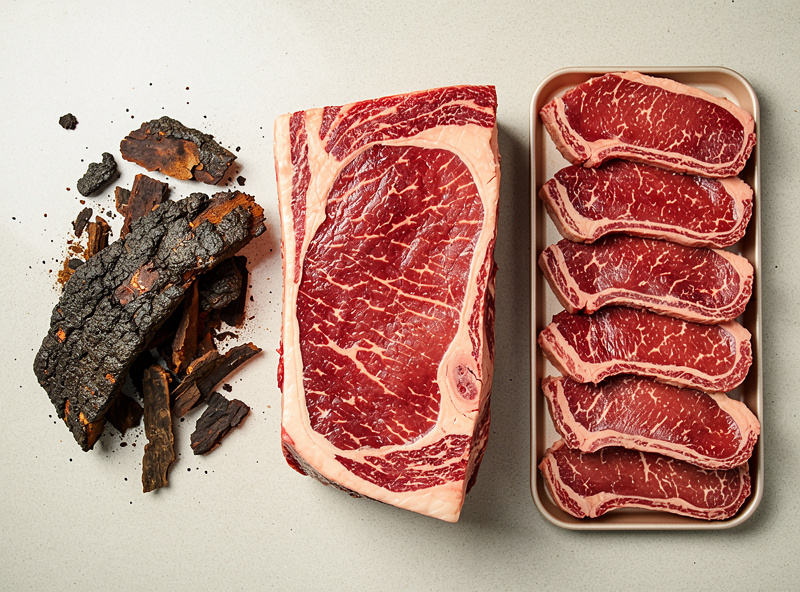
A trimmed subprimal yields roughly 50-55% of its starting weight as usable steak. Published dry-aging research puts evaporative loss alone at roughly 10% by day 21 and 15% by day 301, so for a typical 28-day age that is around 13-14% to evaporation, with the trim removing most of the rest. A 14-pound ribeye subprimal that aged 28 days ends near 12 pounds after evaporation, and after the bark and rancid fat come off you are left with about 7 pounds of steak.
Seeing the bin pile for the first time is alarming, but the loss is the cost of the method, not a mistake. The yield is why dry aging at home only beats retail dry-aged beef when you buy subprimals at warehouse pricing or chase the deep ages — the full cost math sits in dry aging beef at home. Leaner cuts give up even more to trim because the bark eats further into exposed muscle, which is exactly why cut selection matters so much; the cut-by-cut yields are in best beef cuts for dry aging. Do not let the loss tempt you into under-trimming to “save” meat — the few extra grams you keep will be the rancid ones that ruin the steak.
Don’t Waste the Good Trim
The clean trim is not garbage. Meat removed while re-shaping the subprimal — not the bark itself, but the good interior trim — makes outstanding ground beef, and clean fat renders into tallow. Only the bark and oxidized fat truly go in the bin.
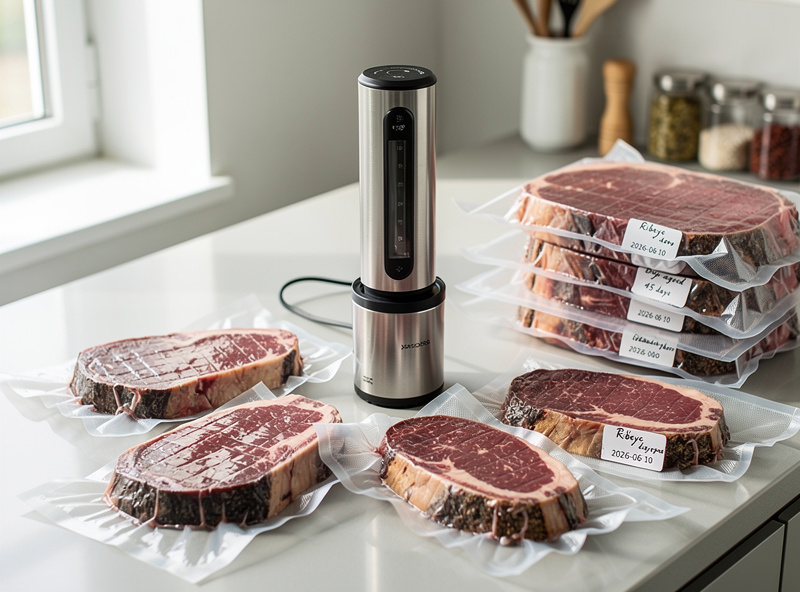
Dry-aged burgers cooked medium-rare are a revelation, and they are where you finally see what the subprimal really cost per usable pound when you count every gram. Save the cleanest fat for rendering into beef tallow, which is superb for searing the steaks themselves. Once portioned, the steaks store well: vacuum-seal what you will not cook in a few days and freeze it. A reliable vacuum sealer keeps a month of dry-aged portions in the freezer without freezer burn, which matters when a single subprimal yields more steak than a household eats in a week.
As an Amazon Associate I earn from qualifying purchases.
Frequently Asked Questions
How do you trim a dry-aged steak?
Work the cold subprimal on a sanitized board. Slice the hard dark bark off every exposed face down to moist red meat, about an eighth to a quarter inch deep, cut away oxidized exterior fat, free the bone on bone-in cuts, then portion into 1.5 to 2 inch steaks. Keep the clean interior fat.
How much do you trim off a dry-aged subprimal?
Expect to discard 30 to 40 percent of the aged weight as bark and rancid fat. Combined with the roughly 10 to 15 percent lost to evaporation during a typical 21 to 30 day age, usable yield is roughly 50 to 55 percent of the starting weight. A 14-pound ribeye subprimal yields about 7 pounds of steak after trim.
Can you eat the bark on dry-aged beef?
No. The hard dark bark is a sacrificial protective layer that turns rancid and inedible over the age. It is trimmed off and discarded along with the beneficial surface mold. Eating the bark is the main reason an otherwise good age tastes harshly funky; trim it away completely to reach the interior.
What tools do you need to trim dry-aged beef?
A stiff boning knife to lift the bark and work around bone, a long cimeter or butcher knife to portion steaks, and a cutting board at least 24 inches wide. Add disposable gloves for sanitation. The knives must be sharp — a dull blade skids and is the real safety hazard.
Is the white mold trimmed off or eaten?
It is trimmed off with the bark, not eaten. The thin white or pale-blue mold is beneficial during aging and contributes flavor to the meat beneath, but it comes off as part of the sacrificial outer layer. Black, green, pink, or fuzzy mold is abnormal and means inspecting the meat before proceeding.
What do you do with the trim from dry-aged beef?
Keep the clean interior trim and clean fat; discard only the bark and oxidized fat. Clean meat trim from re-shaping the subprimal grinds into excellent dry-aged burgers, and clean fat renders into beef tallow for searing. Only the rancid bark and yellowed exterior fat truly go in the bin.
Why does my dry-aged steak taste too funky?
Almost always under-trimming, not over-aging. The harsh off-flavors concentrate in the bark and the oxidized exterior fat, so leaving any of it on carries that funk into the steak. Trim more aggressively down to clean, moist, dark-red meat and the interior reads nutty and savory rather than sharp.
Related Articles
- Dry Aging Beef at Home: The Complete Guide — the full climate, cut, and cost framework behind the trim.
- Best Beef Cuts for Dry Aging: Ribeye vs Striploin vs Sirloin — why leaner cuts give up more to trim.
- How Long to Dry Age Beef: 21 vs 35 vs 60 vs 100 Days — how age length changes bark thickness and trim loss.
- Dry Aging Smell: What Is Normal vs What Means Trouble — reading mold and odor before you trim.
- Dry Aging vs Wet Aging Beef: A Side-by-Side Taste Test — why dry aging trades yield for flavor.