Why Won’t White Mold Grow in My Chamber? Humidity and Spore Fixes
July 19, 2026

White mold won’t grow in your chamber for one of five reasons, in rough order of likelihood: humidity too low for spores to germinate, chlorinated water that killed the culture when you rehydrated it, a chamber running too warm or too cold, residual sanitizer suppressing the mold, or a dead or improperly stored culture. Fix the first two and the majority of “my chamber won’t bloom” problems disappear. Hold 85%+ RH for the first several days after spraying, rehydrate in distilled water, and Penicillium usually shows up within 5 to 9 days.
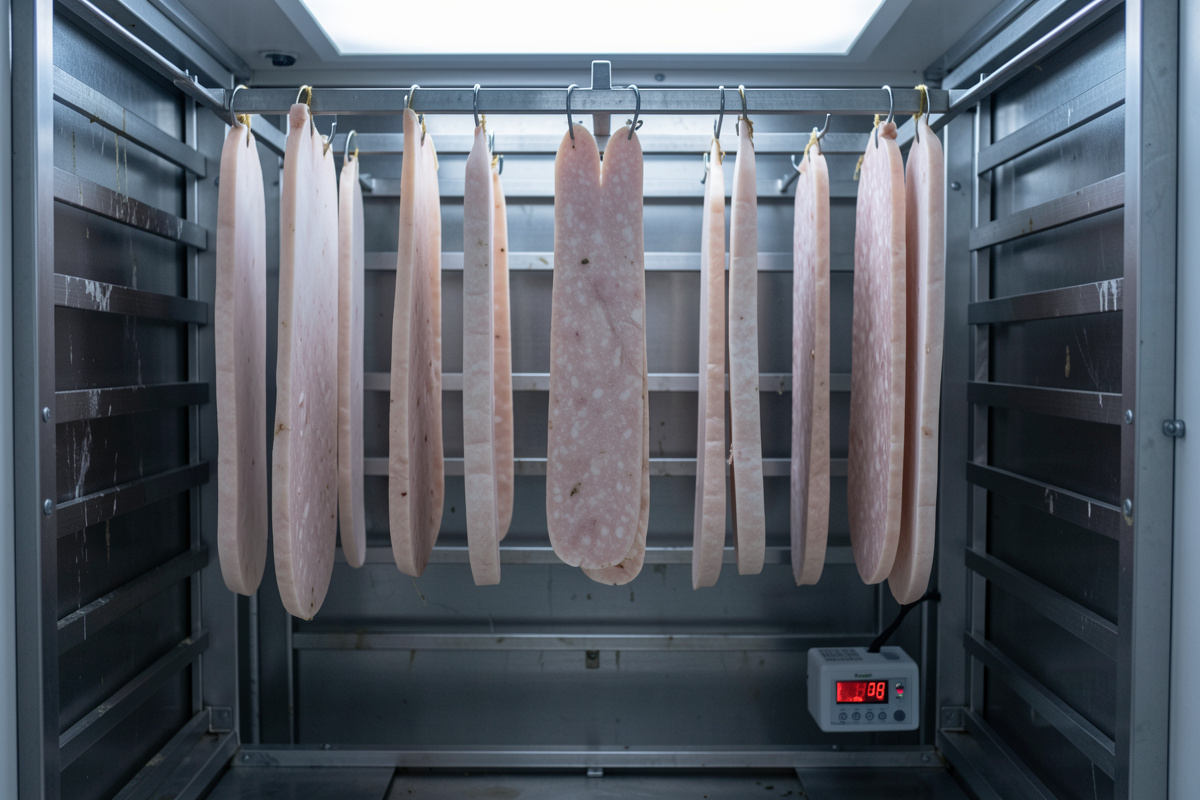
The frustrating thing about a non-blooming chamber is that the meat looks fine — bare casing, slowly drying, no bad mold either — so it’s easy to assume the culture was a dud and give up. It rarely is. In nearly every case I’ve helped troubleshoot, the culture was alive and the environment was the problem. My own worst run was a winter I had the chamber dialed too dry, sitting around 65% RH because I was overcorrecting against a damp basement, and nothing bloomed for two weeks on beautifully sprayed salami. Bumped the humidity into the low 80s and the white coat appeared in four days. The spores had been waiting the whole time.
This is the troubleshooting arm of managing mold in your curing chamber. If you’ve done everything in spraying culture for even coverage and still get nothing, work down this list in order.
Is Your Humidity High Enough for Mold to Germinate?
Humidity is the number one reason a chamber won’t bloom — Penicillium spores need high moisture to germinate, ideally 85% RH or above for the first several days after spraying, and anything below about 75% stalls them. A chamber running dry can hold a perfect spray coat of live spores that simply never wake up, because the surface dries faster than they can establish.
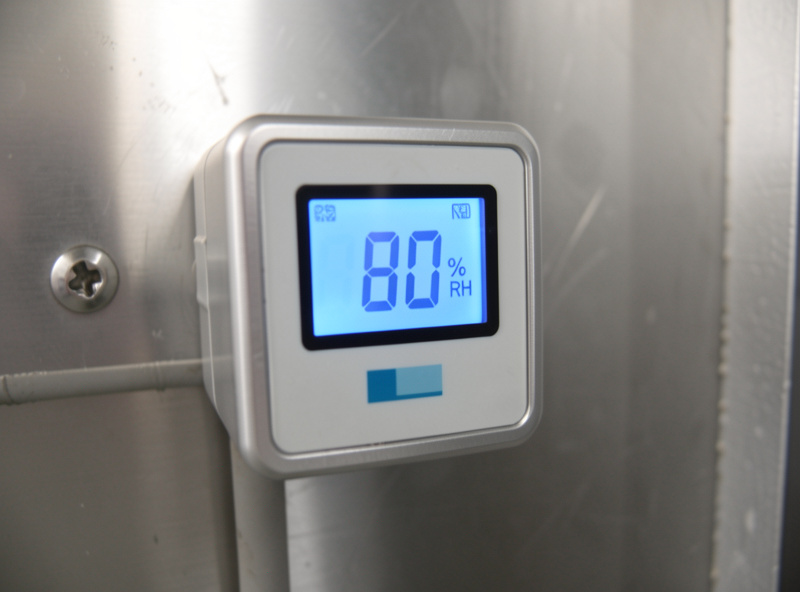
Here’s the nuance most people miss: the humidity you need for germination is higher than the humidity you hold for drying. My drying envelope is around 80% RH, but for the first few days of a new batch I let it run wetter — mid-to-high 80s — to get the mold established, then settle it down. If your chamber can only hold 70%, the spores never get their window. Verify the number with a trusted instrument, not the appliance’s own guess: I trust a SensorPush HT.W at meat-shelf height over the humidifier’s built-in readout, because the reading right at the meat is what the spores actually experience. If your hygrometer has never been calibrated, salt-test it — an uncalibrated sensor reading 80% when it’s really 68% will send you chasing the wrong problem. Getting the chamber to hold a stable, high early-humidity is often the whole fix, and my multi-zone chamber setup covers holding that envelope.
Did Chlorinated Water Kill Your Culture?
If you rehydrated your mold culture in chlorinated tap water, you almost certainly killed it before it ever reached the meat — chlorine and chloramine are added to municipal water specifically to destroy microbes, and they make no exception for the mold you want. This is the single most common invisible failure, because the spray looked perfect and the culture was “fresh.”
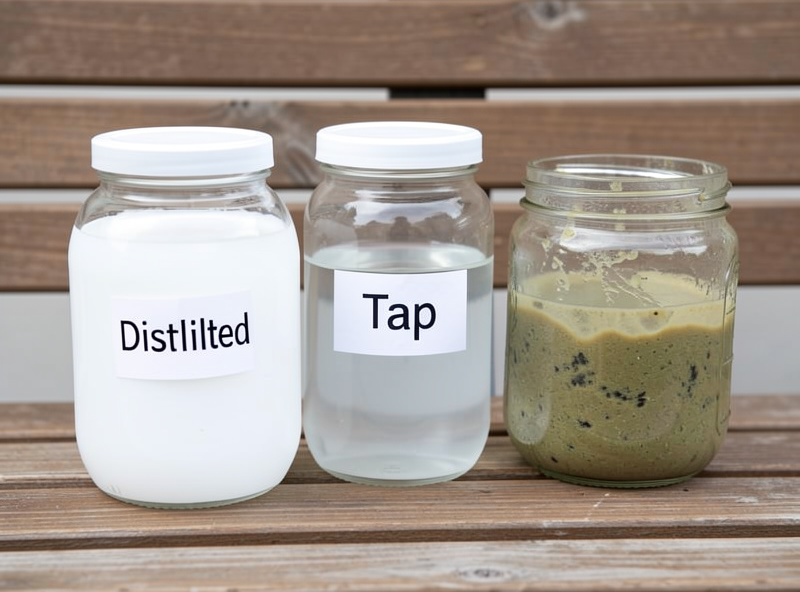
Always rehydrate in distilled or dechlorinated water. This is the same rule that governs applying the culture in the first place, and it’s worth repeating because it catches so many people. I keep a jug of distilled water on the shelf purely for culture work. If you only have tap, boil it and let it stand uncovered overnight so the chlorine off-gasses, or buy distilled — it costs almost nothing. If you’ve been blanking batches despite good humidity, this is very likely your culprit, and the test is simple: mix a fresh batch in distilled water and try again. The number of “dead culture” complaints that turn out to be chlorinated water is remarkable.
Is Your Chamber Running Too Warm or Too Cold?
Temperature matters less than humidity but still gates the bloom: Penicillium nalgiovense is happiest in the same cool range you cure at, roughly 12–15 °C, and it slows markedly when the chamber runs cold, near or below single digits Celsius. A chamber sitting at 6–8 °C — fridge territory — will bloom very slowly if at all, which surprises people who assume colder is safer.
In a Swedish winter this bites, because an unheated basement chamber can drift colder than the mold likes even while the humidity is fine. My primary chamber runs on an Inkbird ITC-308 holding the low-to-mid teens Celsius precisely so the ferment, the drying, and the mold all sit in their happy band together. If your controller is set for pure cold storage, the mold reads that as “not yet.” Nudge the setpoint up into the 12–15 °C window for the establishment phase. The flip side — too warm — is less common but riskier, because above about 20 °C for long you’re inviting bad organisms faster than the good mold can dominate, so don’t overcorrect into a warm, stagnant box.
Is Residual Sanitizer Suppressing the Mold?
If you deep-cleaned and sanitized the chamber right before hanging a fresh batch, leftover sanitizer on the shelves and walls can suppress the very mold you’re trying to establish — you effectively pre-treated the box against Penicillium. This is the over-cleaning trap, and it’s the reason I don’t sterilize my chamber between every batch.
The balance is real: you want to remove spoilage loads between batches, but you also want to preserve the resident house culture that seeds new pieces. A chamber that’s been bleached or hit with a strong quat sanitizer and then loaded immediately can struggle to bloom for a batch or two while the residue dissipates and the spore population rebuilds. If you must do a deep sanitize — because the last batch went bad — rinse thoroughly with dechlorinated water afterward, let the chamber air out and dry fully, and consider re-seeding more heavily with culture on the next hang. When to do a light versus deep clean is its own topic, but the short version: light-clean between good batches to keep your culture, deep-clean only after a problem.
Is Your Culture Actually Dead or Too Old?
Culture does eventually die — freeze-dried Penicillium stored warm, humid, or long past its date loses viability, so if humidity, water, and temperature are all right and you still get nothing across repeated tries, suspect the sachet. Stored properly, in the freezer or a cold fridge and sealed against moisture, a culture stays viable a long time; stored in a warm cupboard, it fades.
Treat the culture like the live product it is. I keep sachets sealed in the freezer and only take out what I’ll use. If yours has been rattling around a warm kitchen drawer for a year, a blank batch might genuinely be a dead culture — but confirm the environment first, because it’s far more often the chamber than the sachet. The clean test is to try a fresh, known-good culture in distilled water at high humidity; if that blooms, your old culture was the problem, and if it doesn’t, keep looking at the environment. A backup sachet stored cold is cheap insurance and doubles as your diagnostic control.
Is Your Chamber Just Too New and Sterile?
A brand-new chamber has no resident spore population, so it relies entirely on what you spray — and if that spray underperforms for any of the reasons above, there’s no ambient house culture to bail you out. Established chambers bloom almost on their own because the walls and air carry Penicillium; a sterile new box gives you exactly one shot per batch, the spray.
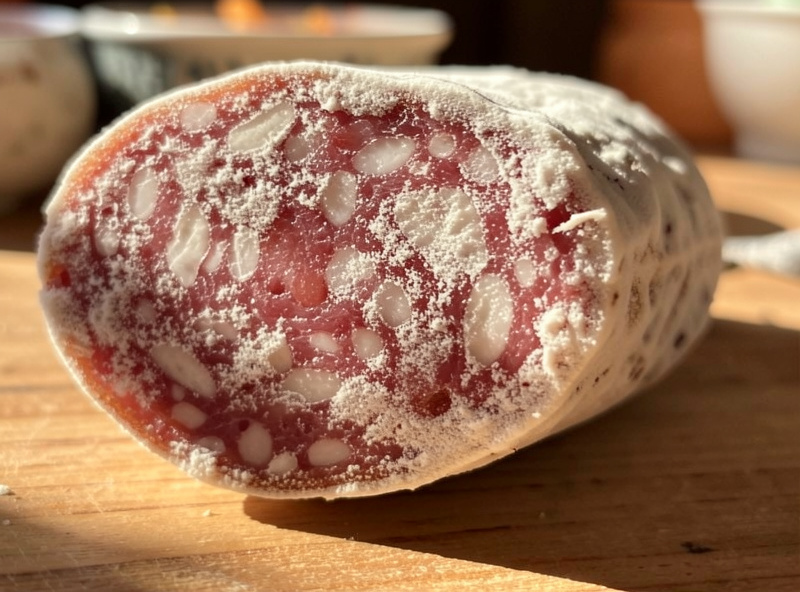
The fix for a new chamber is to get one good batch to bloom, then let the culture establish. Spray heavier than you think you need to on the first few runs, hold the humidity high, and once a batch comes in white, you can even move a well-coated piece around to seed the space — the same cross-seeding covered in will mold spread between pieces. After that, harvesting rind to reuse mold from a finished salami keeps the house culture strong. New chambers are simply harder until they’ve grown their first clean bloom; be patient and spray generously.
Work the list in order — humidity, water, temperature, sanitizer, culture age, chamber maturity — and change one variable at a time so you actually learn what fixed it. And keep the whole exercise in perspective: a bloom is protective and helps the drying curve, but the safety of the piece comes from cure #2, a proper pH drop, and drying to 30–40% weight loss. A batch that dries safely without a full coat isn’t dangerous, it’s just not as pretty or as protected — fix the mold for quality, never treat it as the thing keeping you safe.
What is the most common reason white mold won’t grow?
Humidity that is too low. Penicillium spores need high moisture to germinate, ideally 85 percent RH or above for the first several days after spraying, and anything below about 75 percent stalls them. A dry chamber can hold a perfect coat of live spores that simply never wake up because the surface dries before they establish.
Can chlorinated water stop mold from growing?
Yes, and it is one of the most common invisible failures. Chlorine and chloramine in municipal tap water are designed to kill microbes and will kill your mold culture when you rehydrate it, even though the spray looks perfect. Always rehydrate in distilled or dechlorinated water, or boil tap water and let it stand uncovered overnight first.
What temperature does Penicillium mold need to grow?
It is happiest in the same cool curing range, roughly 12 to 15 degrees C, and slows markedly when the chamber runs cold near or below single digits Celsius. A chamber sitting at fridge temperatures of 6 to 8 degrees C blooms very slowly if at all. Nudge the setpoint into the 12 to 15 degree window for the establishment phase.
Can cleaning the chamber stop mold from growing?
Yes. If you deep-clean and sanitize right before hanging a fresh batch, residual sanitizer on the shelves and walls can suppress the mold you are trying to establish. Light-clean between good batches to preserve your house culture, and deep-sanitize only after a bad batch, rinsing thoroughly and airing the chamber out before reloading.
How do I know if my mold culture is dead?
If humidity, water, and temperature are all correct and you still get nothing across repeated tries, suspect the sachet, especially if it was stored warm or long past its date. Confirm by trying a fresh, known-good culture in distilled water at high humidity. If that blooms, the old culture was dead. If it does not, keep looking at the environment.
Related Articles
- Managing Mold in Your Curing Chamber: The Complete Guide
- How to Spray Penicillium Mold Culture on Salami
- Reusing Mold From a Finished Salami
- Multi-Zone Curing Setup: Ferment and Dry at Once