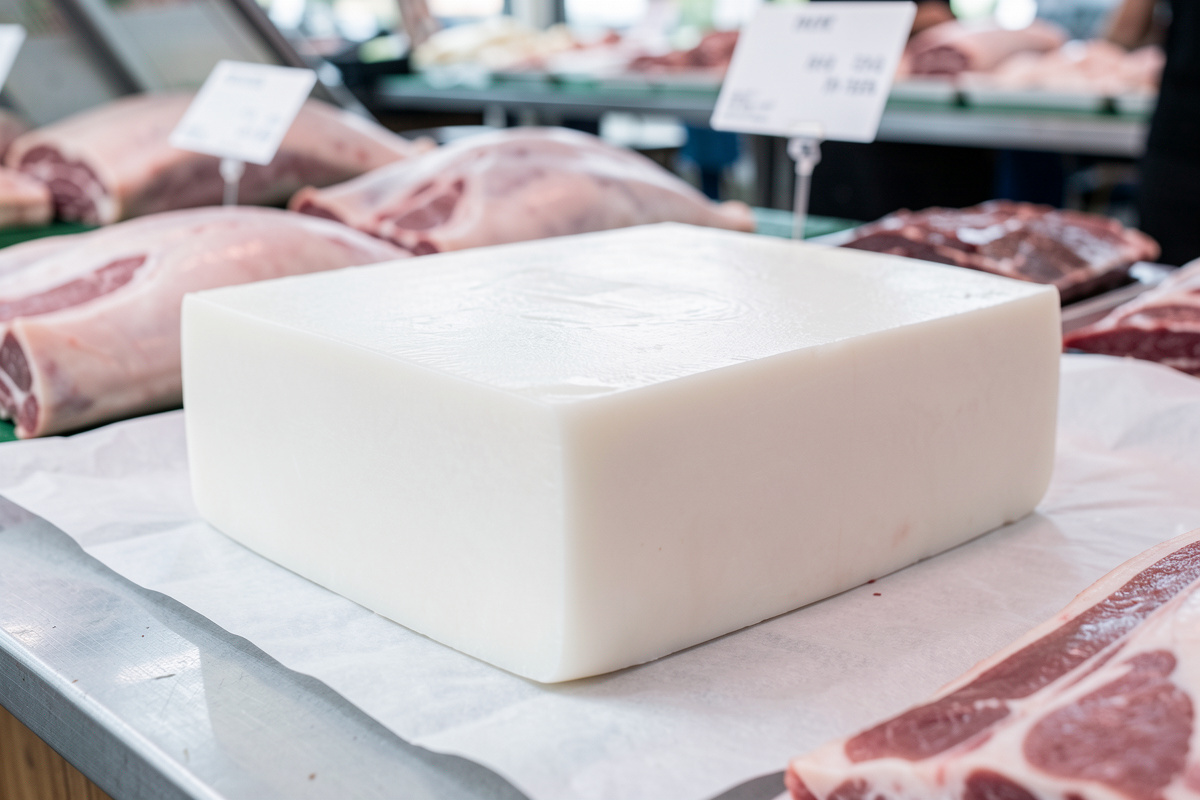
Best Fat for Lardo: Back Fat Thickness and Where to Source It
July 8, 2026

The best fat for lardo is firm pork back fat at least one inch thick — and thicker is better. The dense, hard fat off the shoulder end of the back holds together through a months-long cure, where soft belly fat and thin trim turn greasy and fall apart. Get the cut right and lardo is easy; get it wrong and no amount of salt or patience will save it.
Of every question I get about curing fat, sourcing is the one people skip and then regret. They buy whatever “pork fat” the shop has, cure it perfectly, and end up with a soft, weeping slab that never firms. Across the chambers I run, the single biggest predictor of a good lardo is the slab I started with. This guide covers exactly what to look for, which cuts work, and how to ask for it — a companion to the hub on how to cure lardo at home.
Why Back Fat and Nothing Else
Lardo is defined by texture, and texture comes from the fat’s structure. Back fat — the subcutaneous layer running along the pig’s spine — is dense, firm, and high in the saturated fats that stay solid at room temperature. That firmness is what lets a slab survive weeks of salting and months of aging while turning silky rather than greasy. It is the same fat prized for larding lean roasts and for the fat cap in a guanciale, and it behaves completely differently from the soft, muscle-streaked fat elsewhere on the pig.
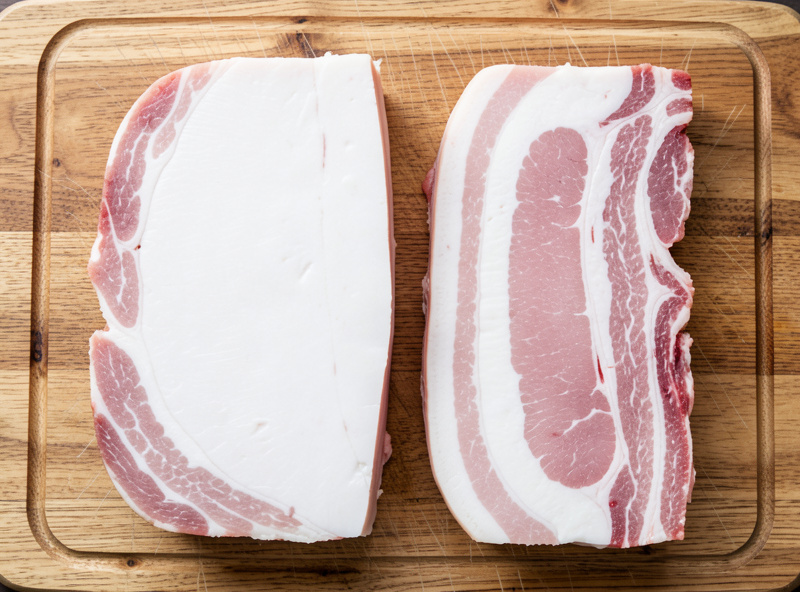
Contrast that with belly fat, which is soft and interleaved with meat — brilliant for pancetta and bacon, useless for lardo because it will not hold a clean slab. Leaf fat, the crumbly kidney fat, is the best fat for rendering into lard but has no structure at all. For lardo, the rule is simple: firm back fat or don’t bother.
Thickness Is Non-Negotiable
A lardo slab needs to be at least one inch (2.5 cm) thick, and I aim for an inch and a half to two inches whenever I can get it. Thickness matters for two reasons. First, a thick slab gives you that luxurious depth when sliced — thin lardo is just seasoned fat, while a proper thick cut has presence on the plate. Second, a thicker slab has a better core-to-surface ratio, so oxidation and salt stay where you want them and the interior stays protected through the long cure.
The best thickness comes from the shoulder end of the back, sometimes sold as “fatback” or the “pork fat cap.” Toward the loin end the fat layer thins out, and near the belly it softens. If your slab tapers, square it up before curing so it salts and ages evenly — an uneven slab cures unevenly, which shows up later as sharp salt in the thin end and under-cure in the thick. That even geometry also keeps your cure timeline predictable.
Which Cut to Ask For
Language is half the battle at the counter. “Pork back fat,” “fatback,” and “hard fatback” all point to the right thing; “pork fat” alone might get you soft belly trim or leaf fat. Ask specifically for the back fat off the shoulder end, skin removed, in a slab rather than diced. Here is how the common fat cuts stack up for lardo.
| Fat Cut | Firmness | Typical Thickness | Good for Lardo? |
|---|---|---|---|
| Back fat (shoulder end) | Very firm, dense | 1.5–2+ inches | Best choice |
| Back fat (loin end) | Firm | 0.75–1.25 inches | Good if thick enough |
| Belly fat | Soft, muscle-streaked | Varies | No — use for pancetta |
| Leaf (kidney) fat | Crumbly | Thin sheets | No — render into lard |
| Caul fat | Lacy, membranous | Very thin | No — wrapping only |
Where to Source It
Back fat is cheap and often free, because most shops discard or grind it — but you have to ask, and sometimes ask ahead. A local butcher who breaks down whole or half pigs is the ideal source; ask them to save you the back fat in slabs next time they cut. Farm shops and abattoirs selling half-pigs are even better, because you get the whole fatback. Supermarket meat counters are hit or miss — some will sell you fatback on request, others only carry it around the holidays. Online charcuterie suppliers ship frozen back fat, which cures perfectly well once thawed. Whatever the source, choose the firmest, whitest, thickest slab available; freshness matters because fat that is already going off will only get worse in a long cure.
One quick field test I use: press the slab. Good lardo fat is firm and springs back with almost no give and leaves your finger clean. If it dents easily or smears, it is too soft — that is belly-grade fat, not backfat, no matter what the label says. Feeding a chamber good raw material is the same principle whether you are curing fat or aging cheese: you cannot fix a poor start with good technique.
Prepping the Slab Before You Cure
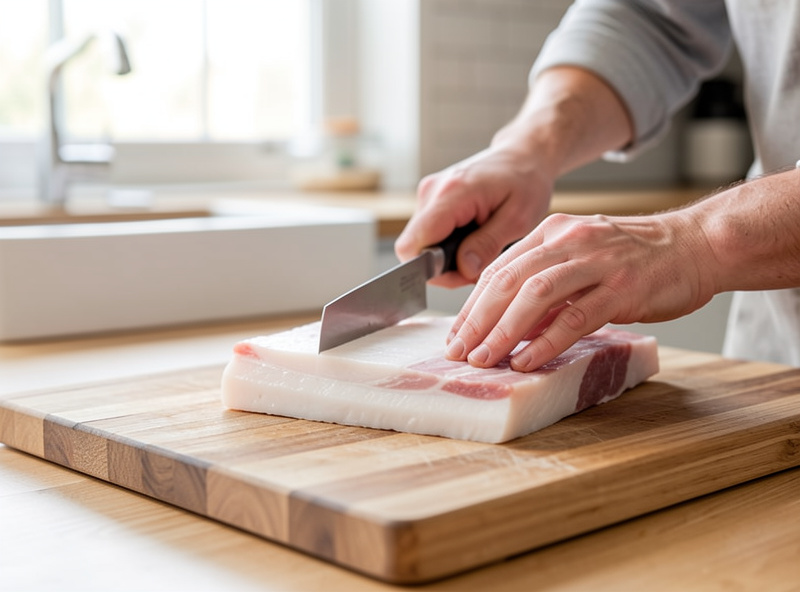
Once you have the right fat, prep is minimal but matters. Remove the skin if it is still attached — a sharp knife run flat between skin and fat takes it off cleanly. Trim off any meat, blood spots, or ragged edges, because lean scraps left on a fat slab are the parts most likely to spoil. Square the slab into an even rectangle so it cures uniformly, and weigh it, because whether you use a salt box or an equilibrium cure without a marble box, the weight is what your salt and cure #2 percentages are based on. A clean, squared, weighed slab of firm shoulder-end back fat is a lardo that has already half-succeeded before the salt touches it.
Fresh vs Frozen, and How Much to Buy
Fresh back fat is ideal, but frozen is perfectly good for lardo — freezing does not damage the texture of dense fat the way it can bruise a delicate lean cut, which is exactly why the salo tradition leans on the freezer. If you buy frozen, thaw it slowly in the fridge and pat it dry before you start; you want the cure working on clean, dry fat, not a wet slab. The one thing freezing will not fix is fat that was already turning before it went in, so still start from the firmest, freshest slab you can get.
On quantity: fat cures down slowly and keeps well, so buy more than you think you need. A finished lardo loses only 10–15% of its weight over months — nothing like the 30–40% a lean cut sheds — so a two-kilogram slab stays close to two kilograms of finished product. That is a lot of lardo, but it seals and freezes beautifully, and having a squared, cured slab in the freezer to shave from is one of the quiet luxuries of this hobby. I usually cure at least two slabs at once, because the chamber is already dialed in and the marginal effort of a second piece is nothing.
Buy a little extra raw fat beyond your slab, too. Trimming to square the piece always sheds usable scraps, and that clean back fat is gold for enriching a lean salami grind or larding a roast — never waste it. Sourcing well means starting with enough good fat that you can afford to trim ruthlessly and still have a generous slab left to cure.
Related Guides
- How to Cure Lardo at Home: The Complete Guide
- Lardo vs Salo vs Fatback: Three Ways to Cure Pork Fat
- Curing Lardo Without a Marble Box: Vac-Bag and Crock Methods
- Homemade Pancetta: Arrotolata vs Tesa
- Homemade Guanciale: Cured Pork Jowl
Frequently Asked Questions
What kind of pork fat is used for lardo?
Lardo is made from firm pork back fat — the dense subcutaneous fat along the spine, ideally from the shoulder end. It should be at least one inch thick. Softer belly fat and crumbly leaf fat do not work for lardo.
How thick should back fat be for lardo?
At least one inch (2.5 cm), and one and a half to two inches is better. Thicker slabs give lardo its luxurious depth on the plate and protect the interior through months of curing. Thin fat cures into little more than seasoned grease.
Where can I buy back fat for lardo?
Ask a butcher who breaks down whole pigs to save you back fat in slabs, or buy it from a farm shop, abattoir, or online charcuterie supplier. It is cheap and often discarded, so you usually need to request it in advance.
Can I use belly fat for lardo?
No. Belly fat is soft and streaked with muscle, so it will not hold a clean slab or firm up into proper lardo texture. Save belly for pancetta or bacon and use firm back fat for lardo.
How do I know if the fat is firm enough?
Press it. Good lardo fat is firm, springs back with almost no give, and leaves your finger clean. If it dents easily or smears, it is too soft — that is belly-grade fat and will not make good lardo.