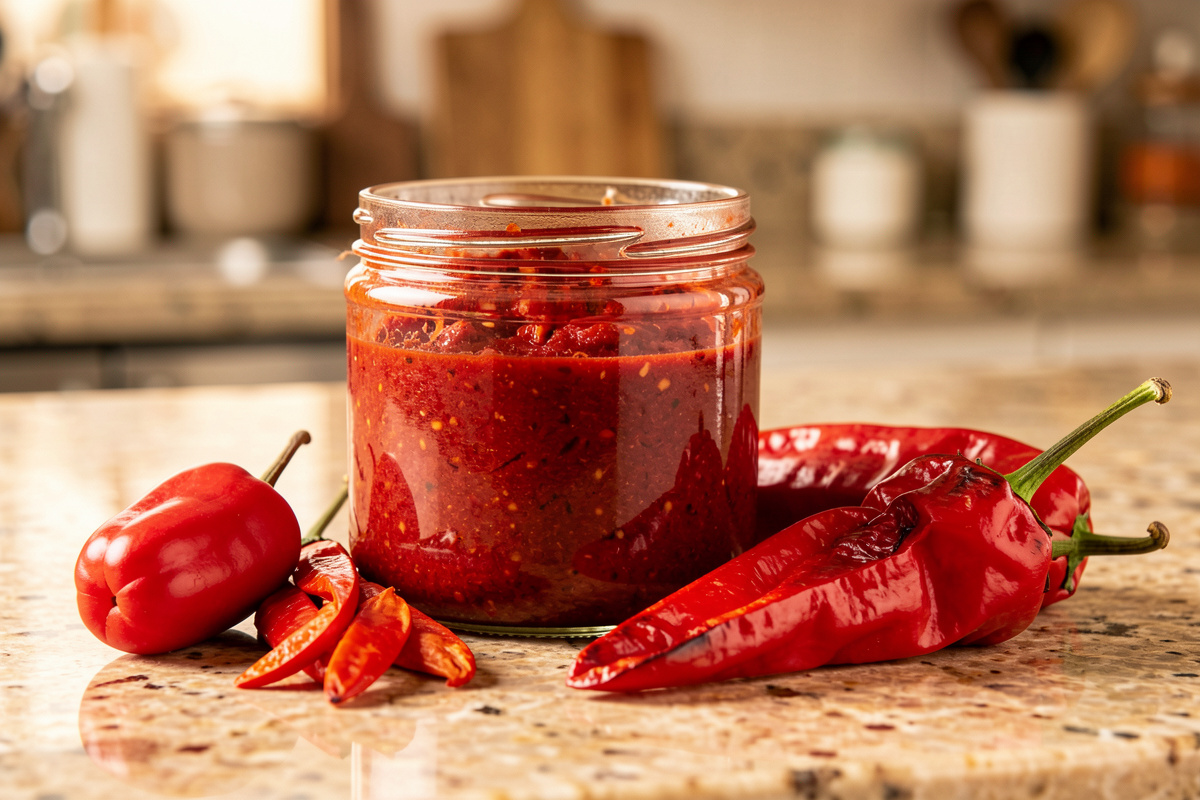
How Much Chili Goes in ‘Nduja: Calabrian Heat Without Wrecking the Cure
July 4, 2026

‘Nduja uses chili and pepper at roughly 20–30% of the meat weight — but that figure is a blend, not pure heat. A typical home build runs perhaps 5–10% hot Calabrian chili for the burn and 15–20% sweet roasted red pepper for colour and body, so the total is huge while the actual fire stays controllable. The split is the whole skill.
This is the number that scares people off ‘nduja, and it is also the number they get wrong most often — either by dumping in 25% of pure hot chili and producing something inedible, or by treating it like a normal salami and adding a timid teaspoon. The way I weigh mine, the pepper is two ingredients doing two jobs. Here is how to balance them so you get the colour, the body, and a heat you actually want to eat.
The Short Answer: A Big Number Made of Two Parts
Total pepper in ‘nduja lands between 20 and 30% of the combined meat-and-fat weight — for a 1 kg batch, that is 200 to 300 g of pepper. But you split it: a smaller fraction of hot Calabrian chili (fresh, dried, or as a hot paste) carries the heat, and a larger fraction of sweet roasted red pepper carries the deep red colour and the soft, jammy body that makes the spread luscious rather than just spicy. I start most batches around 8% hot to 18% sweet and adjust from there.
The pepper does nothing for safety. It is flavour and colour only — the salt, cure, and fermentation are what make the sausage safe, as I cover in the main ‘nduja guide. That distinction matters because it means you can tune the chili freely to taste without ever touching the safety math.
Hot vs Sweet: Why You Need Both
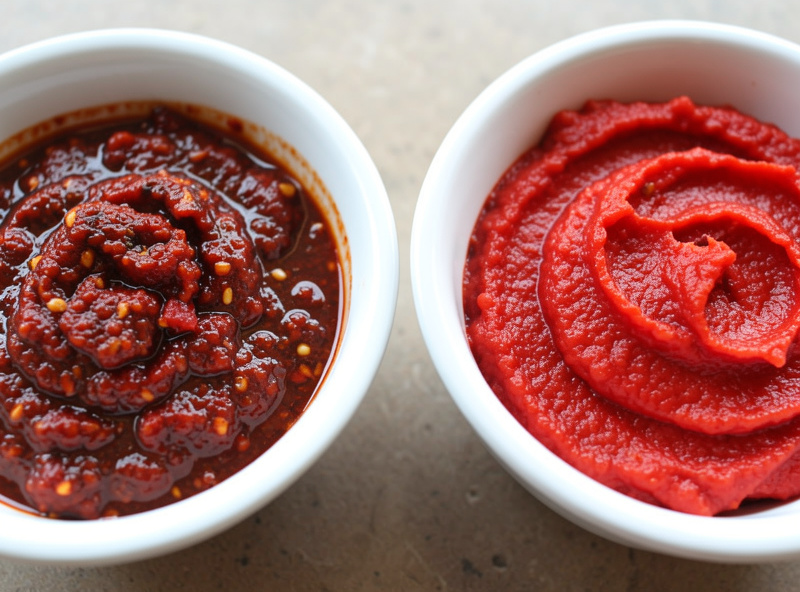
If you build ‘nduja from hot chili alone, two things go wrong. The heat becomes punishing, and the texture suffers — fresh hot chilies are often thinner-fleshed and add sharpness without the soft pulp that gives ‘nduja its body. Sweet roasted red peppers (think the meaty, fleshy peppers roasted and skinned) bring colour, natural sweetness, and a pulpy body that rounds the whole paste. The hot chili is the soloist; the sweet pepper is the entire backing section.
Calabrian peperoncino is the traditional hot component, and you can use it fresh, dried and rehydrated, or as a prepared hot chili paste. The sweet side is roasted red pepper, often blended to a smooth purée. I keep both as pastes so they fold evenly into the cold meat without leaving dry pockets.
How I Dial the Heat
Because the heat lives almost entirely in the hot fraction, you tune burn by moving that number while keeping the total pepper roughly constant. Here is the ladder I use for a 1 kg batch:
| Heat level | Hot chili | Sweet roasted pepper | Result |
|---|---|---|---|
| Mild-warm | 50 g (5%) | 220 g (22%) | Gentle warmth, deep colour, very spreadable |
| Classic | 80 g (8%) | 180 g (18%) | Proper building heat, balanced |
| Hot | 120 g (12%) | 140 g (14%) | Serious burn, still has body |
Keep the combined total in the 20–30% band whichever row you pick. If you push the hot fraction much past 12–15%, you start losing the pulpy body and the spread turns thin and aggressive — the point where it stops being ‘nduja and becomes a chili paste with pork in it.
Fresh vs Dried vs Paste: Adjusting for Water
The form of your chili changes the water you add, and water matters in a spreadable sausage. Fresh chilies and freshly roasted peppers carry a lot of moisture, which nudges the water activity of the mix up. Dried chili (rehydrated) and concentrated pastes add the same flavour with less water. Because ‘nduja is already a wet, high-fat paste with a tighter safety margin than a firm salami, I lean toward roasted-and-reduced or paste forms so I am not loading the mix with extra free water before the ferment.
If you do use plenty of fresh pepper, drain and reduce it first, and be especially disciplined about hitting your pH target during fermentation. The extra moisture is exactly why the safety hurdles need to be right, a point I make in the spreadable salami safety guide.
Building Your Own Chili and Pepper Base
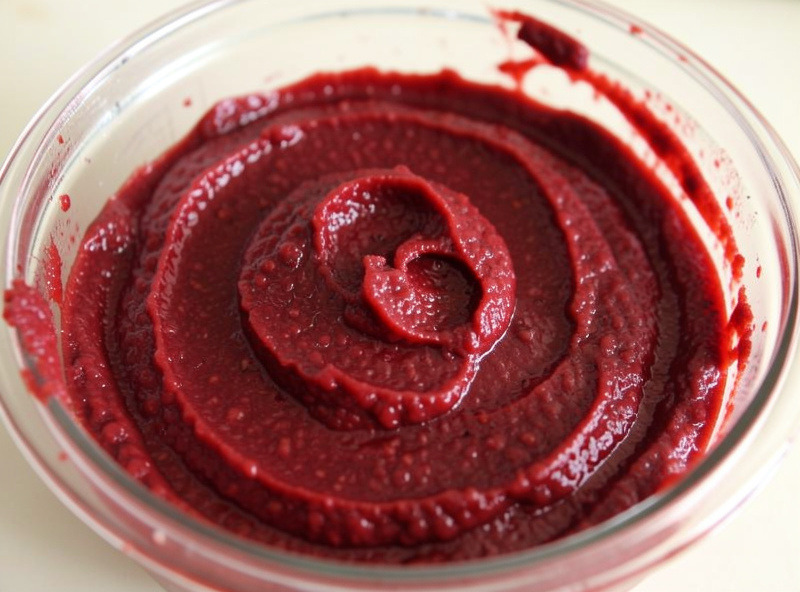
You do not need to buy a prepared ‘nduja paste to get the ratio right — building the base yourself is half the fun and lets you control the heat exactly. For the sweet fraction, I roast fleshy red peppers until the skins blister, steam them covered so the skins slip off, then purée the flesh and reduce it gently in a pan to drive off excess water. For the hot fraction, I rehydrate dried Calabrian-style chilies in a little warm water, then blend them — seeds in for more heat, seeds out for less. Combine the two purées and you have a base you can weigh straight into the meat.
Reducing both purées before they go in is the step that separates a clean, deep-coloured ‘nduja from a wet, slumping one. Free water is the enemy of a spreadable sausage that still has to ferment and dry safely, so I treat the chili base almost like a paste I am concentrating, not a sauce I am pouring. A few extra minutes on the stove pays off across the whole dry.
When in the Process to Add the Chili
The chili goes in at the mixing stage, with the salt, cure, dextrose, and culture, so it distributes evenly through the cold paste before stuffing. Mix only until the colour is uniform — over-mixing a wet, high-fat, chili-loaded paste warms it and starts the fat smearing, which is the opposite of what you want. I fold the chili base in last, after the cure is already evenly dispersed, so I am not over-working the meat just to chase colour. Everything stays cold, the bowl sometimes sits over ice, and the moment the paste looks evenly red it is done.
Smoked and Dried Chili for Depth
A trick I like: replacing part of the sweet fraction with a smoked dried pepper adds a smoky depth without raising the heat. It echoes what a touch of pimentón does for sobrasada, ‘nduja’s Spanish cousin, and bridges the two spreadables nicely. Keep it modest — a smoky note should sit under the chili, not take over. If you want the full comparison of how the two sausages handle their spice, I lay it out in ‘nduja vs sobrasada.
What Too Much Chili Does to the Build
Beyond the obvious — making it too hot — overloading the hot fraction has practical consequences. The paste gets wetter and thinner, which makes a soft sausage even harder to stuff cleanly and more prone to slumping in a wide casing. It can also mask the savoury, fermented depth that is half the point of ‘nduja; you taste fire and nothing else. And a thin, wet paste smears more easily, which feeds the greasy-texture problem I troubleshoot in my greasy ‘nduja fix. Restraint on the hot fraction is not timidity — it protects the texture as much as the flavour.
Tasting and Adjusting Before You Stuff
Here is a step recipe blogs skip: cook a tiny test patty before you stuff the whole batch. Because the raw mix tastes different from the fermented, dried result, and because the cold paste mutes flavour, I fry a teaspoon-sized patty, let it cool slightly, and taste for heat and salt. It will not tell you the final fermented depth, but it absolutely tells you whether the chili balance is in the right place — too hot, too flat, or right. If it is screaming hot raw, it will still be hot finished; if it is timid raw, the dry will not magically add fire.
Adjust the chili at this point, never after stuffing. Add a little more sweet purée to calm a batch that ran too hot, or a touch more hot chili if it is flat — then re-mix briefly, cold, and test again. Once it is in the casing, the ratio is locked for the life of the sausage, so the few minutes spent on a test patty are the cheapest insurance in the whole build. I keep a note of the exact split in my weight log so a batch I liked can be repeated precisely next time.
Frequently Asked Questions
How much chili goes in ‘nduja?
Total pepper runs 20 to 30% of the meat weight, but it is a blend. A typical home build uses around 5 to 12% hot Calabrian chili for heat and 14 to 22% sweet roasted red pepper for colour and body. For a 1 kg batch that is 200 to 300 g of pepper in total.
Why use sweet pepper as well as hot chili?
Sweet roasted red pepper provides the deep red colour, natural sweetness, and pulpy body that give ‘nduja its luscious spreadable texture. Hot chili alone makes the paste thin, sharp, and punishingly spicy. The sweet fraction is the backbone; the hot fraction is the accent.
Does the chili make ‘nduja safe to eat?
No. Chili and pepper are flavour and colour only and contribute nothing to safety. The salt, Cure #2, and the fermentation pH drop below 5.3 are what make the sausage safe. You can adjust the chili freely to taste without affecting the safety of the cure.
Should I use fresh or dried chili in ‘nduja?
Either works, but dried or paste forms add less water. Because ‘nduja is a wet, high-fat paste with a tight safety margin, reducing extra moisture helps. If you use fresh peppers, drain and reduce them first and be strict about hitting your fermentation pH target.
How hot is traditional ‘nduja?
Genuinely hot, but balanced. The Calabrian chili gives a building, lingering burn that the larger sweet-pepper fraction tempers. A classic build at roughly 8% hot chili lands as a serious but eatable heat, not an extract-level burn.
Can I make a milder ‘nduja?
Yes. Drop the hot chili to around 5% and raise the sweet roasted pepper to keep the total pepper near 22%. You keep the deep colour, body, and savour with only gentle warmth, which is a good starting point if you are unsure of your heat tolerance.
Related Guides
- How to Make ‘Nduja at Home: Calabrian Spreadable Salami
- Why Is My ‘Nduja Greasy Instead of Spreadable?
- Is Spreadable Salami Safe?
- ‘Nduja vs Sobrasada Compared
- How to Make Sobrasada