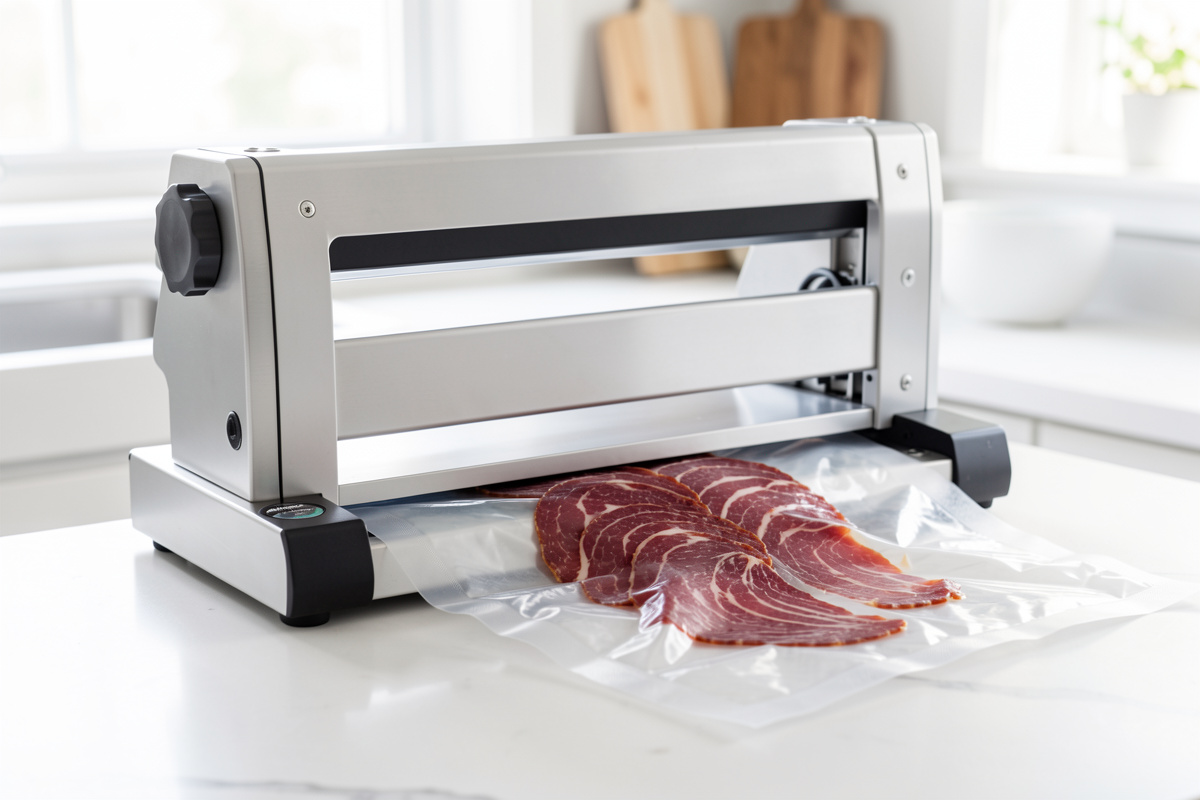

Packaging cured meat for sale is two problems at once: keeping the product physically stable, and putting a legally compliant label on it. A piece that is perfect on your chamber shelf — firm only after shedding 30 to 40 percent of its starting weight over three to four months of drying — can sweat, soften or lose its bloom inside the wrong bag, and a package with the wrong label gets pulled by an inspector no matter how good the meat is. Vacuum-seal only fully finished pieces, hold the cold chain, and put net weight, full ingredients, allergens, your business name and address, a lot number and storage instructions on every package.
I run converted-fridge curing chambers and weigh every piece in and out, so I know exactly when a coppa or salami has stopped losing moisture — and that endpoint is the line that decides when a piece is ready to package. Seal it too early and it keeps drying inside the bag and pools liquid. This guide is part of the broader selling homemade charcuterie cluster and focuses on the practical mechanics of getting cured meat from your shelf into a customer’s hands intact and legal.
Only package a piece that has finished drying
The first rule is timing. Cured meat is alive in a slow way — it keeps releasing moisture until it reaches equilibrium. If you vacuum-seal a whole muscle that is still actively losing weight, it will continue inside the bag, condensation will collect, and you will hand a customer a wet, slack package instead of a firm slice. I use the weight log to confirm a piece has crossed its target loss — around 30 to 40 percent for whole muscle and finished salami — and held steady before it goes anywhere near a sealer.
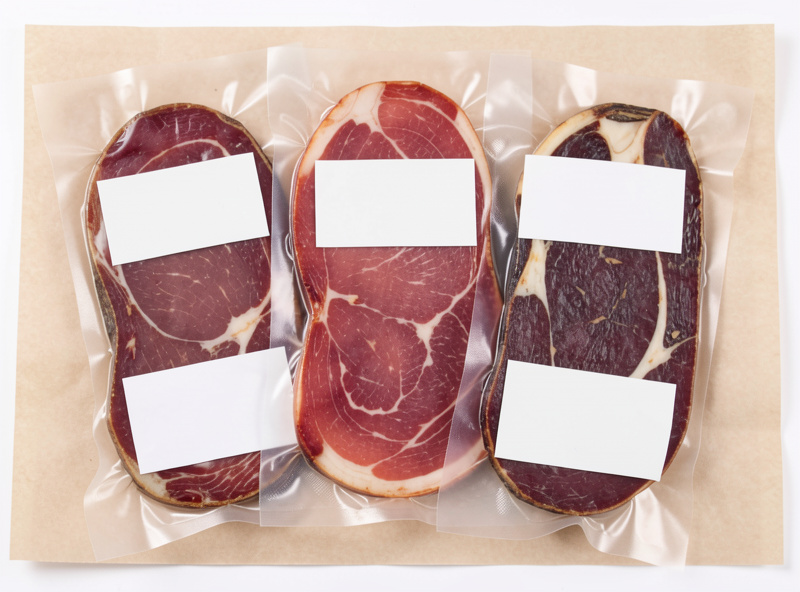
For pieces you intend to sell sliced, there is an extra wrinkle: sliced cured meat oxidises fast, the cut faces dull from deep red to brown within hours of air exposure, and the thin slices dry to leather if left open. Sliced product needs to be vacuum-sealed or modified-atmosphere packed promptly after slicing to hold both colour and texture. Whole pieces are far more forgiving, which is one reason many small producers sell whole or half muscles and let the customer slice.
Choosing a packaging method
There is no single right answer — the method follows the format you are selling and how long it needs to hold. The honest framing for shelf life is that a properly finished, low-water-activity dry-cured product is shelf-stable by design, but once you sell it you should still label conservatively and assume the customer will refrigerate it.
| Method | Best for | Strengths | Watch out for |
|---|---|---|---|
| Vacuum seal | Finished whole muscle, bulk salami | Long hold, blocks oxygen, tidy | Crushes soft pieces; traps moisture if sealed too early |
| Modified-atmosphere (MAP) | Sliced product for retail | Holds slice colour and shape | Needs equipment; shorter hold than vacuum |
| Butcher paper / breathable wrap | Fresh market sales, same-day | Lets the piece breathe, premium feel | Short shelf life; not for shipping |
| Parchment + box | Gift and grazing presentation | Looks premium, easy to brand | No barrier protection; pair with cold chain |
My default for selling whole pieces is a vacuum seal once the weight log confirms the piece is done, because it travels well and gives the longest predictable hold. For a market stall where pieces sell the same day, breathable butcher paper looks and feels more artisan and lets the bloom stay matte rather than sweating under plastic. Match the method to the channel — the farmers market guide covers the cold-chain side of selling in the open air, which packaging alone does not solve.
The label is a legal document
This is where good meat gets stopped. A package sold for money needs a compliant label, and for cured meat the required fields are more demanding than for a jar of jam. The exact wording and format are set by your regulator, but the fields you should expect to provide are consistent enough to plan around.
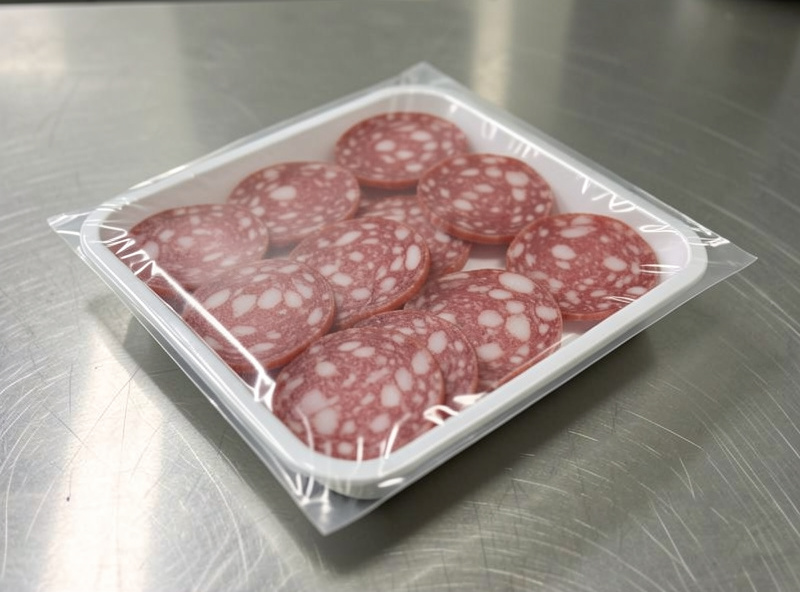
At minimum, expect to declare: the product name; the net weight; a full ingredient list in descending order by weight, including the cure (sodium nitrite or nitrate) and any allergens such as the milk in a starter or the nuts in a coating; your responsible business name and address; a lot or batch identifier so a specific batch can be traced; and storage and handling instructions. Many jurisdictions also require a safe-handling statement and, for meat specifically, an inspection legend or establishment number once you are producing under inspection. The cure declaration matters — nitrite and nitrate are regulated additives, and they must appear honestly on the label, never hidden. Get the lot number system in place from your very first sale, because traceability is exactly what a regulator asks for when there is ever a complaint, and it is the same batch tracking your cost records already rely on.
Don’t let packaging hide a safety problem
One genuine hazard worth stating plainly: vacuum packaging creates a low-oxygen environment, which is exactly the condition Clostridium botulinum prefers. For properly dry-cured, low-water-activity product this is not a concern, because the low moisture and the cure prevent growth — that is the whole point of curing correctly with cure #2 on long-dried pieces. But it is the reason you must never vacuum-seal an under-cured or under-dried piece and treat the bag as if it makes it safe. Packaging preserves a safe product; it cannot rescue an unsafe one. If a piece shows fuzzy black or green growth, a slimy surface, or an off smell, it does not get packaged — it goes in the bin. The chamber discipline is what makes the package trustworthy, not the plastic.
Presentation sells the premium
Beyond function, packaging is your most visible branding. A clean label, a consistent look, and a piece that arrives firm and well-bloomed all justify the premium price that hand-cured product should command. I would rather sell a slightly smaller piece beautifully presented and correctly labelled than a larger one in a bare bag with a hand-scrawled weight. Presentation and compliance are not in tension — the same tidy label that satisfies the inspector also reassures the customer. The board business guide takes this further, where presentation is most of what you are actually selling.
Frequently Asked Questions
When is a cured piece ready to package?
When the weight log shows it has reached its target drying loss — roughly 30 to 40 percent for whole muscle and finished salami — and held steady. Sealing a piece that is still losing weight traps moisture inside the bag and leaves it wet and slack.
Should I vacuum seal or use breathable wrap?
Vacuum seal finished whole muscle and bulk salami for the longest predictable hold and for shipping. Use breathable butcher paper for same-day market sales where the artisan feel matters and the piece sells before shelf life is an issue. Match the method to the channel.
What has to go on a cured meat label?
Expect to declare product name, net weight, full ingredients in descending order including the cure and allergens, your business name and address, a lot or batch number for traceability, and storage and handling instructions. Your regulator sets the exact format, and inspected product also carries an inspection legend.
Do I have to list the curing salt on the label?
Yes. Sodium nitrite and nitrate are regulated additives and must be declared honestly in the ingredient list, never hidden. Allergens from starters or coatings must also appear. An accurate cure declaration is one of the first things an inspector checks.
Is it safe to vacuum seal cured meat?
For properly dry-cured, low-water-activity product cured with the correct salt, yes — the low moisture and cure prevent growth even in the low-oxygen bag. Never vacuum seal an under-cured or under-dried piece, because the sealed environment favours Clostridium botulinum and the bag does not make an unsafe piece safe.
How should I label shelf life and storage?
Label conservatively and assume refrigeration even for shelf-stable dry-cured product. Provide a clear storage instruction and a date in the format your regulator requires. Sliced product oxidises quickly, so give it a shorter stated life than whole pieces.
Related Guides
- Selling Homemade Charcuterie: The Complete Legal Guide
- Food Safety Licensing for Charcuterie
- How to Price Homemade Charcuterie
- Farmers Market for Charcuterie
- Charcuterie Board Business Guide