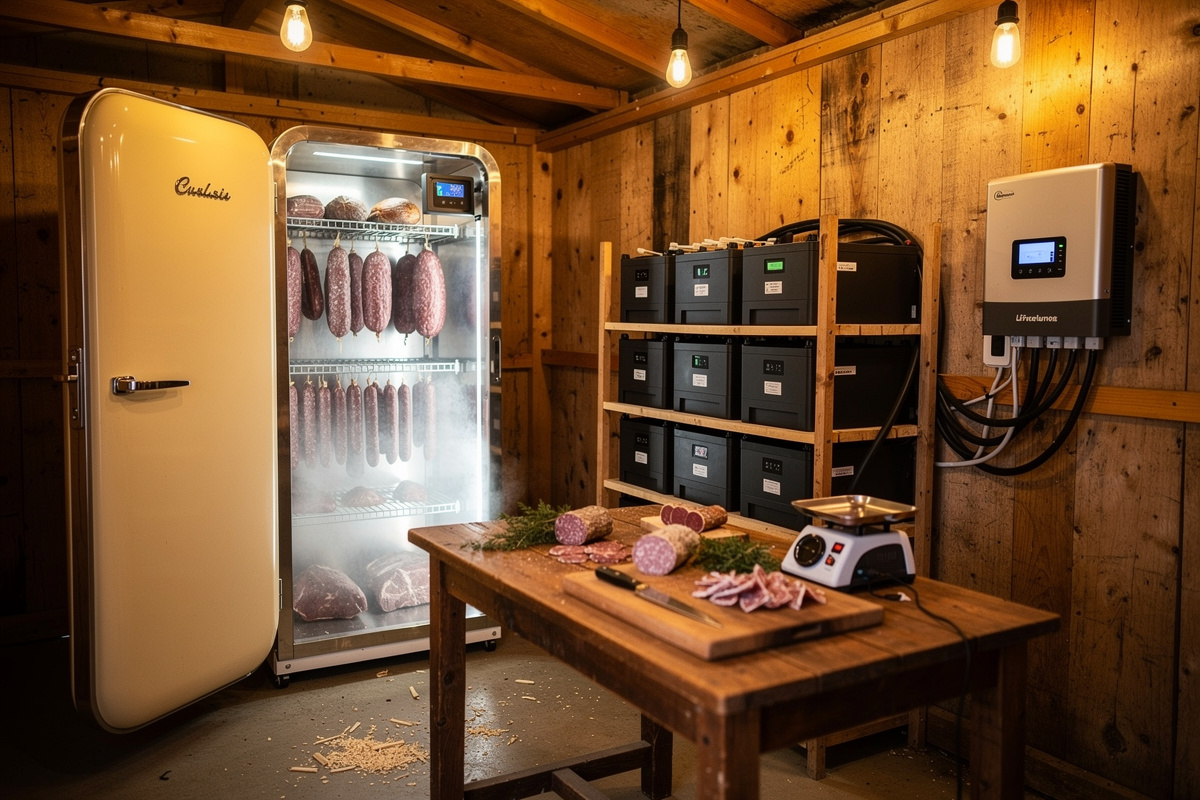
Off-Grid Curing Chamber: Battery and Inverter Sizing for 24/7 Climate Control
May 3, 2026

An off-grid curing chamber drawing about 4–6 kWh/day (a converted mini fridge with PID temperature control plus an ultrasonic humidifier and small fan) needs roughly 10–15 kWh of usable LiFePO4 storage and a 3 kW continuous-rated hybrid inverter to ride out 2–3 cloudy days without grid backup.
The compressor surge is the binding constraint, not the steady-state load — a typical home curing chamber cycles 25–35% duty cycle with a 600–1000 W surge at compressor start, and a wrong-sized inverter will fail at exactly the worst moment.
I sized my own off-grid setup for the worst-case month at 59°N latitude, which meant 18 kWh of LiFePO4 plus a Victron MultiPlus II 3000VA, and the system has carried a 14-week salami cure plus a 45-day dry-aged ribeye through a January cloudy stretch with one generator-assist event. The build slots into the broader complete curing chamber build guide; treat off-grid power as the resilience layer that wraps the rest. The actual chamber wiring (controllers, fan, humidifier) is identical to the grid-tied version covered in how to convert a fridge into a curing chamber.
Curing chambers are an unusual off-grid load. They run 24/7 for weeks at a time (a salami cure is 4–8 weeks; whole muscle goes 2–4 months), they cannot tolerate even short outages without losing safety-critical temperature control, and the consequences of a power gap are not “annoying” but “the meat is unsafe and must be discarded.” Off-grid is genuinely viable for these systems, but only if the sizing math accounts for steady-state plus surge plus reserve correctly. This guide walks through that math, the inverter brands that actually handle the surge, and the resilience layers I run on my own setup.
The Curing Chamber Load Profile
A typical home curing chamber has four electrical loads:
- Compressor (the meaningful load): 80–150 W running, 600–1000 W surge for 0.5–1 second at start, runs 25–35% duty cycle in steady state. Daily energy: 0.6–1.2 kWh.
- Ultrasonic humidifier: 25–40 W running, runs 5–15% duty cycle. Daily energy: 0.05–0.15 kWh.
- Internal fan (small AC or 12V DC computer fan): 4–12 W continuous. Daily energy: 0.1–0.3 kWh.
- PID controllers + dehumidifier (if used): 5–50 W continuous depending on setup. Daily energy: 0.1–1.2 kWh.
Total daily energy: 0.85–2.85 kWh for a typical 4–7 cu ft chamber. Add 50–100% headroom for cold months when the chamber’s heater (if you have one) runs more, and plan toward 4–6 kWh/day for sizing purposes. I logged my own chamber for 21 days with a Kill-A-Watt before sizing the system; the average came out to 1.9 kWh/day, but the worst single day (compressor cycling hard against a 4°C ambient garage) hit 4.7 kWh. Sizing to the average instead of the worst-case would have undersized my battery by roughly 60%.
As an Amazon Associate I earn from qualifying purchases.
Battery Sizing: Two-to-Three Day Resilience
Curing chambers have lower fault tolerance than other off-grid loads. A 4-hour outage on a fridge during a sausage cure is acceptable; a 12-hour outage at the wrong stage of the dry-cure cycle creates a bacteriological risk that is not worth the gamble — the same pH and water-activity validation numbers that govern dry and semi-dry sausage safety assume the fermentation and drying schedule stays on its intended temperature curve, and the cure window does not forgive multi-hour drift outside it. Standard sizing is 2–3 days of usable storage at 80% depth-of-discharge.
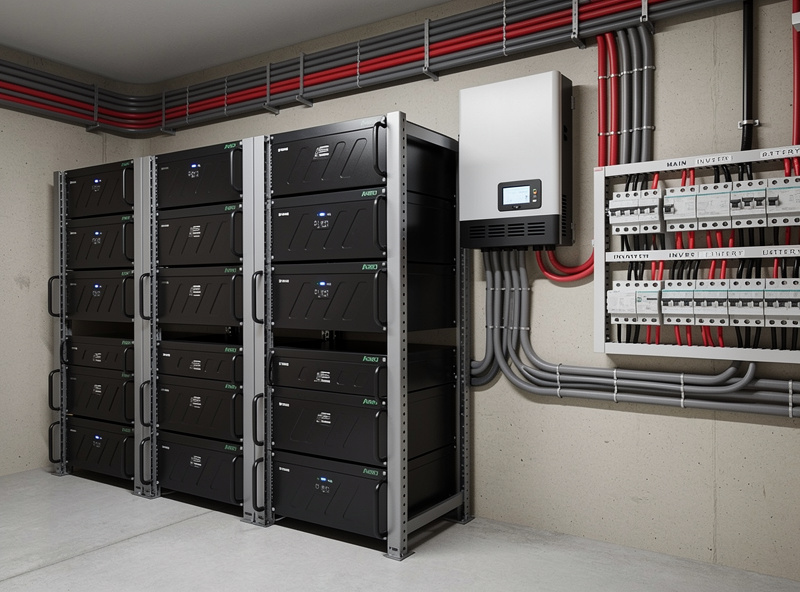
The math: 5 kWh/day × 2.5 days resilience / 0.8 DOD = 15.6 kWh nameplate capacity. Three 5.12 kWh server-rack LiFePO4 batteries (15.36 kWh nameplate, 12.3 kWh usable) is the natural fit and matches the sizing approach in the BatteryStorageHQ battery chemistry comparison hub — the chemistry hub covers the LiFePO4 vs NMC tradeoff that determines which battery brand makes sense for this duty cycle.
For deeper sizing methodology, the cycle life vs DOD chart is the canonical reference. The relevant takeaway for curing chambers: at 80% daily DOD, LiFePO4 cells deliver 3,000–5,000 cycles, which is 8–13 years of daily cycling. The chamber will outlive the fridge.
Inverter Sizing: Surge, Not Steady State
The compressor surge is what kills under-sized inverters. A continuous-rated 1500 W inverter with a 3000 W surge spec sounds like it covers the 80–150 W steady-state plus 600–1000 W compressor surge with comfortable margin. In practice, cheap inverters’ “3000 W surge” rating is for 0.1–0.5 seconds, while the compressor draws surge for 0.5–1 second. Result: random inverter shutdowns at compressor start. The first inverter I tried (a no-name 2 kW unit a friend lent me to test) tripped on every fourth or fifth compressor start, with an audible click-clack from the unit and a slow LED amber-red sequence that I came to recognize as “your compressor just shut itself down for the next 12 minutes.” Two weeks of that and I sent the unit back.
The minimum class I’d run for curing chamber loads is a 3000VA-class hybrid inverter (2.4-3 kW real continuous depending on brand) with at least 5.5 kW of surge headroom. Look for UL 1741-listed grid-interactive inverters if you plan to permit the install — the UL 1741 listing is what an inspector wants to see, and it implicitly forces the surge spec to be honest. The brands that consistently meet this:
Victron MultiPlus II 3000VA ($1,400–$1,700): 2.4 kW continuous, roughly 5.5 kW surge (the “3000VA” naming is apparent power, not the real continuous watts — worth knowing before you spec against it). The European standard, and what I run on my own chamber; it’s the tightest fit of the three brands here but still clears the compressor surge with margin. The MultiPlus II datasheet is published with full surge curves so you can verify the real numbers rather than just trusting the VA rating on the box. Right pick for most curing setups under 5 kWh/day. See the deep coverage in the Victron MultiPlus II review.
EG4 6000XP ($1,800–$2,200): 6 kW continuous, 12 kW surge. Overkill for a single chamber but the right pick if you plan to expand to multiple chambers or pair with other loads.
Sol-Ark 8K-2P ($4,800–$5,200): 8 kW continuous, 16 kW surge. Premium tier. Right answer for serious off-grid setups where the curing chamber is one load among many.
Avoid: Pure-sine-wave inverters under 2 kW continuous (cannot reliably handle compressor surge), modified-sine inverters of any size (damages compressors over time), and “peak” specs without 5-second-rated surge data.
Solar Sizing for the Chamber Load
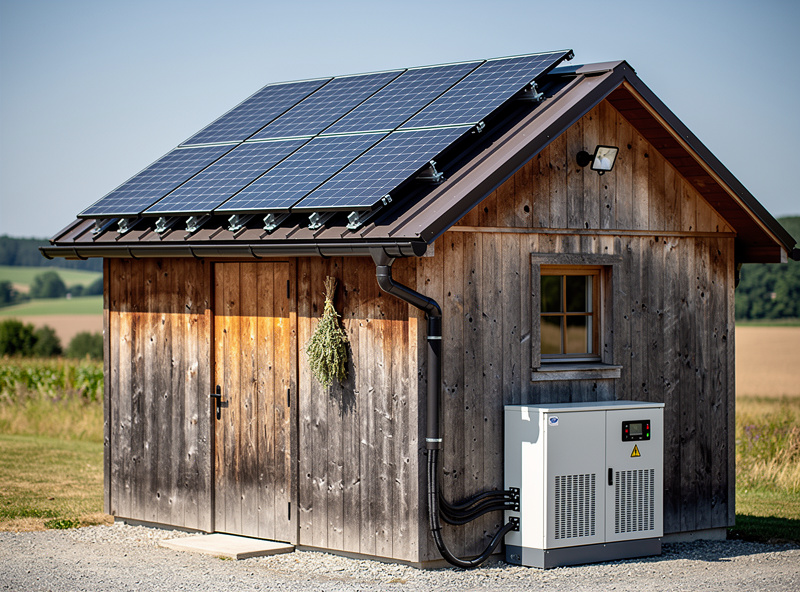
Daily energy of 4–6 kWh/day requires 1.5–2 kW of solar in good locations (4–5 sun hours/day) or 2.5–3 kW in winter latitudes. Curing chambers run year-round, so plan for the worst-case month at your latitude — winter solar production at 35°N is roughly 60% of summer production. At my latitude (59°N) winter is closer to 25% of summer, which is why my array is oversized to 3 kW for a chamber that only draws ~2 kWh/day on average.
The mounting geometry insight specific to curing setups: the chamber load is constant (not load-following like household appliances), so south-facing panels at latitude tilt produce the smoothest battery state-of-charge curve. East- or west-facing panels add complexity without benefit because the chamber does not care when the energy arrives — it cares only that the battery has enough buffer to cover overnight + cloudy days.
Resilience Layers: Belt, Suspenders, and a Backup Belt
Curing chambers warrant more redundancy than typical off-grid loads because of the food-safety stakes. The resilience stack I run, from cheapest to most thorough:
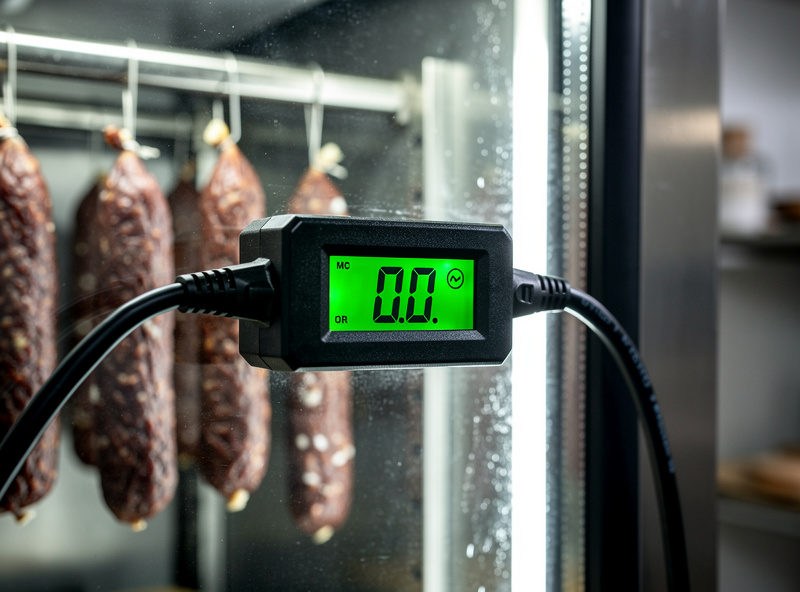
Layer 1: Smart plug + offline alert. A WiFi smart plug ($15) on the chamber sends a phone alert if it loses power. Catches inverter shutdowns, breaker trips, and chamber unplugs. Costs nothing operationally; saves the cure from silent failures. The single highest-leverage $15 in the whole system, and how I caught my no-name-inverter problem in week two before it ruined a 5-week coppa run. Combined with the rule patterns in smart plug schedules for curing chambers, the alerting layer also catches stuck contactors, not just power loss.
Layer 2: Battery low-voltage cutoff with hysteresis. The inverter cuts off the chamber load before draining the battery below 20% SOC, with a 10% hysteresis to prevent rapid cycling. This protects the battery and gives you 2–3 hours warning before total power loss.
Layer 3: Generator auto-start on grid loss / battery low. A propane or natural gas generator with auto-start (Generac Guardian 7.5 kW, $2,500–$3,500 installed) kicks in if the battery hits 20% SOC. For year-round 24/7 cures, this is the right resilience layer for any climate that sees prolonged cloudy stretches. Mine fired exactly once in 14 months — January 9 last year, after four straight overcast days — and ran for 6 hours overnight.
Layer 4: Grid backup on a transfer switch. The cleanest insurance: hybrid grid-tied so the system pulls grid power if all else fails. Requires permitting and grid interconnection (NEC 705 covers the interconnection rules and transfer-switch requirements where applicable) but turns the curing chamber from “off-grid” to “off-grid-most-of-the-time” with vastly higher resilience.
Whole-System Cost Breakdown
| Component | Spec | Cost (2026) |
|---|---|---|
| 3× Server-rack LiFePO4 (5.12 kWh each) | 15.36 kWh nameplate | $3,600–$4,500 |
| Hybrid inverter (3 kW continuous) | 6 kW surge for 5 sec | $1,400–$2,200 |
| Solar panels (2 kW) | 5x 400W panels | $800–$1,200 |
| Mounting hardware and BoS | Combiner, breakers, cabling | $600–$900 |
| Installation labour (if not DIY) | Permitting + connection | $2,500–$5,000 |
| Smart plug + monitoring | WiFi plug + sensor | $30–$60 |
| Total (DIY) | 2 days resilience | $6,500–$8,900 |
| Total (with auto-start generator) | Belt + suspenders | $9,000–$12,500 |
Pure Off-Grid vs Hybrid Grid-Tied
For a curing chamber specifically, hybrid grid-tied is almost always the right answer. Here is why: the chamber runs 24/7 for weeks, and a 5-day cloudy stretch in February pushes pure off-grid into emergency-discharge territory if the battery is not oversized to 4–5 days of resilience. A 4-day battery bank doubles system cost. Hybrid grid-tied with 2–3 day battery handles 99% of cloudy stretches on solar+battery and falls back to grid for the rare 5+ day events without the cost of a 4-day battery.
The only setups where pure off-grid genuinely makes sense for a curing chamber: permanent-no-grid locations (remote homesteads, off-grid cabins where the grid was never connected) and very low daily duty cycle setups (a 7 cu ft chamber that only runs in winter when ambient is the same temperature as the chamber and the compressor barely cycles).
Specific Inverter Recommendation by Setup Size
| Chamber Size | Daily Energy | Battery | Inverter | Solar |
|---|---|---|---|---|
| Mini-fridge (3–4 cu ft) | 2–3 kWh/day | 10 kWh | 2–3 kW | 1.5 kW |
| Standard chamber (5–7 cu ft) | 4–6 kWh/day | 15 kWh | 3 kW | 2 kW |
| Large chamber (10–15 cu ft) | 7–10 kWh/day | 20–25 kWh | 5 kW | 3 kW |
| Multi-chamber setup | 15–25 kWh/day | 40–50 kWh | 8 kW | 5–6 kW |
For deeper inverter selection, see the best hybrid inverter for home solar 2026 guide; for cold-climate battery considerations, see LiFePO4 cold weather performance. Curing chambers running outdoors or in unheated outbuildings need self-heated batteries or conditioned enclosures below freezing — this is the trap I almost fell into siting my battery bank in the same shed as the chamber. Battery cells below 0°C don’t accept charge current, and an off-grid system that can’t recharge in winter is just a finite-runtime UPS.
Frequently Asked Questions
How much battery do I need for an off-grid curing chamber?
Roughly 10 to 15 kWh of usable LiFePO4 storage for a standard 5 to 7 cubic foot chamber drawing 4 to 6 kWh per day, sized for 2 to 3 days of resilience at 80 percent depth of discharge. Three 5.12 kWh server rack batteries hits the spec with a clean upgrade path.
What inverter size do I need for a curing chamber compressor?
A 3000VA-class hybrid inverter with at least 5.5 kW of surge headroom for a few seconds, not just a fraction of a second. The compressor surge is the binding constraint – many cheap 3000 W peak inverters fail at compressor start because their peak rating is for 0.1 to 0.5 seconds, while compressor surge runs 0.5 to 1 second. The Victron MultiPlus II 3000VA (2.4 kW continuous, about 5.5 kW surge) is the tightest fit and what I run; EG4 6000XP (6 kW continuous) and Sol-Ark 8K-2P (8 kW continuous) clear the requirement with more margin.
Can a curing chamber really run off-grid 24/7?
Yes, with proper sizing. The continuous load is modest (4 to 6 kWh per day for a standard chamber); the harder problem is multi-day cloudy resilience and food-safety-grade reliability. Hybrid grid-tied with 2 to 3 days of battery is the right architecture for almost every curing setup.
Should I use a generator backup?
For year-round 24/7 cures, yes. A propane or natural gas auto-start generator (Generac Guardian 7.5 kW, around 3000 dollars installed) kicks in at battery low SOC and handles prolonged cloudy events. For seasonal use only, the generator is optional.
How much does a complete off-grid curing chamber power system cost?
6,500 to 8,900 dollars DIY for the standard chamber spec (15 kWh battery, 3 kW inverter, 2 kW solar). Add 2,000 to 3,500 dollars for an auto-start generator. Professional installation roughly doubles the labour portion. Total system cost is comparable to a year of premium grocery-store charcuterie.
What is the biggest off-grid curing chamber risk?
Silent failures during multi-week cures. A smart plug with a phone alert on the chamber circuit costs 15 dollars and catches inverter shutdowns, breaker trips, and chamber unplugs before the temperature drift becomes a food safety problem. The single highest-leverage 15 dollar spend in the entire system.
Related Articles
- How to Build a Curing Chamber: The Complete Guide
- Curing Chamber Build Cost: My $200 DIY Setup
- How to Convert a Fridge Into a Curing Chamber
- Smart Plug Curing Chamber Schedule: 4 Rule Patterns
- Smart Temperature and Humidity Sensors for Curing Chambers