Why Is My Charcuterie Slimy? Causes and How to Rescue It
June 15, 2026

You open the chamber, reach for a coppa that’s been hanging three weeks, and your fingers come back tacky. Maybe there’s a faint glossy film on a salami casing, or a wet sheen on a bresaola that wasn’t there yesterday. Slimy charcuterie is one of the most misread problems in home curing, because the same word covers a completely harmless situation and a genuinely dangerous one. The trick is learning to tell them apart before you either bin a perfectly good piece or eat something you shouldn’t.
A sticky or slimy surface on charcuterie usually means RH is too high (above 80%) with too little air exchange, letting surface bacteria or yeasts colonize. Wipe with a vinegar-brine cloth, drop RH, and restore airflow. If the slime smells rotten or sour-ammonia and is everywhere, toss it.
The three things “slimy” can actually mean
Across the chambers I’ve built, almost every “help, it’s slimy” panic falls into one of three buckets. Harmless sweat is just condensation. Sticky bacterial colonization is a fixable process fault. Spoilage is meat that has gone over and needs to leave your house. Reading which one you have is the whole game, and it takes about thirty seconds once you know the tells.
1. Harmless surface moisture (sweat)
If you’ve just moved a piece into a cooler or more humid chamber, or opened the door on a warm day, the cold surface pulls condensation out of the air. That’s sweat, not slime. It feels damp, not tacky, has no smell beyond clean cured meat, and dries off within a few hours once air moves over it again. I see this constantly on the first day after loading a fresh batch.
2. Sticky bacterial or yeast colonization
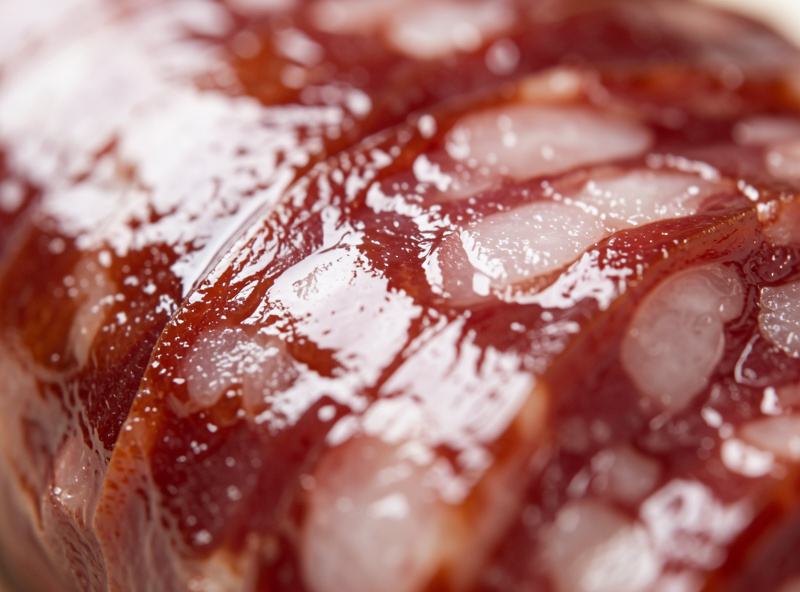
This is the real “slimy” most people mean: a tacky, slightly glossy film that builds over days, sometimes with a faint sour or yeasty note. It’s surface bacteria (Serratia and friends, the source of pink slime) or wild yeasts thriving on a saturated boundary layer of still, humid air right against the meat. The meat underneath is fine. The surface conditions are the problem, and they’re fixable.
3. Genuine spoilage
Slime that is everywhere, paired with a rotten, putrid, or sharp sour-ammonia smell, casing that slips or slides on the meat, grey-green discoloration going into the flesh, or a piece that never lost the weight it should have — that’s spoilage. No wipe-down rescues this. When the smell makes you recoil or you’re genuinely unsure, the answer is always the same: toss it. Cured meat is not worth a food-safety gamble.
Sweat vs sticky bacteria vs spoilage at a glance
Here’s how I sort it in front of the open chamber. The single most useful question is “where is the slime, and what does it smell like?” Surface-only with a clean or faintly sour smell is recoverable. Slime that’s penetrated the meat with a foul smell is not.
| Sign | Smell | Safe to rescue? | Action |
|---|---|---|---|
| Damp sheen, dries in hours (sweat) | Clean cured-meat smell | Yes — it’s just condensation | Restore airflow, no other action |
| Tacky surface film, builds over days | Neutral to faintly sour/yeasty | Usually — surface only | Vinegar-brine wipe, drop RH, fix airflow, space pieces |
| Slime everywhere, casing slips, grey-green into flesh | Rotten, putrid, or sour-ammonia | No | Toss it — no rescue |
Why charcuterie goes sticky in the first place
Sticky surfaces are almost never bad luck. They’re a humidity-and-airflow fault, and once you see the pattern you stop getting them. Every cause below comes down to one thing: a thin, saturated, motionless layer of air sitting against the meat surface long enough for bacteria to set up shop.
RH too high
This is the headline cause. Above about 80% RH, the meat surface stays wet enough that surface bacteria outcompete the drying you want. My chambers run 75–80% RH on a SensorPush HT.W sitting at meat-shelf height, with an Inkbird IHC-200 cutting the ultrasonic humidifier and nudging in the desiccant dehumidifier. If your reading sits at 85% or higher, that’s your sticky problem in one number.
Dead air and a saturated boundary layer
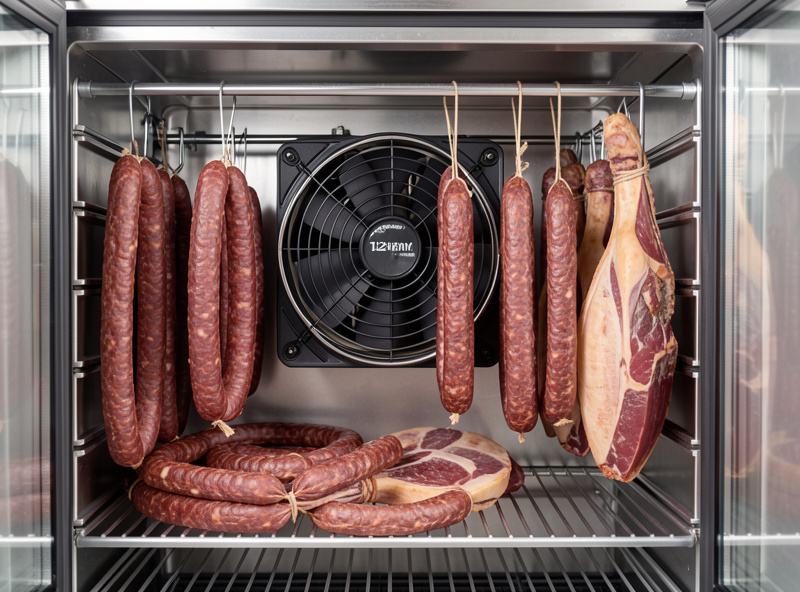
Even at correct RH, still air ruins you. Without movement, each piece breathes out moisture that pools in a humid skin right against its own surface. That microclimate can be 90%+ even when the chamber gauge reads 78%. This is why I run a 120mm low-speed fan on a 5-minutes-on, 25-minutes-off timer — enough exchange to break the boundary layer, not so much it case-hardens the meat.
Pieces touching
Two salami resting against each other, or a coppa kissing the chamber wall, creates a permanently wet contact patch with zero airflow. That’s the most reliable way to grow slime I know of. Space everything so air can reach all the way around each piece — a few centimetres of gap is plenty.
A ferment that never dropped pH
On fermented salami, sticky surfaces early on often mean the fermentation stalled. If the LAB starter didn’t take and pH never fell into the safe range, the surface stays a welcoming neutral environment for the wrong bacteria. A pH meter or strips confirm it; a salami that never acidified and is now sticky is a candidate for the bin, not a rescue.
A chamber running too warm
Push past ~15°C and you accelerate every surface organism you don’t want. I hold ~12–15°C on an Inkbird ITC-308. If your chamber is drifting warm — a failing thermostat, a hot room, a door left ajar — sticky surfaces follow fast. Check the temperature log before you blame anything else.
How to rescue salvageable sticky charcuterie
If you’ve decided it’s surface bacteria and not spoilage — surface-only film, no foul smell, meat firm underneath — here’s the exact sequence I run. Treat the symptom and the cause in the same session, or it just comes back in a week.
Wipe the surface
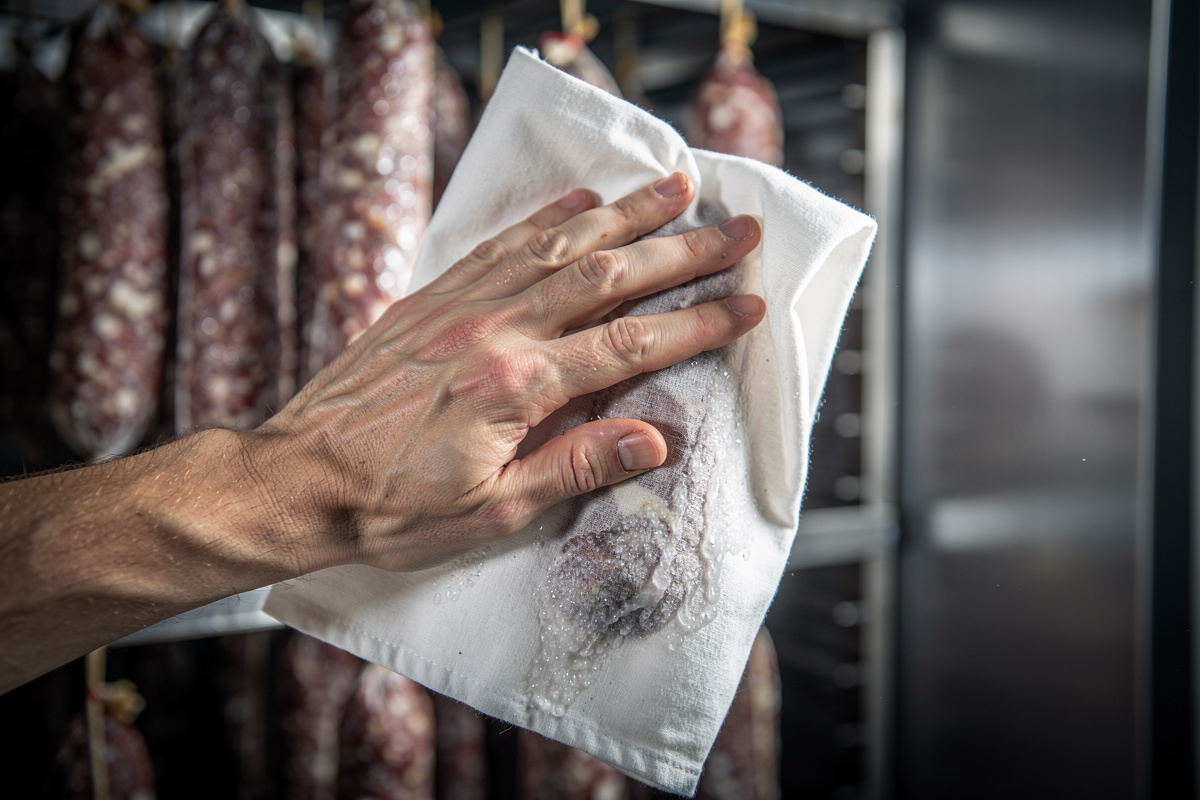
Mix a cloth with a roughly half-and-half white vinegar and salt-brine solution, wring it out, and wipe the whole piece down firmly to lift the film. The acidity and salt knock back the surface load. For white-mold pieces you want to keep the good Penicillium nalgiovense, so wipe gently and reinoculate later if needed. Don’t soak the meat — damp cloth only.
Drop the RH
Get the chamber back to 75–80%. If you’re running high, bring in a small Peltier or desiccant dehumidifier, or as a fallback swap the humidifier for a damp sponge you control by hand. Verify on a calibrated hygrometer at meat-shelf height — salt-test or ice-water calibrated, not the readout you assumed was right.
Restore air exchange
Confirm the fan is actually cycling and that its airflow reaches every piece. A 120mm fan on a 5-on/25-off timer is my baseline. If you don’t run a fan yet, this is the single highest-impact fix you can make for sticky surfaces.
Space the pieces and recheck weight loss
Re-hang so nothing touches anything. Then look at your weight log: a healthy whole-muscle cure is heading toward ~30–40% weight loss, salami similar. If a piece is sticky AND hasn’t been losing weight, the drying never worked and that’s a stronger argument for tossing it than for rescuing it.
When it’s spoilage: just toss it
Toss any charcuterie with a rotten, putrid, or sour-ammonia smell, slime over the entire surface, a casing that slips off the meat, grey-green colour penetrating the flesh, or sliminess on a piece that never lost weight. No wipe, no airflow tweak, no salvage. When you’re genuinely unsure, throw it out.
This is the YMYL line in home curing and it isn’t worth crossing. A ruined coppa costs you a few weeks and some pork. The alternative costs far more. I’ve binned pieces I was attached to, logged what went wrong in the chamber that grew them, and moved on. That logbook is why I get sticky surfaces far less often now than when I started.
Related Guides
- Curing Chamber Troubleshooting: Diagnose Common Faults
- Curing Chamber Airflow and Fan Setup
- Curing Chamber Too Humid? How to Bring RH Down
- Choosing a Dehumidifier for a Curing Chamber
- Best Humidifier Setup for a Curing Chamber
- Black Mold on Charcuterie: Keep or Toss?
- Home Salami Making: Fermentation and Drying
Is slimy charcuterie always unsafe to eat?
No. A damp sheen that dries in hours is harmless condensation, and a thin surface film with no foul smell is usually fixable. But slime everywhere with a rotten or sour-ammonia smell means toss it.
What causes the sticky film on cured meat?
Almost always RH above 80% combined with too little airflow, leaving a saturated boundary layer against the meat where surface bacteria like Serratia or wild yeasts colonize. Pieces touching makes it worse.
Can I wipe the slime off and keep curing?
Yes, if it is surface-only with no foul smell and the meat is firm. Wipe with a roughly 50/50 vinegar and salt-brine cloth, then drop RH to 75 to 80 percent and restore fan airflow so it does not return.
What RH and temperature stop sticky surfaces?
Hold about 75 to 80 percent RH and roughly 12 to 15 degrees C, verified on a calibrated hygrometer at meat-shelf height. Above 80 percent RH or past 15 degrees C, surface bacteria thrive and slime returns.
Why does my salami get sticky but my whole muscles do not?
Sticky salami early on often means the fermentation stalled and pH never dropped into the safe range, leaving a neutral surface for the wrong bacteria. Check pH with a meter or strips; an unacidified sticky salami is a toss candidate.
How do I know it is spoilage and not just surface bacteria?
Spoilage shows slime over the whole piece, a putrid or sour-ammonia smell, casing that slips off, grey-green colour going into the flesh, or no weight loss. Surface bacteria is film-only with a clean or faintly sour smell.