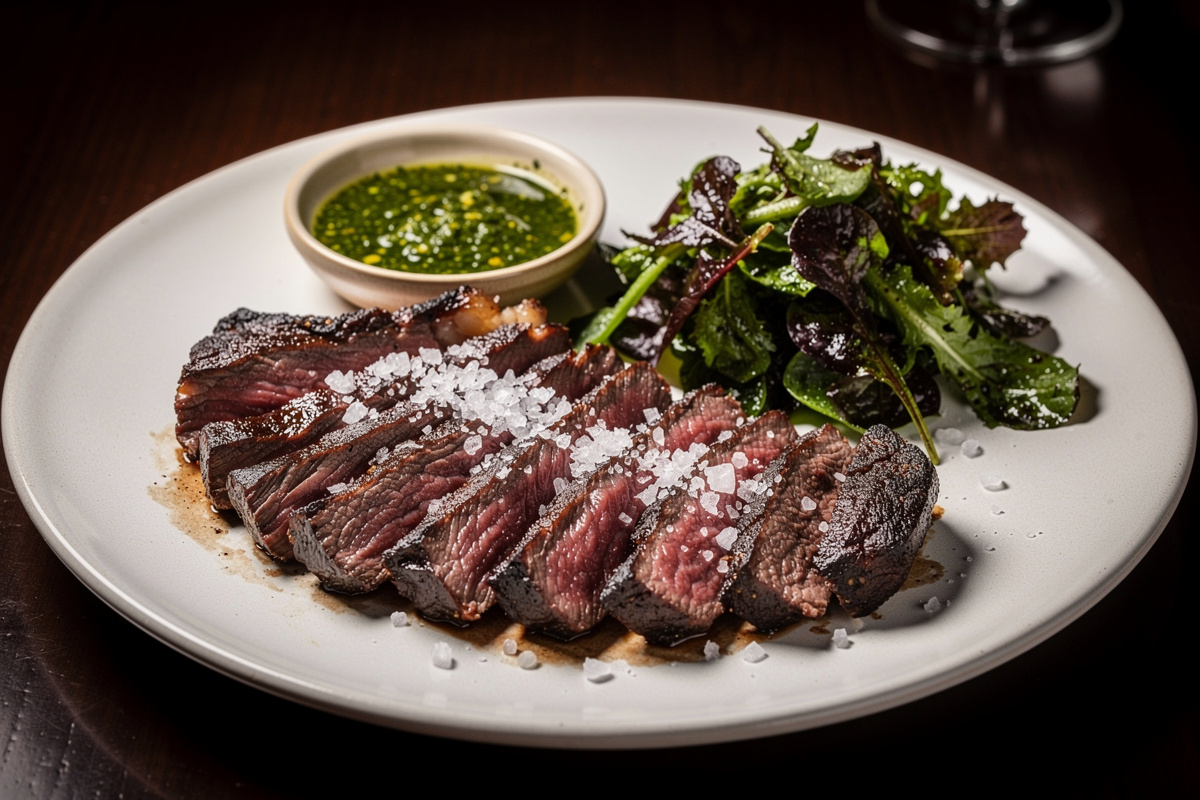

To serve dry-aged beef restaurant-style, rest the cooked steak 5-10 minutes, slice it thick against the grain on a bias, fan it on a warm plate, finish with flaky salt, and keep the sauce minimal so the funk leads. The dry-age flavor is the star — your job is to frame it, not bury it.
After weeks of aging, a careful trim, and a basted sear, plating is the last place to go wrong — and the most common mistake is over-saucing a steak that spent a month developing its own flavor. Here is how I serve mine the way a good steakhouse would: the rest, the slice, the salt, the spare sauce, and the pairings that flatter rather than fight.
Rest, Then Slice Against the Grain
Rest the steak 5-10 minutes off the heat so the juices redistribute, then slice it thick — about half an inch — against the grain on a slight bias. Cutting across the muscle fibers shortens them, which makes even a firm dry-aged steak eat tender. Slicing with the grain leaves it chewy no matter how well you cooked it.
The rest is non-negotiable: cut a steak straight off the heat and the juices that were driven to the center pour onto the board instead of staying in the meat. Five to ten minutes lets them settle back through. Find the direction of the muscle fibers — the grain — and run your knife across them, angling the blade slightly for wider, more attractive slices. For a thick reverse-seared ribeye, slicing also lets everyone see the even rosy interior you worked for, which is half the restaurant effect. Use the sharpest knife you have and cut in single confident draws rather than sawing, which tears the fibers. The interior should read a clean medium-rare at 130-135°F, the doneness that shows off both the texture and the funk.
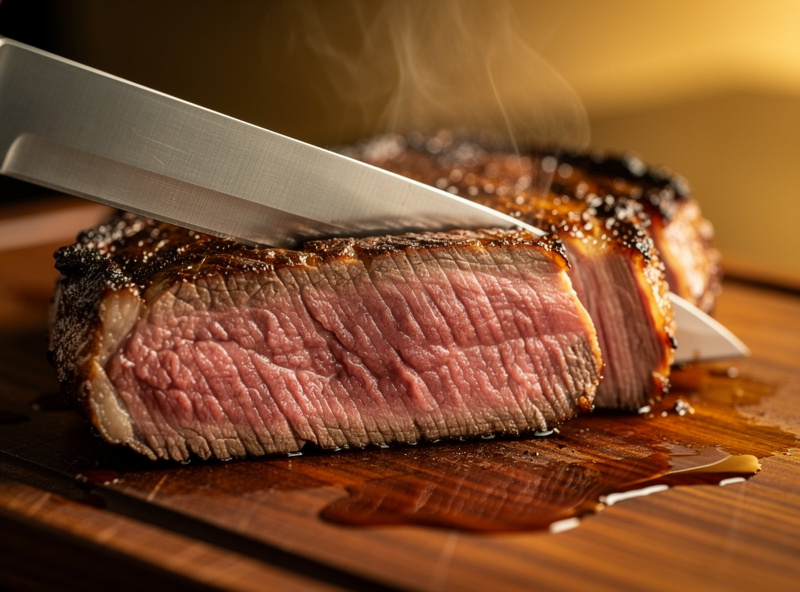
Plate It Like a Steakhouse
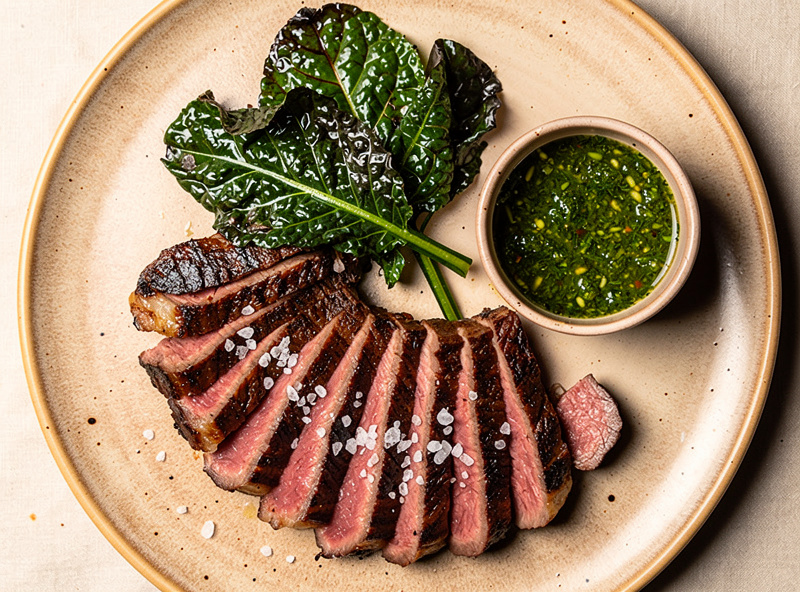
Serve dry-aged beef on warm plates, sliced and fanned to show the crust and interior, with flaky salt scattered on top at the last moment. Warm plates keep the fat from congealing, and the visual of the dark crust against the rosy center is most of what makes a steakhouse plate feel special. Keep the plate uncluttered.
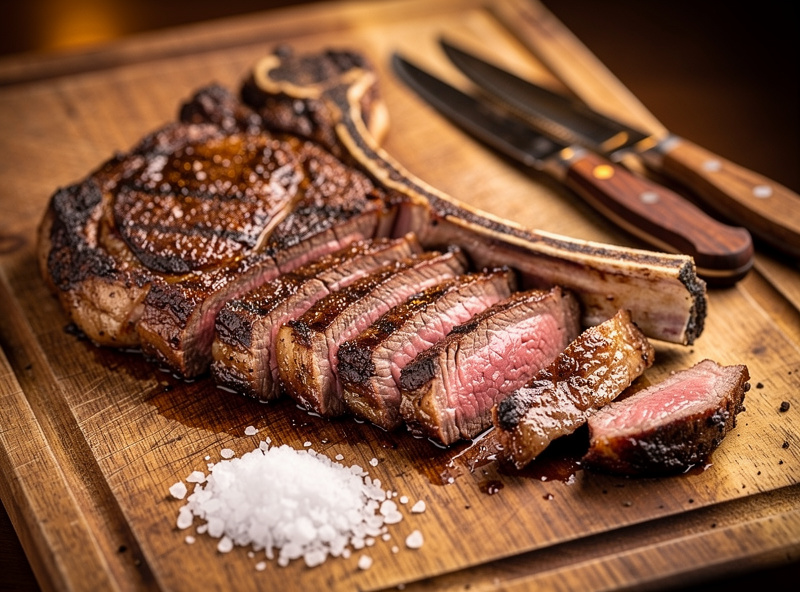
A cold plate is a quiet steak-killer — the rendered fat that makes dry-aged beef luscious sets and turns waxy the moment it hits cool china, so warm the plates in a low oven for a few minutes first. Fan the slices in an overlapping line or arc so each shows its crust edge and rosy face. Scatter flaky finishing salt across the cut surfaces right before serving, never earlier, so the crystals stay crunchy and bright rather than dissolving. Resist crowding the plate; dry-aged beef reads as expensive precisely because it is presented simply. If you cooked it on the bone, present the bone — a tomahawk or bone-in ribeye carved tableside and laid back against its bone is pure theater and costs you nothing.
Keep the Sauce Minimal
Dry-aged beef needs little or no sauce. The concentrated, nutty, blue-cheese-adjacent flavor is the entire point, and a heavy sauce masks what you spent weeks building. If you serve anything, keep it bright and restrained — a spoonful of chimichurri, a light red-wine pan reduction, or a small knob of compound butter.
This is where restraint separates a good home cook from a great one. The instinct to ladle on a rich peppercorn or béarnaise sauce comes from cooking ordinary steak that needs the help; dry-aged beef does not. If you want a sauce, choose one that cuts or complements rather than smothers: chimichurri’s acid and herbs lift the funk, a quick reduction of the basting-pan fond with a splash of red wine concentrates the beefiness, and a small disc of herb-and-garlic compound butter melts into the warm slices without dominating. Serve any sauce on the side or in a thin line under the meat, not poured over the crust — that crust took weeks and a careful sear to build, and drowning it is a waste. The brown-butter baste from the cook stage often makes additional sauce unnecessary entirely; the technique is in butter-basting a dry-aged steak.
Pairings Compared
The right accompaniments flatter dry-aged beef; the wrong ones compete with it. Here is how the main plate components should go for a restaurant-style serving — what to reach for, and what to leave off.
| Component | Restaurant-Style Choice | What to Avoid |
|---|---|---|
| Finishing salt | Flaky sea salt, added at the table | Heavy pre-salting that dulls the crust |
| Sauce | Chimichurri, light wine reduction, compound butter | Thick peppercorn or cream sauces |
| Starch side | Simple roasted or fried potato | Cheesy, saucy casseroles |
| Vegetable | Charred greens, grilled asparagus, blistered tomato | Sweet glazed vegetables |
| Wine | Bold dry red (Cabernet, Malbec, Syrah) | Light, sweet, or heavily oaked whites |
| Plate | Warmed, uncluttered | Cold plate that congeals the fat |
The through-line is simplicity and contrast: a little acid, a little char, a bold dry red, and nothing sweet or heavy enough to flatten the funk. The tannin-and-fat pairing is not just tradition — wine science research on tannin-protein interaction shows fat competes with saliva proteins for tannin binding, which is why a rich, fatty dry-aged steak softens a tannic red’s astringency instead of fighting it. Sides should be supporting actors, not scene-stealers.
Sides That Flatter the Beef
The best sides for dry-aged beef are simple and a little bit charred or acidic. A crisp roasted potato, blistered greens, grilled asparagus, or a sharp leaf salad all give contrast without competing. Skip sweet, creamy, or heavily sauced sides — they flatten the beef’s savory depth.
Steakhouses pair dry-aged beef with deliberately plain sides for a reason: the steak is the luxury, and everything else exists to reset the palate between rich bites. A potato done simply — roasted in beef fat, or a single crisp-edged hash — echoes the savory note without adding sweetness. Charred or bitter greens (broccolini, kale, a wedge of grilled romaine) bring smoke and a little bitterness that cuts the fat. A sharply dressed salad does the same job with acid. The bone marrow trimmed and saved from a bone-in cut, roasted and spread on toast, is a restaurant-grade flourish that uses a part of the cut you already paid for. Save the cleanest fat from the trim to roast those potatoes in — the yield logic that makes every gram count is in how to trim a dry-aged steak.
As an Amazon Associate I earn from qualifying purchases.
The Tools That Sell the Presentation
A sharp steak knife, a wooden carving board, and good flaky salt are the only serving tools that matter. The knife lets guests cut cleanly without shredding; the board makes carving and presentation look intentional; the salt is the single finishing touch that lifts every slice. None of it is expensive.
A set of steak knives with a fine edge does more for the eating experience than any sauce — a dull serrated knife saws the fibers and pushes out the juices you rested into the meat. A wooden carving board with a juice groove catches the little that escapes and doubles as a serving platter for a carved bone-in cut. And a tin of flaky finishing sea salt is the cheapest upgrade in cooking — a pinch across the cut surfaces at the table is what makes a home steak taste like the restaurant version. Match the cut to the occasion using best beef cuts for dry aging, and the age to the flavor with how long to dry age beef.
Frequently Asked Questions
How do you serve dry-aged beef restaurant-style?
Rest the cooked steak 5 to 10 minutes, slice it thick against the grain on a bias, fan it on a warm plate to show the crust and rosy interior, finish with flaky salt at the table, and keep any sauce minimal. The concentrated dry-age flavor should lead; your job is to frame it simply.
Should you put sauce on dry-aged steak?
Little or none. The nutty, funky, concentrated flavor is the whole point, and heavy sauce masks it. If you serve a sauce, keep it bright and restrained — chimichurri, a light red-wine pan reduction, or a small knob of compound butter — and put it under or beside the meat rather than poured over the crust.
How should you slice dry-aged beef?
Slice it about half an inch thick, against the grain, on a slight bias. Cutting across the muscle fibers shortens them so even a firm dry-aged steak eats tender, while slicing with the grain leaves it chewy. Use a sharp knife in single confident draws and slice only after a 5 to 10 minute rest.
What sides go with dry-aged beef?
Simple, charred, or acidic sides that contrast without competing: a crisp roasted potato, blistered greens, grilled asparagus, or a sharply dressed salad. Roasting potatoes in saved beef fat echoes the savory note. Avoid sweet, creamy, or heavily sauced sides, which flatten the beef’s savory depth.
What wine pairs with dry-aged steak?
A bold, dry red stands up to the concentrated flavor — Cabernet Sauvignon, Malbec, or Syrah are classic matches. Their tannin and structure balance the rich fat and funk. Avoid light, sweet, or heavily oaked whites, which get overwhelmed. Serve the wine at cool room temperature alongside the beef.
Why serve dry-aged beef on a warm plate?
Because the rendered fat that makes dry-aged beef luscious sets and turns waxy on a cold plate. Warming the plates in a low oven for a few minutes keeps the fat glossy and the steak hot through the meal. It is a small step that makes a noticeable difference to the eating experience.
What doneness is best for serving dry-aged beef?
Medium-rare, around 130 to 135 degrees F, is the sweet spot. It renders enough fat to deepen the flavor while preserving the tender texture the age developed. Cooking past medium dries out a steak you spent weeks concentrating, wasting both the funk and the tenderness that make dry-aged beef worth serving.
Related Articles
- Butter-Basting a Dry-Aged Steak: Technique and Temps — the cook stage that builds the crust you are plating.
- Dry Aging Beef at Home: The Complete Guide — the whole process from subprimal to plate.
- How to Trim a Dry-Aged Steak: Bark, Fat, and Portioning — turning the aged subprimal into serving steaks.
- Best Beef Cuts for Dry Aging: Ribeye vs Striploin vs Sirloin — choosing the cut that presents best.
- How Long to Dry Age Beef: 21 vs 35 vs 60 vs 100 Days — matching the funk to the occasion.