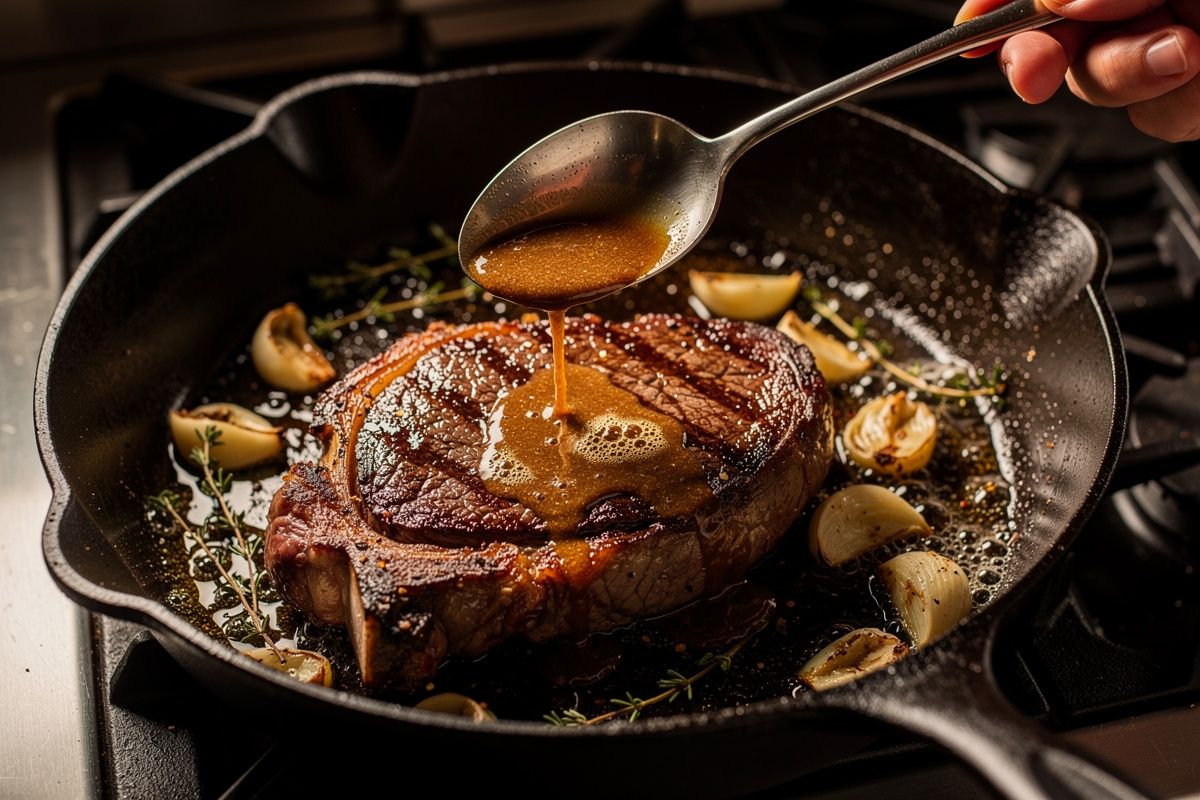

To butter-baste a dry-aged steak, sear it first in neutral high-heat oil, then add butter, smashed garlic, and thyme in the last 1-2 minutes, tilt the pan, and spoon the foaming butter over the meat until it hits 125°F for a 130-135°F medium-rare after rest. Add the butter late — dry-aged steak is drier and the butter burns fast.
Butter-basting (the French arroser) is the finishing move that turns a good dry-aged steak into a restaurant one, but the low moisture of aged beef changes the timing. Here is exactly how I baste mine, why the butter goes in last, and the pull temperatures that keep a concentrated steak from sailing past medium-rare.
Why the Butter Goes in Last
Butter burns far below the temperature you need for a good sear. Its milk solids brown around 250°F and scorch bitter not long after, while a proper crust forms above 350°F. So you sear in neutral oil first, then add butter only in the final minute or two — long enough to baste and build flavor, not long enough to burn.
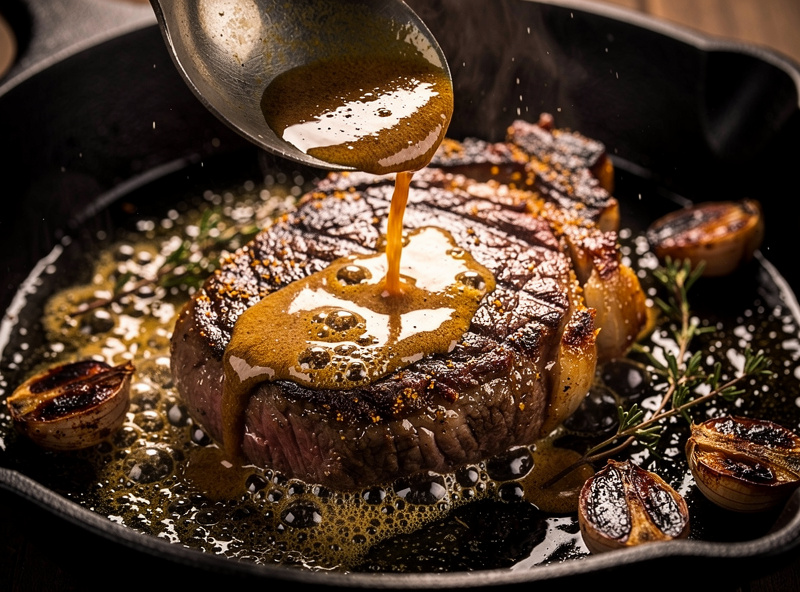
This is the single mistake that ruins home butter-basting: people drop the steak into foaming butter from the start, and by the time the crust forms the milk solids are black and acrid. Sear in a neutral high-smoke-point oil — grapeseed, avocado, or refined canola — to get the Maillard crust, then add a knob of butter, a couple of smashed garlic cloves, and a sprig of thyme or rosemary for the last 1-2 minutes. The butter foams, the milk solids brown to a nutty beurre noisette, and that nutty note is a perfect match for the dry-aged funk. Tilt the pan toward you so the butter pools at the low edge, and spoon it continuously over the top of the steak. The basting both flavors the surface and gently cooks the top, which is especially useful on a thick cut.
Why Dry-Aged Steak Cooks Differently
Dry-aged beef has lost 15-30% of its water over the course of aging (documented in the published dry-aging weight-loss research, which tracks evaporation climbing through the aging window), so it sears faster, browns harder, and pulls past medium-rare more abruptly than fresh steak. The concentrated surface forms a crust almost immediately, and the lower internal moisture means the doneness window is narrower — a minute of inattention takes you from medium-rare to medium.
The lower moisture is the whole reason dry-aged steak is worth eating, but it changes your technique. Because the surface is drier it browns rapidly, so you need slightly less sear time than fresh beef and you must watch the heat to avoid scorching the crust before the center comes up. Because the interior holds less water, there is less buffer against overshooting, so the rule is simple: cook dry-aged steak slightly cooler than you would the same fresh cut, and lean on a thermometer rather than the calendar. Salt the surface 40 minutes before cooking — the salt draws out a little moisture that then reabsorbs and forms a dry pellicle that browns beautifully. Avoid marinades entirely; the dry-age flavor is the point, and a marinade only masks what you spent weeks building.
Butter-Basting as the Finish of a Reverse Sear
For thick cuts over 1.5 inches, butter-basting works best as the finish of a reverse sear. Bring the steak to 110-115°F internal in a 250°F oven, rest it 10 minutes, then sear hard in cast iron and butter-baste at the end. This gives an even rosy interior wall to wall with a deep basted crust.
The reverse sear solves the thick-steak problem: a screaming pan alone overcooks the outer band before the center warms. By bringing the steak up gently in a low oven first, you get edge-to-edge medium-rare, and the brief, hot finishing sear is purely for crust and basting. After the oven stage and a short rest, get the cast iron rippingly hot, sear each face in neutral oil for 45-60 seconds, then drop to the butter-and-aromatics baste for the final minute. For thinner steaks under an inch, skip the oven — a single high-heat pass in cast iron with a butter-baste finish is plenty, and the reverse sear would just dry them out. Either way, the basting stage is identical; only what comes before it changes with thickness.
Pull Temperatures for Dry-Aged Steak
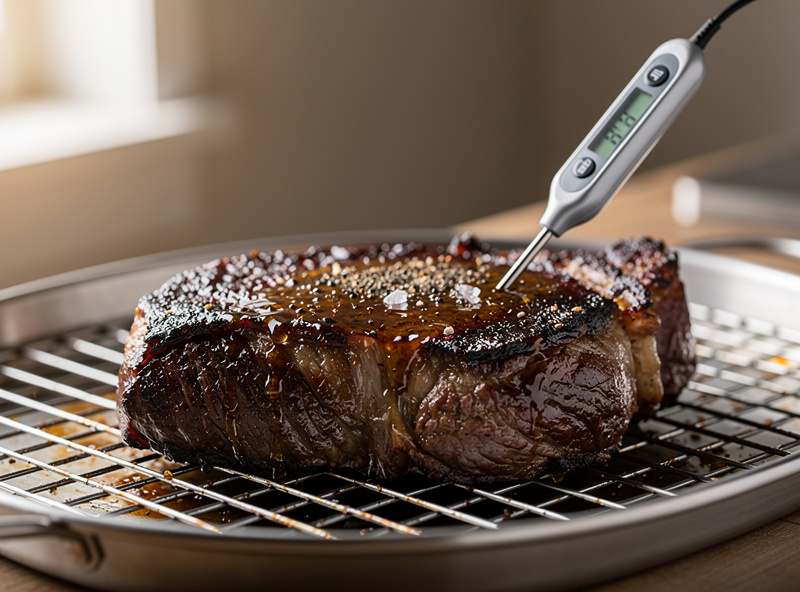
Pull a dry-aged steak about 5°F before the target, because carryover keeps cooking it during the rest. For a 130-135°F medium-rare, take it off the heat at 125°F. The drier interior means overshooting is easy, so the thermometer matters more here than with fresh beef.
| Doneness | Pull From Heat | Final After Rest | Notes for Dry-Aged |
|---|---|---|---|
| Rare | 118°F | 120-125°F | Soft; showcases tenderness |
| Medium-rare | 125°F | 130-135°F | The sweet spot for funk and texture |
| Medium | 130°F | 135-140°F | Acceptable; firmer, drier |
| Medium-well | 140°F | 145-150°F | Not recommended; wastes the age |
| USDA reference | — | 145°F + 3 min rest | USDA’s recommended whole-cut steak temperature |
Medium-rare is where dry-aged beef shines — enough heat to render fat and deepen flavor, not so much that you cook out the texture you paid weeks for. The USDA-FSIS safe minimum internal temperature chart lists 145°F with a three-minute rest for steaks, chops, and roasts; culinary medium-rare runs cooler, so cook to the doneness you are comfortable with and use an instant-read meat thermometer rather than guessing.
As an Amazon Associate I earn from qualifying purchases.
The Gear That Makes Basting Easy
Butter-basting needs a heavy pan that holds heat, a reliable thermometer, and a wide spoon. Cast iron is the standard — it stores enough heat to keep searing while you baste, where a thin pan drops temperature the moment the cold steak hits it and you end up steaming rather than searing.
A well-seasoned cast iron skillet is the one pan I will not substitute for this — its thermal mass is what makes the basting work, and it takes the high heat dry-aged crust needs without warping. A large metal spoon moves a lot of butter with each pass. And a wire rack set over a tray does double duty: it holds the steak off the surface for the 40-minute salt-and-pellicle stage so air can dry the surface, and it elevates the steak during its post-sear rest so the bottom does not steam. Rest basted steaks 5-10 minutes before slicing so the juices redistribute; cutting too early dumps them onto the board.
Aromatics and Brown Butter Notes
Garlic, thyme, and rosemary are the classic basting aromatics, and they belong in the butter, not the oil. Added to the foaming butter for the final minute, they perfume the fat without burning, and the browned milk solids contribute a nutty depth that echoes the dry-aged funk rather than fighting it.
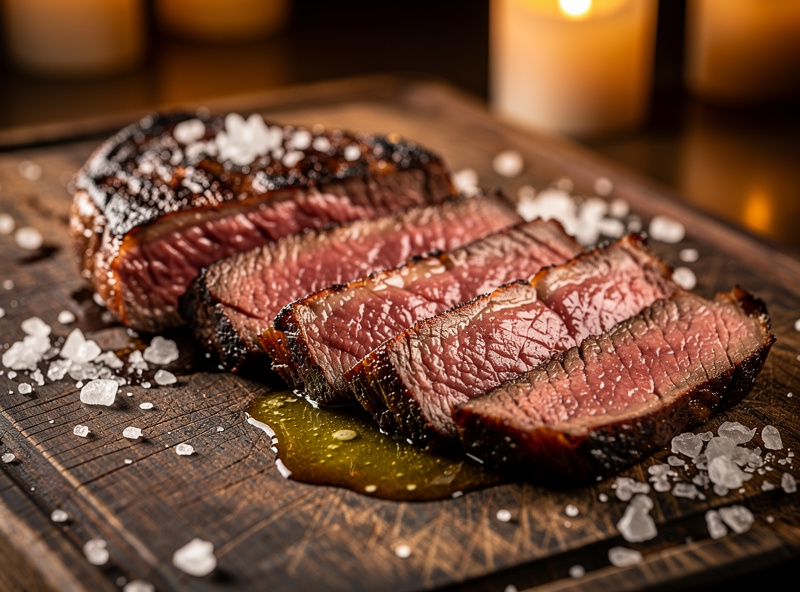
Smash the garlic cloves rather than slicing — whole smashed cloves release flavor into the butter without the small bits that scorch. A sprig or two of thyme or rosemary is plenty; more turns medicinal. As the butter browns to beurre noisette, it takes on a hazelnut aroma that is genuinely one of the best partners for dry-aged beef’s blue-cheese notes. Keep the heat moderate during the baste so the butter browns rather than blackens, and if it threatens to burn, pull the pan off the flame and keep spooning — the residual heat is enough. Finish with flaky salt on the sliced steak, never before basting, so the crystals stay crunchy on the plate. Once you have basted, the only thing left is plating, and a steak started from the right cut needs little else beyond it — the cut-by-cut guidance is in best beef cuts for dry aging.
Frequently Asked Questions
How do you butter-baste a dry-aged steak?
Sear the steak first in neutral high-heat oil to build a crust, then add a knob of butter, smashed garlic, and thyme in the last 1 to 2 minutes. Tilt the pan and spoon the foaming butter continuously over the meat until it reaches 125 degrees F for a 130 to 135 degree medium-rare after resting.
Why does the butter go in at the end instead of the start?
Butter’s milk solids brown around 250 degrees F and scorch bitter soon after, while a good sear needs over 350 degrees F. Searing in neutral oil first builds the crust, then adding butter only for the final minute or two flavors and bastes the steak without burning the butter to an acrid black.
What temperature should I pull a dry-aged steak?
Pull about 5 degrees below target because carryover keeps cooking it. For medium-rare, take it off the heat at 125 degrees F to finish at 130 to 135 after a rest. Dry-aged beef is drier and overshoots easily, so use an instant-read thermometer rather than timing or touch.
Does dry-aged steak cook faster than fresh steak?
Yes. Dry-aged beef has lost 15 to 30 percent of its water, so it sears faster, browns harder, and passes medium-rare more abruptly. Cook it slightly cooler than the same fresh cut, watch the crust so it does not scorch, and rely on a thermometer because the doneness window is narrower.
Should you marinate dry-aged steak?
No. The concentrated, nutty dry-aged flavor is exactly what you spent weeks developing, and a marinade only masks it. Salt the surface 40 minutes before cooking to form a dry pellicle that browns well, then finish with flaky salt after basting. Let the beef and the brown butter carry the flavor.
What aromatics are best for basting dry-aged beef?
Smashed garlic cloves with thyme or rosemary, added to the foaming butter for the final minute. Whole smashed garlic flavors the fat without the small bits that scorch, and the herbs perfume the butter as it browns. The nutty beurre noisette echoes the dry-aged funk rather than competing with it.
Do I need to reverse sear a dry-aged steak?
Only thick cuts over 1.5 inches benefit. Bring them to 110 to 115 degrees F in a 250 degree oven, rest, then sear and butter-baste for crust. Thinner steaks under an inch should skip the oven — a single high-heat cast iron pass with a butter-baste finish cooks them perfectly without drying them out.
Related Articles
- Dry Aging Beef at Home: The Complete Guide — everything that happens before the steak hits the pan.
- Serving Dry-Aged Beef Restaurant-Style — plating, slicing, and pairing after the baste.
- How to Trim a Dry-Aged Steak: Bark, Fat, and Portioning — getting from subprimal to a steak worth basting.
- Best Beef Cuts for Dry Aging: Ribeye vs Striploin vs Sirloin — which cuts give the thickest steaks for reverse searing.
- How Long to Dry Age Beef: 21 vs 35 vs 60 vs 100 Days — how age length shapes the flavor you are cooking.