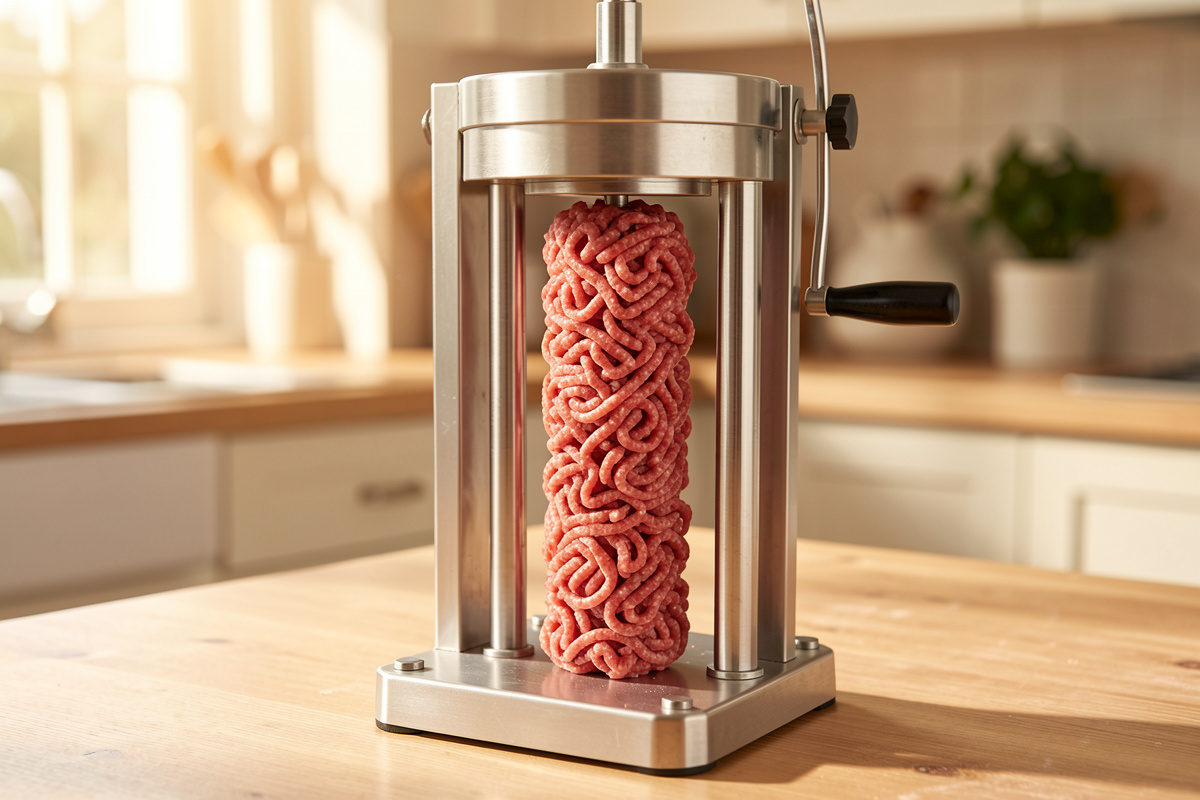
Why Do My Casings Keep Bursting? Stuffing Pressure and Fixes
July 16, 2026

Casings burst for three reasons, almost always in this order: the meat is too warm and smears, the stuffing pressure is uneven or too fast, or the casing was under-soaked and brittle. Keep the farce below 4 °C, fill slowly and steadily with no trapped air, match the horn to the casing, and hydrate the casing fully — fix those and blowouts nearly vanish.
A blowout is never random. It is the casing telling you that something upstream went wrong, and the split just happens to be where the casing was weakest when the pressure spiked. I have chased this fault across every stuffer and casing I own, and the cure is almost never “buy a better casing.” It is a handful of habits at the bench. Let me walk through why casings burst and exactly how to stop it, in the order the causes actually bite.
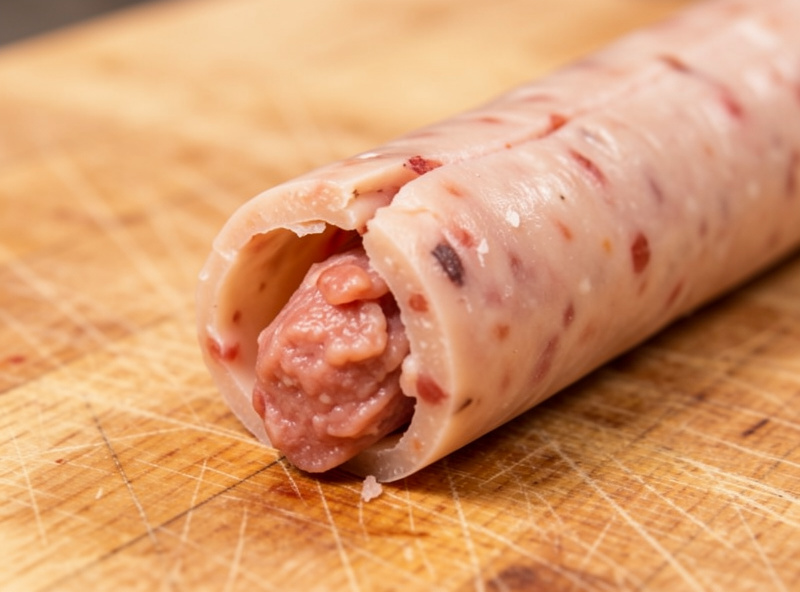
This is one of the core failures in the whole casing preparation and stuffing workflow, and it is worth understanding deeply, because the same three causes drive most of the other stuffing defects too — including the air pockets that ruin a salami from the inside.
Why Do Sausage Casings Burst?
Casings burst when internal pressure exceeds the casing’s tensile strength at its weakest point. Three things push pressure up or strength down: warm fat that smears instead of flowing, jerky or over-fast stuffing that spikes the pressure, and a brittle under-hydrated casing that has less strength to give. Nearly every blowout traces back to one of those three, and often to two at once.
The reason it matters to know the order is that the fixes are different and cheap. You do not need a stronger casing or a more powerful stuffer. You need cold meat, a steady hand, and a properly soaked casing. On my hand-crank piston stuffer I can feel a blowout coming a second before it happens — the crank gets suddenly harder, the casing goes tight and shiny, and if I do not ease off, it lets go with a soft wet pop and a spray of farce. Reading that feedback is half the skill.
Is Your Meat Too Warm?
Warm meat is the most underestimated cause of blowouts. Above about 4 °C the fat begins to soften and smear into a greasy paste that will not slide cleanly through the horn, so pressure climbs and the casing splits. Keep the farce cold — ideally near freezing, with visible ice crystals forming at the edges — and it flows like a cold, cohesive mass instead of fighting you.
I chill the stuffer canister and the grinder plates in the freezer for twenty minutes before every batch, and I keep the bowl of farce in the fridge until the moment it goes in the hopper. If the room warms up mid-batch — a real problem in a Swedish summer even in my basement — the meat goes back to the fridge for fifteen minutes rather than pushing on. The instant-read thermometer that lives on my bench earns its place here: the moment the farce reads above 4 °C, I stop. Cold farce is not a nicety; it is the single biggest defence against both smearing and the broken emulsion that causes greasy, weak sausage, which I cover in building a meat emulsion that doesn’t break.

Are You Stuffing Too Fast or Unevenly?
Uneven stuffing spikes the pressure. A jerky crank, a stop-start rhythm, or trapped air that suddenly compresses all send a pressure surge down the horn that finds the casing’s weakest spot. Fill at a slow, continuous pace, keep steady back-tension on the casing with your guiding hand, and let the farce flow rather than forcing it.
A piston stuffer helps enormously here because it delivers even, controllable pressure, where a grinder-attachment stuffer pulses and smears. But technique still matters. I keep light tension on the casing as it fills, feeding it off the horn at the same rate the farce arrives, so the casing fills firm but not drum-tight. Drum-tight is where blowouts live — and it is also where you cannot twist links or tie off without splitting. Aim for firm-with-give, the texture of a well-packed but not bulging sausage. The last thing you want is to stuff so tight there is no room to prick out the air, which is its own downstream disaster covered in the air-pocket guide.
Did You Under-Soak the Casing?
An under-soaked casing is a brittle casing, and brittle casings split under pressure that a supple one would shrug off. Natural casings must be soaked in lukewarm water for 30 to 60 minutes and flushed before stuffing; a casing that is still stiff or papery has not rehydrated and will tear at the first tight twist. Hot water is just as bad, because it weakens the collagen.
If your casings keep splitting even with cold meat and steady pressure, the soak is the prime suspect. I once fought a whole afternoon of blowouts that I blamed on my stuffer, only to realise I had soaked the hank in water that was too hot and effectively par-cooked it — it tore like wet tissue. The full method for getting this right is in how to soak and flush natural hog casings, and it is worth reading, because a good soak also flushes out the pinholes that masquerade as blowouts.
Does Your Horn Match the Casing?
The stuffing horn has to match the casing diameter. A horn too fat for the casing stretches it thin before the farce even arrives, so it splits easily; a horn too narrow lets the casing bunch and traps air that spikes pressure. Match the horn to the casing — a 32 to 35 mm hog casing wants a mid-size horn, a wide beef casing wants a large one — and half the problem disappears.
Most stuffers ship with three or four horns for exactly this reason. I keep mine sorted by size and pick the one that lets the casing slide on snug but unstressed, with the casing gathered like a loose sleeve rather than stretched like a drum. When I moved up to wide beef casings for big salami, using too small a horn was my first mistake — the casing bunched, trapped air, and blew. The right horn is a thirty-second fix that saves a batch.
Does a Better Stuffer Actually Prevent Blowouts?
A good stuffer helps, but it is not a cure for bad technique. A vertical piston stuffer delivers slow, even, controllable pressure, which is exactly what a casing wants; a grinder-attachment or “stuffing tube on the meat grinder” setup pulses, heats the meat as it works, and smears the fat — three strikes against the casing at once. If you are serious about dry-cured salami, the piston stuffer is the upgrade that pays off fastest.
That said, I have watched people blow casings on a lovely five-litre piston stuffer because the meat was warm and they cranked like they were in a race. The machine gives you even pressure; you still have to supply cold farce, a steady hand, and the right horn. The way I think about it, the stuffer removes one variable — pressure spikes from a pulsing mechanism — but it cannot fix warm fat or a brittle casing. Buy the piston stuffer for the control it gives you, then still do the boring things right. On my hand-crank unit I get almost no blowouts now, not because the machine is special but because cold-meat-slow-fill-right-horn has become automatic. The tool is a multiplier of good habits, not a substitute for them — the same lesson the whole chamber teaches, where a better controller only helps if you have already learned to hold the envelope.
How Do You Fix a Blowout Mid-Stuff?
When a casing blows mid-stuff, stop cranking immediately, ease the pressure, and assess. For a small split near the end you can often cut back to sound casing, tie off, and carry on. For a blowout in the middle of a long fill, twist the sausage into a link at the split, tie both sides, and treat it as two shorter pieces rather than trying to salvage the whole run.
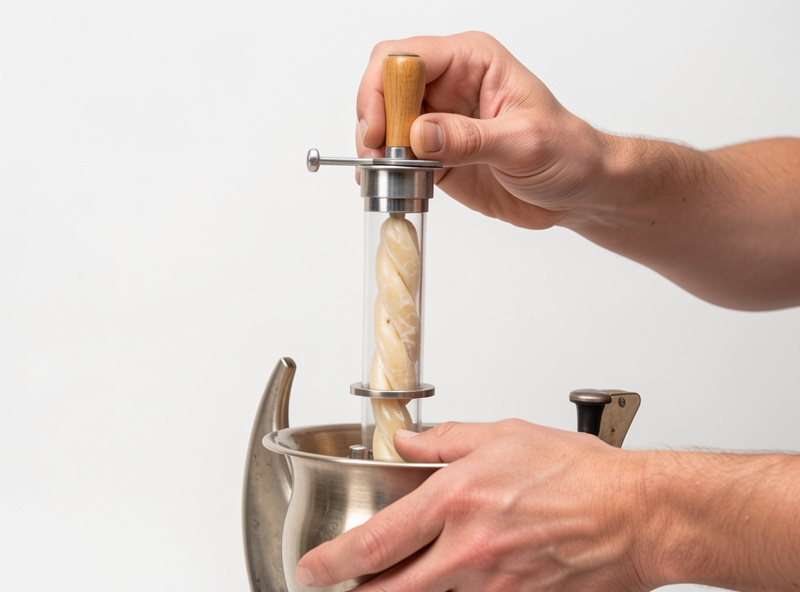
The key is not to panic and keep cranking, because pressure that is already past the casing’s limit will just open the split further and push farce everywhere. Ease off, tie off, and reset. And then figure out which of the three causes did it — because a blowout you fix without diagnosing is a blowout you will repeat on the next piece. The table below is the quick diagnostic I run in my head at the bench.
Casing Bursting: Quick Troubleshooting Table
| Symptom | Most likely cause | Fix |
| Casing feels greasy, farce smears, crank gets hard | Meat too warm (over 4 °C) | Chill farce to near freezing; refreeze plates and canister |
| Sudden splits with a jerky crank | Uneven, over-fast pressure | Fill slowly and continuously; keep even back-tension |
| Casing tears like wet paper at any twist | Under-soaked or hot-soaked casing | Soak 30–60 min in lukewarm water; never hot |
| Casing splits before it even fills | Horn too large; casing stretched thin | Switch to a smaller horn that matches the casing |
| Fine leak or spray, not a full split | Pinhole missed during prep | Cut back to sound casing; flush-check next time |
| Casing bunches and traps air, then blows | Horn too small | Switch to a larger horn; feed casing evenly |
Work down that table and you will find that “why do my casings keep bursting” almost always resolves to cold meat, steady hands, a good soak, and the right horn. None of it costs money; all of it costs a little patience — which, as this hobby keeps teaching me, is the whole game. For the safe-handling fundamentals behind keeping farce cold and clean, I check my practice against the USDA Food Safety and Inspection Service, and the mechanics of a stable, cohesive farce are worth understanding from the cooked sausage making guide.
Why do my sausage casings keep bursting?
Casings burst for three main reasons: the meat is too warm and smears, the stuffing pressure is uneven or too fast, or the casing was under-soaked and brittle. Keep the farce below 4 degrees Celsius, fill slowly and steadily, match the horn to the casing, and soak natural casings fully before stuffing.
What temperature should sausage meat be when stuffing?
Keep the farce below 4 degrees Celsius, ideally near freezing with ice crystals forming at the edges. Above that, the fat softens and smears into a paste that will not flow, so stuffing pressure climbs and the casing splits. Chill the stuffer parts before you start and return the meat to the fridge if it warms up.
Does the stuffing horn size cause blowouts?
Yes. A horn too large for the casing stretches it thin so it splits easily, and a horn too small lets the casing bunch and trap air that spikes pressure. Match the horn to the casing diameter, using a mid-size horn for hog casings and a large horn for wide beef casings.
How do I fix a casing that bursts in the middle of stuffing?
Stop cranking immediately and ease the pressure rather than forcing on. Twist the sausage into a link at the split, tie off both sides, and treat it as two shorter pieces. Then diagnose which cause did it, so you do not repeat the blowout on the next piece.
Keep Building
- Preparing Sausage Casings: A Complete Guide
- How to Soak and Flush Natural Hog Casings the Right Way
- How to Build a Meat Emulsion That Doesn’t Break
- Cooked Sausage Making Guide: The Complete Chamber Method