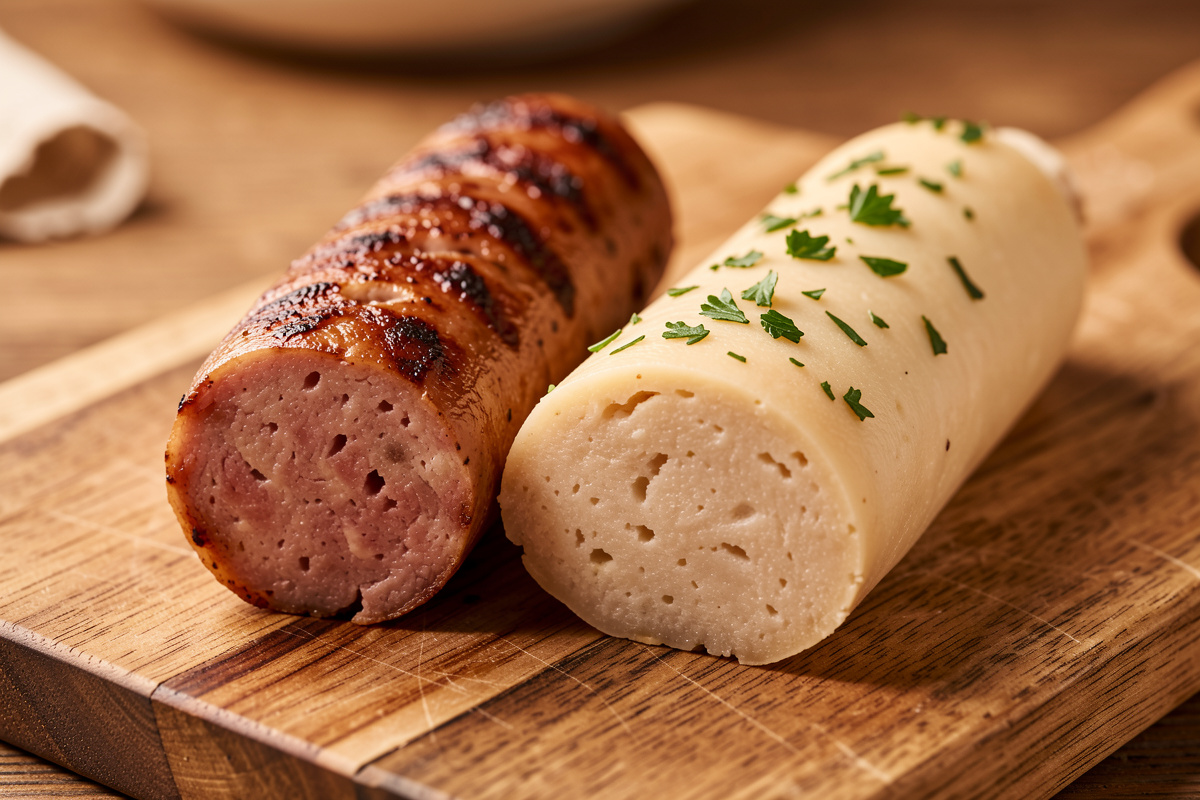

The difference between bratwurst and weisswurst is structure and cook: a bratwurst is a coarse-ground pork sausage, usually grilled or pan-fried to a 160 °F (71 °C) internal; a weisswurst is a finely emulsified veal-and-pork sausage, gently poached, never grilled. Both are German, both use hog casings, and that is where the similarity ends — one is a coarse fresh sausage, the other a delicate cooked emulsion, and the technique for each belongs to a different branch of this site’s cooked-sausage family.
I make both, and I treat them as opposites that teach complementary skills. The bratwurst trains your hand on grind size, fat ratio, and a clean grill char; the weisswurst trains your temperature discipline on a fragile emulsion that punishes a hot poach the way a frank does. If you’re working through the cooked sausage guide, this is the comparison that explains why those two skills live in different articles — and why a weisswurst is closer in technique to a hot dog or bologna than it is to the bratwurst it’s usually pictured next to.
What’s the Difference Between Bratwurst and Weisswurst?
A bratwurst is coarse, porky, and grilled; a weisswurst is fine, veal-rich, and poached. The table below is the quick reference I keep on the wall of my workshop, because the two get conflated constantly and they share almost no technique.
| Feature | Bratwurst | Weisswurst |
|---|---|---|
| Grind / texture | Medium to coarse | Fine emulsion, almost smooth |
| Typical meat | Pork (sometimes pork and veal) | Veal and pork |
| Bind | Minimal — just enough to hold | Full emulsion bind (myosin cage) |
| Cure #1 | No (fresh sausage) | Optional (usually none) |
| Cook method | Grill or pan-fry; or poach then grill | Poach only, gentle |
| Casing | Hog | Hog |
| Signature seasoning | Marjoram, white pepper, nutmeg | Parsley, lemon zest, cardamom, ginger |
| Traditionally eaten | Anytime, hot off the grill | Before noon, skin removed |
| Served with | Mustard, sauerkraut, beer | Sweet mustard, pretzel, wheat beer |
| Target internal | 160 °F (71 °C) | 155 °F (68 °C) |
Read the cook-method row twice. It’s the one that decides everything downstream: a bratwurst is built to take direct heat and develop a crust, while a weisswurst is built to be heated gently in water and will split or go mealy the moment it meets a grill. The other rows are consequences of that single fork.
How Is Bratwurst Made and Cooked?
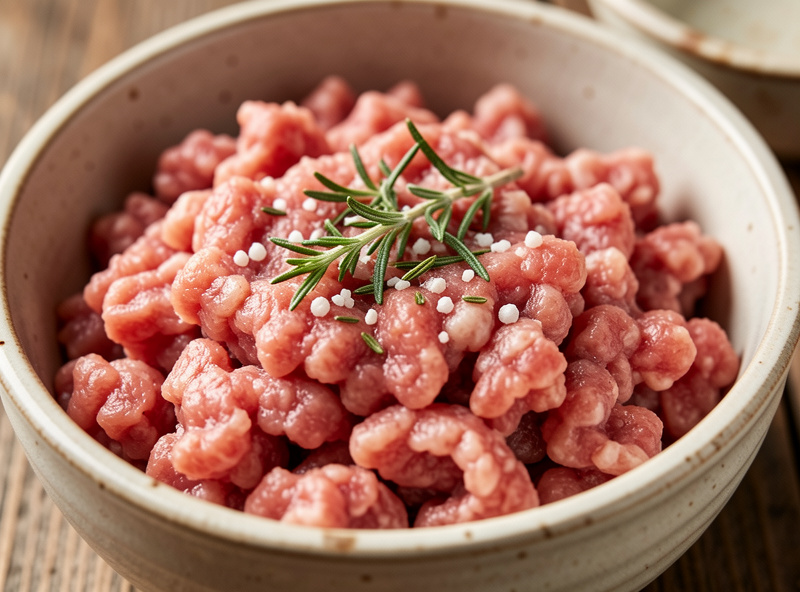
A bratwurst is a coarse-ground fresh pork sausage — typically 20–25% fat, salted at about 1.5–1.8%, seasoned with marjoram, white pepper, and a little nutmeg, stuffed into a hog casing and either grilled raw or par-poached then grilled to a 160 °F (71 °C) internal. It’s the same family as the sausages in my fresh sausage guide, distinguished mainly by the marjoram-forward German seasoning. Grind the pork once through a 6–8 mm plate for a coarse, toothsome bite, or a 4.5 mm plate for a finer brat, mix just until the protein starts to pull (you want some bind, not an emulsion), and stuff firmly.
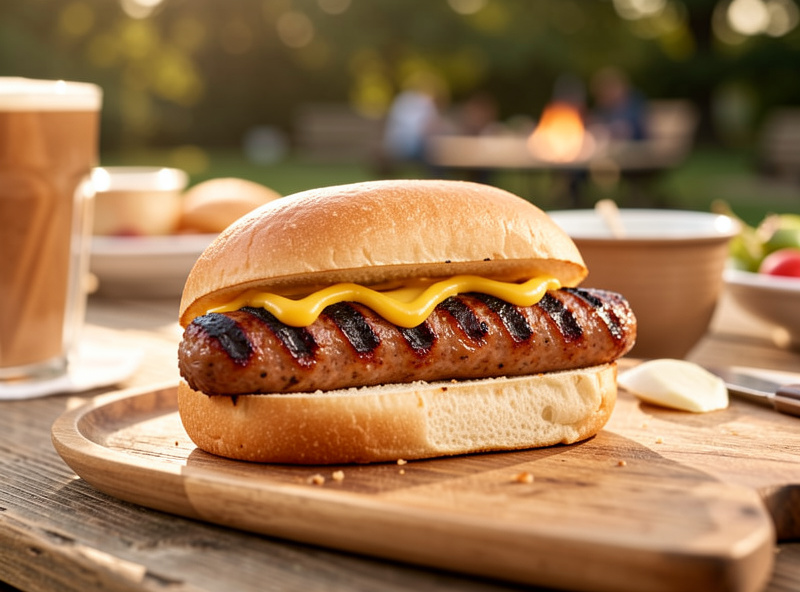
Because it’s a fresh sausage, a bratwurst carries no Cure #1 — it goes from fridge to grill without lingering in the danger zone, so there’s no botulism window to protect against. The cook is direct: grill over medium heat, turning, until the thickest link reads 160 °F at the center. The failure mode is a blown casing from too-high heat or a dry, crumbly interior from overcooking; pull at 160 °F, not 170 °F, and rest the links a minute before serving. The char on a well-grilled brat — that dark, slightly bitter, fat-rendered crust over juicy pork — is the whole point, and you cannot get it any other way.
The par-poach-then-grill method is worth knowing for the same reason it’s worth knowing for any coarse fresh sausage: a gentle poach to about 150 °F internal first, then a short, hot finish on the grill purely for color and crust. It guarantees the center is cooked without the casing blowing out on the grate, and it lets you hold a batch warm in the poach while you grill to order. The trade-off is that you lose a little of the char-grill depth, because the sausage spends less time over direct heat. I use the straight-grill method for a small cookout and the poach-then-grill for a crowd, and the choice is logistically about timing, not flavor.
Seasoning balance is where a homemade bratwurst separates from a forgettable one. Marjoram is the lead — more than you’d think, almost a teaspoon per pound — backed by white pepper (black pepper is too aggressive and speckles the pale meat), a scrape of nutmeg, and occasionally a pinch of mace. Salt at 1.6–1.8% is lower than an emulsion sausage wants, because a bratwurst’s salt isn’t doing structural work; it’s pure seasoning, and over-salting is the most common home error. A little milk or ice water in the mix (5–10% of meat weight) keeps the ground texture juicy on the grill, where direct heat will otherwise drive moisture out fast.
The regional bratwursts are where it gets interesting and where I stay out of the origin wars. Nürnberger, Thüringer, Fränkische — each has its own grind, seasoning balance, and protected-status tradition, and the details are genuinely contested in a way I won’t adjudicate. What transfers to a home kitchen is the principle: a coarse pork sausage, marjoram-forward, grilled hot. Everything beyond that is regional tuning.
How Is Weisswurst Made and Cooked?
A weisswurst is a fine emulsion of veal and pork — classically more veal than pork, with the lean cut fine and bound into a smooth paste with ice water and salt, folded with fresh parsley, lemon zest, cardamom, and ginger, stuffed into a hog casing, and poached gently to a 155 °F (68 °C) internal. The pale color (weiss = white) comes from the veal and from cooking without smoke or cure; the green flecks are the parsley. Technique-wise, a weisswurst is a delicate frankfurter built on veal instead of beef — full emulsion discipline applies.
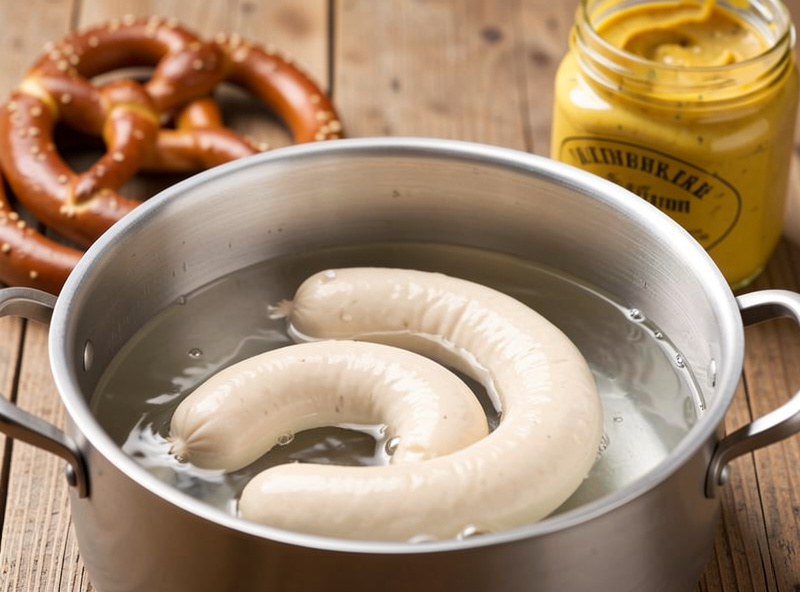
The poach is the make-or-break step, and it’s gentler than a frank’s. Bring water to about 170 °F (77 °C) — hot but nowhere near boiling — and hold the links in it for 15–25 minutes until the center reads 155 °F. A weisswurst poached at a rolling boil splits its casing and goes tough almost immediately — I trashed my first weisswurst batch exactly this way, leaving the pot at a boil while I set out the pretzels and sweet mustard, and watching every casing rupture inside five minutes as the delicate emulsion wept into the water. The texture you want is delicate and yielding, almost custardy, which only a calm poach produces. The crossover that helps here is the same one as a bologna: a large, gentle cook beats a fast, hot one, and an ice bath after pull keeps the texture from coasting past tender into mealy.
The emulsion behind a weisswurst is built the same cold, ordered way as any fine emulsion: veal lean (which is pale and delicate) cut with salt and ice water until glassy, the colder pork fat added last and cut only until smooth, the whole paste held under 55 °F. The parsley, lemon zest, cardamom, and ginger are folded in by hand at the very end so the blade doesn’t bruise them to grey — fresh parsley through a grinder goes from bright green to muddy in seconds, and a weisswurst’s charm is partly its green-flecked, pale face. Salt sits a little lower than a frank, around 1.6–1.8%, because veal reads saltier than beef and the delicacy is the point.
Serving is part of the technique. A weisswurst is traditionally peeled — the casing slipped off after poaching, either whole or by squeezing the meat out of one end in the classic Zuzeln — and eaten hot with sweet mustard and a pretzel. The casing is a cooking vessel, not a eating vessel, which is why its toughness (it needs to survive a poach) is acceptable. Cool any uneaten links through the 40–140 °F danger zone promptly and refrigerate them, but plan to eat weisswurst the day it’s made; the veal emulsion tightens and weeps overnight in a way a pork frank does not.
Does Either Need Cure #1?
Strictly, neither does in its classic form — bratwurst because it’s fresh and grilled immediately, weisswurst because it’s poached immediately without a warm-smoke step. The danger-zone logic that makes Cure #1 mandatory for a smoked frank or bologna simply doesn’t apply when the sausage goes from fridge to cook without a smoke hold. FSIS classifies fresh sausages and cooked sausages separately for exactly this reason, and the cure decision follows that classification.
The nuance: if you wanted to smoke a bratwurst (some traditions do a smoked brat), it would then need Cure #1, because it would sit in the 120–140 °F smoke — at which point it’s effectively a cooked sausage, not a fresh one, and the rules change. A classic weisswurst is never smoked, so the question doesn’t arise. If you’re ever unsure whether a sausage you’re making needs cure, the test is simple: will it spend meaningful time between 40 and 140 °F before it’s eaten? If yes, cure; if no, it’s optional. The pink-salt explainer covers the why in depth.
Why Is Weisswurst Eaten Before Noon?
Bavarian tradition holds that a weisswurst should be eaten before noon — the saying goes that it shouldn’t hear the church bells at twelve. The practical origin, as it’s usually explained, is pre-refrigeration: weisswurst was made fresh each morning from the morning’s mince, and without reliable cold storage it wouldn’t keep past midday, so it was eaten immediately. I present that as the received story rather than a verified historical claim, because the precise origin is the kind of contested regional food history I prefer to flag rather than assert.
What’s true regardless of the folklore is that a weisswurst is at its best fresh — poached and eaten the same day, the casing slipped off, dipped in sweet mustard, with a pretzel and a wheat beer. The texture degrades in the fridge faster than a bratwurst’s does, because the delicate veal emulsion weeps and tightens as it sits. I make weisswurst for the meal I’m going to eat, not for the week, which is the opposite of how I treat bologna.
Texture and Flavor: What Each Should Bite Like
A bratwurst should bite with resistance — a coarse, juicy, porky snap, a charred crust giving way to a loose-but-bound interior, and the warm, almost piney note of marjoram. It’s a sturdy, grilled, anytime sausage, and the texture tolerates a lot: a slightly looser bind still grills into something good. A weisswurst should bite delicately — smooth, pale, yielding, almost mousse-like, with the brightness of lemon and parsley and the warm spice of cardamom coming through the veal. It tolerates nothing: a broken emulsion, an over-hot poach, or a day in the fridge, and the magic is gone.
That tolerance gap is why I recommend a beginner start with bratwurst. You learn grind, fat, seasoning, and grill heat on a sausage that forgives you, then carry that confidence into the weisswurst, where the same care has to be exact. The bratwurst is the training wheels; the weisswurst is the test. If your weisswurst comes out rubbery, the cause is almost always over-mixing or too-hot a poach — and the fix is the same patience the bratwurst taught you, applied more strictly.
Can You Make Both in the Same Session?
Yes, and I often do — they share equipment and prep, even if they diverge in technique. Grind the coarse bratwurst pork first (it’s forgiving), mix and stuff it, then clean the grinder cold and switch to the finer plates and chilled bowls for the weisswurst emulsion. The order matters: make the fresh, coarse sausage first while everything is still cold, then the delicate emulsion second, because an emulsion demands the coldest, freshest setup and you don’t want to warm the equipment on the bratwurst and then try to hold a veal emulsion under 55 °F.
The shared gear is the same I use across the cooked-sausage family: a #22 grinder with chilled plates, a 5 lb vertical stuffer, hog casings, and a fast instant-read probe to confirm the cook. If you’re shopping, a vertical stuffer and a fast instant-read thermometer are the two that matter for both — the bratwurst needs the probe for its 160 °F pull, and the weisswurst needs it doubly, for the 170 °F poach water and the 155 °F internal. Hog casings serve both; the bratwurst takes a slightly wider caliber than the weisswurst, but a medium hog casing handles either.
As an Amazon Associate I earn from qualifying purchases.
What I’d do starting today, if I wanted both on the table: grill the bratwurst for lunch, poach the weisswurst for a late-morning snack the same day, and read the contrast as the whole point — the coarse and the fine, the grilled and the poached, the pork and the veal. They’re the two faces of German sausage making, and making both is the fastest way to understand why a coarse fresh sausage and a fine cooked emulsion are genuinely different crafts, not just different seasonings on the same one.
Where to Go Next in the Cooked-Sausage Family
- How to make hot dogs at home — the fine-emulsion method a weisswurst is built on, with beef instead of veal.
- How to make bologna at home — the same fine emulsion scaled to a large chub.
- Poaching temperature for cooked sausage — the gentle-poach discipline that decides whether a weisswurst holds.
- Do cooked sausages need Cure #1? — why neither of these two needs it in classic form, and when that changes.